
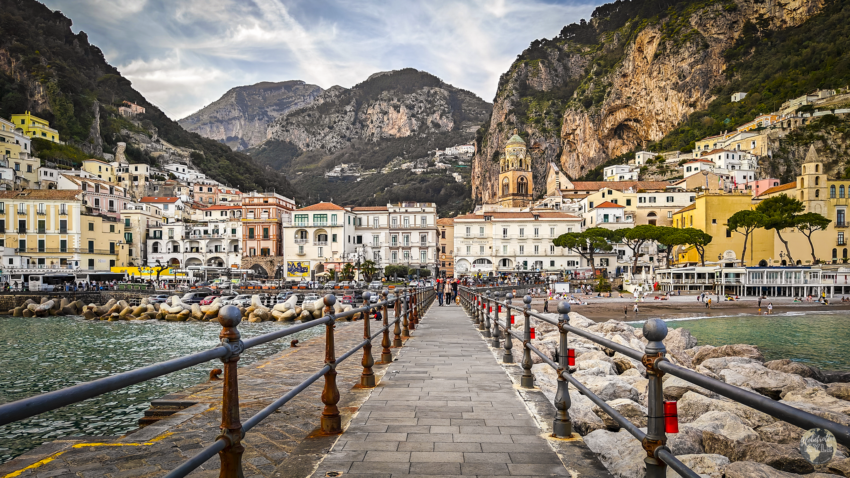
If you’ve been searching for the perfect Amalfi Coast itinerary, let me save you the trouble right now: stop searching, start packing. Few places on earth deliver the kind of sensory overload that this stretch of Italian coastline offers. Picture-perfect hillside villages jutting right up against a shimmering sea, the pervasive smell of fresh lemons drifting along the breeze, and turquoise waters crashing against sandy beaches. These aren’t travel brochure exaggerations; they’re what greets you every single morning when you step outside.
Ciara and I stumbled into this paradise during Easter Weekend after spending a few days in Milan and Florence. The contrast was immediate and jarring in the best possible way, and vastly different from the trip we already took to Venice earlier that year. Milan offered upscale elegance and The Last Supper, whereas Florence presented us with Renaissance art and cobblestone grandeur. The Amalfi Coast was perfectly different: it handed us sunshine, scooters, and one of the most breathtaking Easter celebrations either of us had ever witnessed. We didn’t expect to be moved to tears by candlelight on a beach, but Amalfi had other plans.
This Amalfi Coast itinerary covers three full days based out of Minori, a quieter, more budget-friendly town that most travel blogs skip right past. Their loss and your gain Id’ say! Whether you’re a solo traveler flying in from the States, a couple looking for a romantic European escape, or a military bubba stationed in Europe looking to maximize a long weekend, this guide is built for you. Everything I share here comes from lived experience, not a listicle scraped together from other blogs.
Let’s get into it!
Getting to the Amalfi Coast
Flying In from the US or Outside Italy
Flying into Naples International Airport is your best bet for accessing the Amalfi Coast. Direct flights from major U.S. hubs like New York, Philadelphia, and Chicago also land in Naples, especially during peak travel season. If you’re stationed in Europe like Ciara and I were, budget carriers like Ryanair and EasyJet operate frequent routes from Stuttgart, Frankfurt, and Ramstein-area airports directly into Naples. Flights are often shockingly affordable if you book a few weeks in advance. Because Ciara and I were touring Milan and Florence prior to Amalfi, we flew from Florence to Naples.
For military members specifically: keep an eye on Space-A flights to Naples if possible. A Space-A hop can dramatically cut your travel budget. That said though, Easter Weekend is not the weekend to gamble on Space-A availability. It’s best to book a commercial ticket due to peak holiday travel. The last thing you want is to be bumped off a flight when your Amalfi Coast itinerary is already locked in.
From a flight perspective, April is a sweet spot. Crowds haven’t hit their summer peak, prices are still reasonable, and the coast is beginning to wake up from winter. Flights from Stuttgart, where Ciara and I were based, are straightforward and affordable. From the U.S., connecting through Rome or Frankfurt and then catching a short hop to Naples is often the most efficient routing.
From Naples to the Amalfi Coast
Once you land in Naples, your journey to the coast is a multi-step process. Here’s the sequence that worked for us:
Naples Airport → Train to Salerno → Bus or ferry to your town along the coast.
The train from Naples Centrale to Salerno runs frequently and takes about 40 minutes. Tickets are cheap, usually only costing a few euros. From Salerno, you have two primary options for reaching towns like Minori, Amalfi, or Positano: the bus or a ferry.
I’ll be straight with you: the bus is rough. Ciara and I took the SITA bus from Salerno to Minori. It ranks among the most nauseating rides either of us has ever endured. Continuous hairpin turns, sporadic near-misses with oncoming cars on roads barely wide enough for one vehicle, and zero mercy from the driver’s throttle. We both nearly lost our lunches multiple times, and I don’t get car sick easily. This bus humbled me!
My honest recommendation would be to take the ferry from Salerno to your coastal town if it’s running. Ferries operate seasonally and are far more pleasant. Sitting on the open water with the coastline approaching from the sea is a spectacular way to arrive. It sets the tone for the trip far better than hunching over a barf bag. If you absolutely must take the bus: sit near the front and crack a window, fix your eyes on the horizon, and maybe pack a motion sickness bag. You’ve offically been warned!
It’s also worth knowing that the SITA bus system serves most coastal towns along this stretch of the coast. Positano, Amalfi, Minori, Maiori, and Ravello (via connection) are all accessible. Bus tickets are inexpensive, and the frequency is reasonable during peak season. The only thing the bus cannot offer is comfort on those turns. Factor accordingly…
A Note for Military Travelers: Driving and Licensing
If you’re a U.S. military member stationed in Europe, you can rent a scooter (or car) along the Amalfi Coast using your USEUCOM driver’s license in combination with a valid U.S. driver’s license. No international driver’s permit required. This is a significant advantage and makes the scooter rental process fast and painless. Walk up to any rental stand, show both licenses, and you’ll be on the road within minutes. More on scooters in a moment.
Where to Stay on the Amalfi Coast
Before diving into this Amalfi Coast itinerary day by day, let’s talk accommodations. Where you stay can shape everything else for your trip, for better or worse.
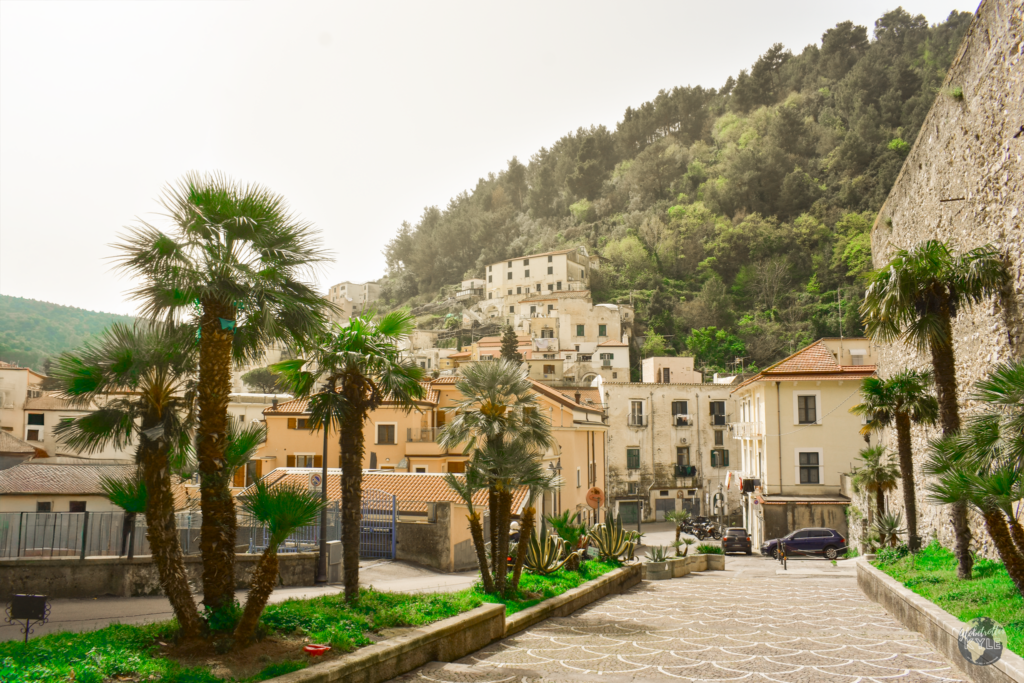
The Famous Towns (Positano, Amalfi, Ravello) for an Amalfi Coast Itinerary
Every travel blog will steer you toward Positano, Amalfi town, or Ravello. And honestly? They’re not wrong. These towns are stunning, well-located, and dripping in charm. Staying inside them means you’re within walking distance of the best views, restaurants, and beaches on the coast. The downside is the price tag, and it’ll be big. Accommodations in Positano especially tend to run high, particularly during peak seasons like Easter, summer, or the September harvest festival.
If budget isn’t a concern, staying in one of these iconic towns is absolutely worth it for the convenience and atmosphere.
The Smart Alternative: Minori and Maiori
Here’s the insider tip that most Amalfi Coast itinerary guides won’t give you: stay in Minori or Maiori.
Ciara and I based our entire trip out of Minori, and it was the best decision we made. The town is smaller and quieter than its famous neighbors, but it sits right on the coast with its own beach, restaurants, and local shops. Property prices here are noticeably lower than in Amalfi or Positano, meaning you get more space for less money. Our Airbnb was spacious, had a small kitchenette for morning coffee, and was only steps from the waterfront.
Minori itself is a genuine working town rather than a tourist set piece. Residents go about their lives here. Families walk the waterfront in the evenings. Local restaurants serve the kind of food that’s priced for neighbors rather than tourists. Staying here gives you proximity to the coast’s best attractions while keeping you inside something that feels truely authentic.
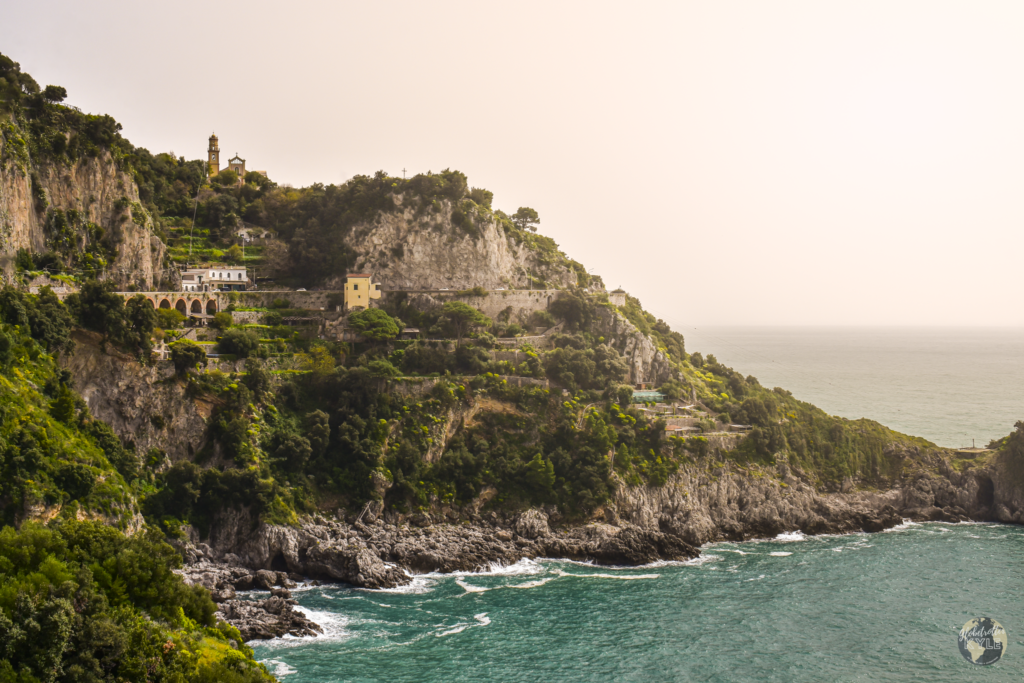
The key to making Minori work is having your own transportation, ideally a scooter. With a rental, every major attraction along the coast is 10 to 20 minutes away. Without one, you’re back on that bus, praying you don’t puke or run into the cliffside. Rent the scooter. Always rent the scooter.
Maiori, just to the east, is a similarly smart option. It’s slightly larger than Minori with a wider beach and a few more accommodation options. Both towns sit along the same stretch of coast and give you equal access to the full Amalfi Coast itinerary covered in this guide.
For budget-conscious travelers, especially military bubbas watching their spending, Minori and Maiori are the right call. You get the full Amalfi Coast experience at a fraction of the cost of the more famous addresses.
An Amalfi Coast Itinerary as Part of a Larger Italy Trip
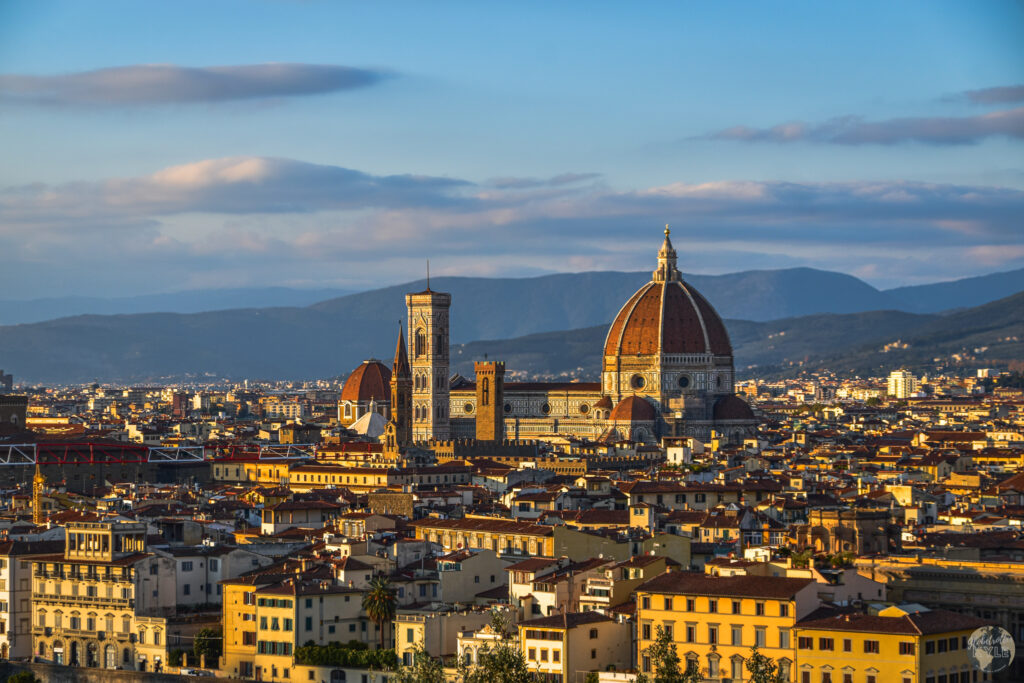
Why We Paired It With Milan and Florence
Our Amalfi Coast itinerary didn’t exist in isolation. It was the final act of a 10-day Italy trip that began in Milan, continued through Florence, and finished on the coast. That sequencing turned out to be inspired, even if we didn’t fully plan it that way.
Milan delivered fashion, architecture, and the Last Supper. Florence delivered the Uffizi, the Duomo, and the particular kind of Renaissance overwhelm that leaves you needing a gelato and a quiet bench. Both cities were extraordinary complete with history, art, and culture in the way that Italy’s northern cities tend to be. By the time we arrived in Florence, we were culturally saturated in the best possible way. There’s just something about laying on a beach though!
The Amalfi Coast was the antidote. Where Milan and Florence demanded your intellectual engagement, the Amalfi Coast demanded nothing except your presence. Trade cobblestone piazzas for scooter rides along cliff-side roads. Trade museum galleries for open water. Trade espresso at a standing bar for lemon-zested coffee on a terrace overlooking the sea. The contrast made each leg of the trip better by comparison.
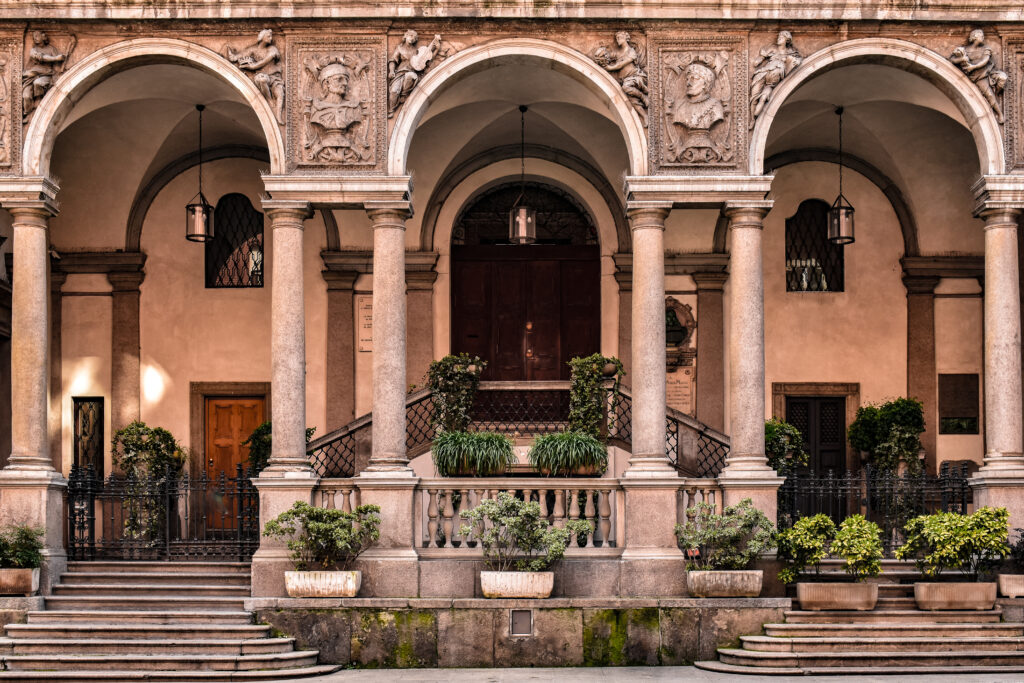
If you’re planning a first trip to Italy from the U.S., this Milan-Florence-Amalfi Coast routing is one of the best possible frameworks. It gives you the cultural depth of the north and the sensory joy of the south in a single efficient trip. Flying into Milan and out of Naples (or vice versa) avoids backtracking and keeps the itinerary logical.
For military travelers stationed in Europe: this routing is particularly practical. Budget airlines like Ryanair and EasyJet connect Stuttgart, Frankfurt, and other German hubs to both Milan and Naples affordably. You can build the entire trip with cheap flights and trains without touching a full-service carrier.
Getting from Florence to Naples
The flight from Florence to Naples is short (just over an hour) and runs on multiple airlines. Alternatively, the train from Florence to Naples via Rome is a scenic and comfortable journey of about three hours on the high-speed Frecciarossa service. Both options are solid, but we chose the flight for efficiency given our timeline. The train would have been a beautiful ride through Tuscany and Lazio, but we had heard of strikes among the train operators, and we didn’t want to chance it.
If you’re doing the full Italy trip sequence, build at least a buffer day between Florence and the Amalfi Coast. Arriving on the coast in the late afternoon gives you time to find your accommodation, recover from travel, and ease into the pace of the place rather than hitting the ground running. The coast rewards exactly that kind of unhurried arrival.
The Arrival
Our plane from Florence touched down at Naples in the afternoon. With the sun beginning its descent, we caught a train bound for Salerno. The plan felt simple on paper: train to Salerno, bus to Minori, drop bags, relax. However, the bus had other ideas.
As covered above, the ride from Salerno to Minori was an experience in survival. Every hairpin turn felt like a dare, and every oncoming car felt like a game of chicken. By the time we rolled into Minori, we were pale, grateful, stress seating, and already plotting how to avoid the return trip.
The Lemon Coffee Trick That Ruined Starbucks for Me
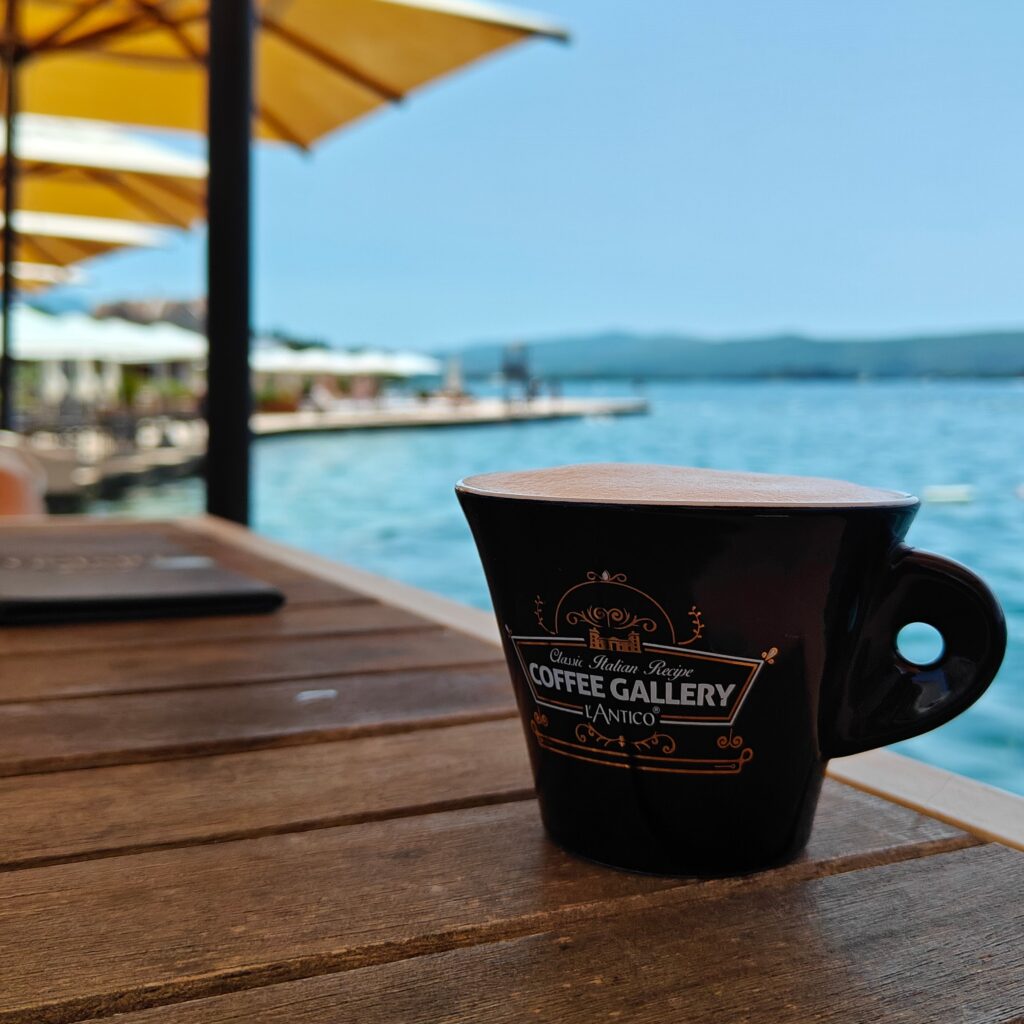
What saved the evening was our host. The kindest older gentleman met us at the door of our Airbnb and walked us through the space with genuine warmth. The room was spacious, comfortable, and had a small stove perfect for making coffee each morning.
Before leaving, he paused and shared a piece of local wisdom I haven’t forgotten since. Take a fresh lemon (of which Minori has no shortage) and run your fingernail along the skin over your cup of coffee. The oils released from the rind transform the cup entirely. To this day, I still do it every chance I get!
The Amalfi Coast is full of moments like that: small, unexpected, and lasting.
What to Do on Arrival Day
Don’t try to cram in any major sightseeing on arrival day, especially if you’re connecting through Naples and Salerno. The transit alone will take most of the afternoon. Instead, use the evening to decompress, walk along the Minori waterfront, and find a local trattoria for dinner. Let the place wash over you slowly; the Amalfi Coast rewards patience.
Amalfi Coast Itinerary Day 1: Scooter Rides, Ravello, and a Town Lit by Candlelight
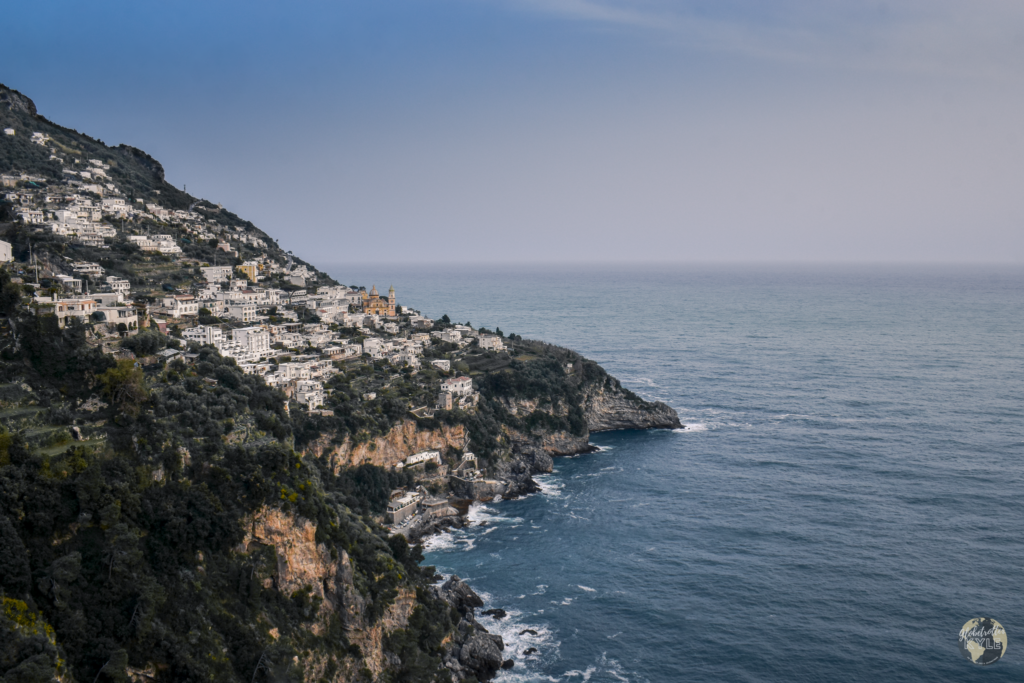
I’ve never been able to sleep in on vacation. My mind simply won’t allow it. The anticipation of a new place hits like an alarm clock set to 6 a.m., and Minori was no exception. While Ciara caught a few extra hours of sleep, I laced up my shoes and stepped out the back of our Airbnb.
Just behind the property, a trail climbed straight up the mountain. Naturally, I followed it. Running switchbacks through the hills of the Amalfi Coast is not something I expected to put on a list of life highlights, but here we are. Lemon trees flanked both sides of the trail (literally thousands of them) and the smell was extraordinary. Fresh, clean, and alive in a way that synthetic lemon products have been lying to us about for decades.
The Amalfi Coast is famous for its lemons, and experiencing that fame through your lungs on a morning run is something no guidebook would even think to recommend. The lemon groves here produce the Sfusato Amalfitano variety, which is a large, intensely aromatic lemon grown in terraced groves. In fact, these trees have climbed these hillsides for centuries. Running through them before the rest of the world has woken up is a quietly unique experience.
From the overlook in Minori, the coast stretched out below in both directions. The sea was already catching the early morning light. Fishing boats dotted the water below, and the air was completely still. I took a few photos from that overlook before heading back down, knowing they wouldn’t come close to capturing what I was looking at.
Take this morning run (or hike) through the hills if you can. You’ll thank yourself for it.
Rent a Scooter. Seriously, Rent a Scooter
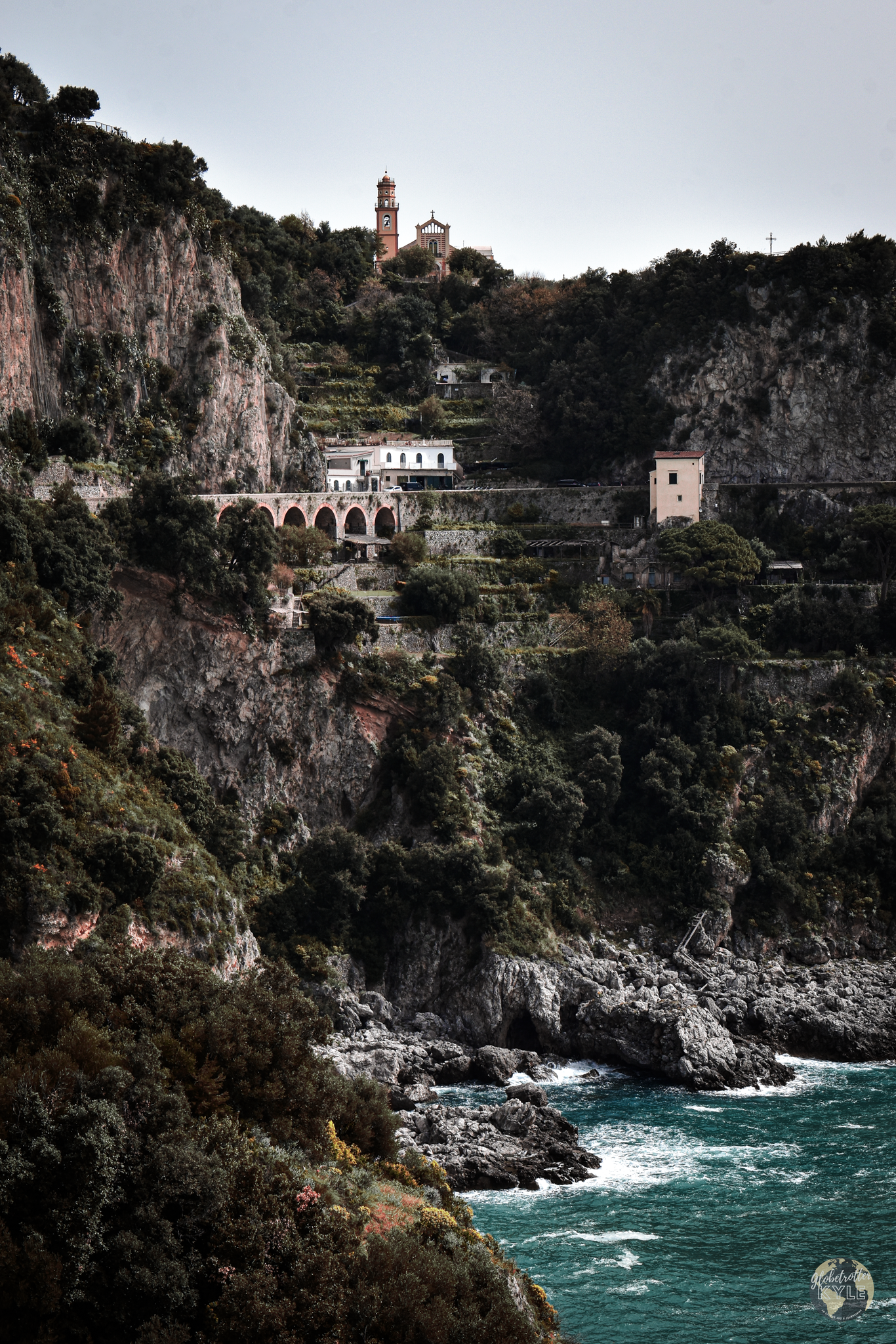
By the time I returned, Ciara was up, dressed, and ready to explore. After a quick shower and the first of many lemon-zested coffees, we stepped out to make one of the most important decisions of the trip: transportation.
The bus was immediately disqualified. No way were we going to subject ourselves to that experience again. We found a nearby vendor in Minori renting small scooters and committed on the spot. This was the best decision of the entire trip!
Narrow coastal roads that would’ve been stressful in a car became a joy on that scooter. Traffic that would’ve cost us an hour in a rental car dissolved entirely, and parking in the small towns was effortless. Most importantly, the scooter made the entire itinerary for the Amalfi Coast feel spontaneous and free rather than logistically complicated.
For my bubbas stationed in Europe: your USEUCOM license combined with your U.S. driver’s license is all you need. No additional paperwork, no international permit. Walk up to the rental stand, show your licenses, pay for the day, and go.
Cruising East With No Plan
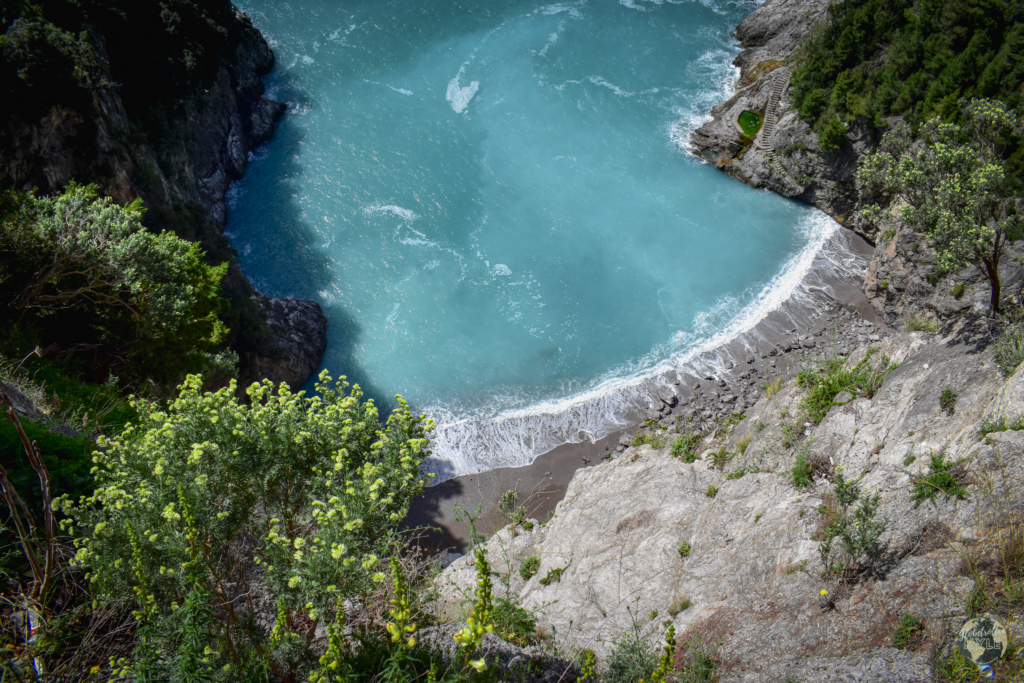
Our first ride had no destination. We simply pointed the scooter east and went cruising down the Amalfi Coast. The hairpin turns that had made us miserable on the bus became exhilarating on the scooter. Dramatic cliff drops fell away to our right while the sea glimmered below. Wind hit our faces and the smell of the coast filled every breath. Living inside a postcard is the only accurate description.
We rode until we found a natural turning point, doubled back, grabbed a light lunch in Minori, and then pointed ourselves north toward Ravello.
Ravello: The Town That Fits Just Right
More hairpin turns, more smiles, and after a scenic climb through the hills, the town of Ravello appeared. It wasn’t boastful, it wasn’t loud or crowded; it was simply right-sized for the experience it offered. And because we visited during the quieter morning hours, Ciara and I practically had the streets to ourselves.
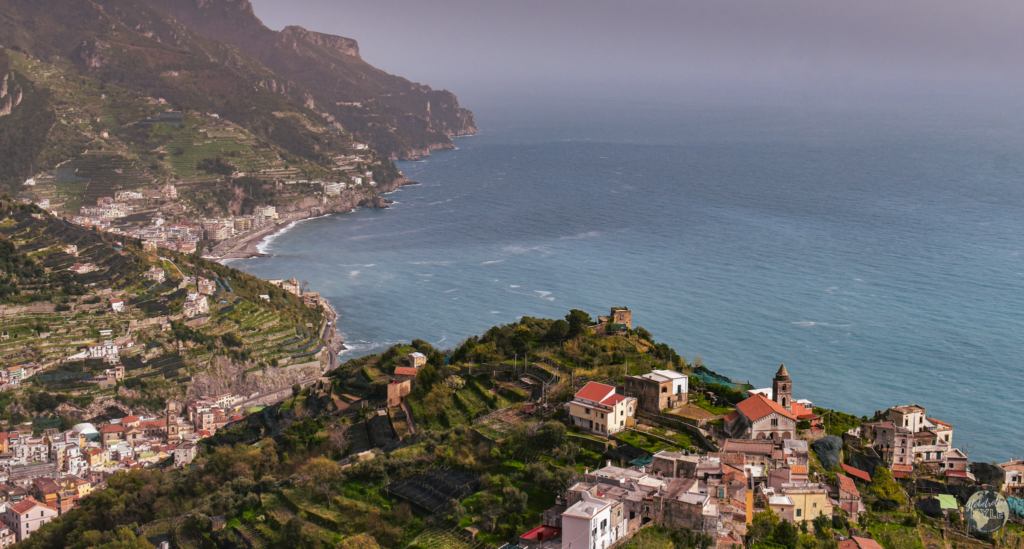
Ravello sits roughly 350 meters above sea level, which means the views from town are already rewarding before you’ve even done a single thing. The elevation also gives the air a slightly different quality up here. It’s cooler, quieter, and laced with the same lemon-and-sea fragrance that follows you everywhere on the coast.
Ravello’s Beautiful Ceramics
The thing I remember most about Ravello is the ceramics. Every shop along the main street displayed plates, bowls, and decorative pieces painted in bright colors and intricate designs. Blue, yellow, and terracotta patterns adorned stone facades all the way down the street, each shop as welcoming as the last. These aren’t mass-produced tourist trinkets, as many are made by local artisans using traditional techniques that have been passed down through generations. The craftsmanship is immediately apparent when you hold one.
Tucked between the ceramic shops were small art studios showcasing paintings and photographs of the Amalfi Coast, reminding every passerby that the view outside the window has been inspiring artists for centuries. Some of the paintings were truely stunning, and one nearly came home with us had it’ve fit in our carry-on.
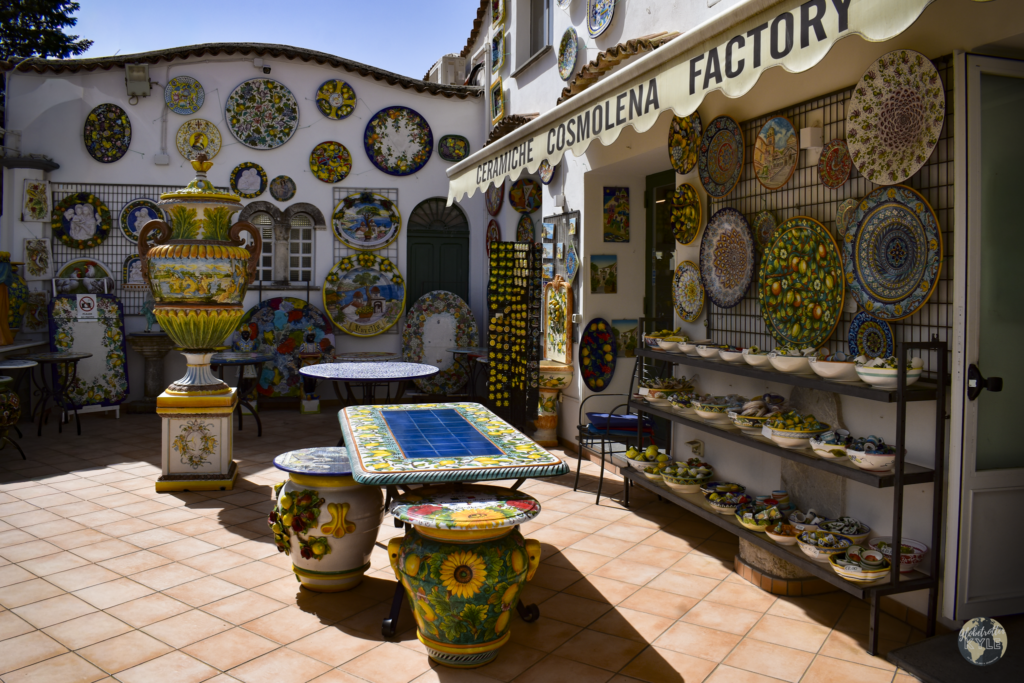
After wandering the main street, Ciara and I drifted toward a bell tower adjacent to a beautiful courtyard garden. Hundreds of flowers were bursting open in the spring warmth, their colors accenting the pastel hillsides visible just beyond the courtyard walls. This garden, likely belonging to the adjacent church, was alive with the particular joy of a Mediterranean spring. Simply put, it was a riot of color framed by ancient stone. We set up a tripod, positioned the camera, and took a few photos together in the garden. Ravello handed us the kind of backdrop that doesn’t require any filtering.
My advice would be to not rush Ravello. It’s small, yes, but the rewards come to the traveler(s) who move slowly.
Sunset in Amalfi
From Ravello we descended back toward the coast and rode into Amalfi town to catch the sunset from the pier. The view from that pier is one I won’t forget. Every house along the hillside wore a different color: terracotta, cream, pale yellow, and burnt orange. Yet somehow, they all came together into a single coherent scene. It was the view I’d seen in travel magazines without realizing I’d one day stand in front of it in real life. The sun dropped lower, the colors deepened, and the whole scene glowed.
That moment alone is worth building your Amalfi Coast itinerary around.
Good Friday: The Night the Town Lit Up With Candles
Then the real magic began.
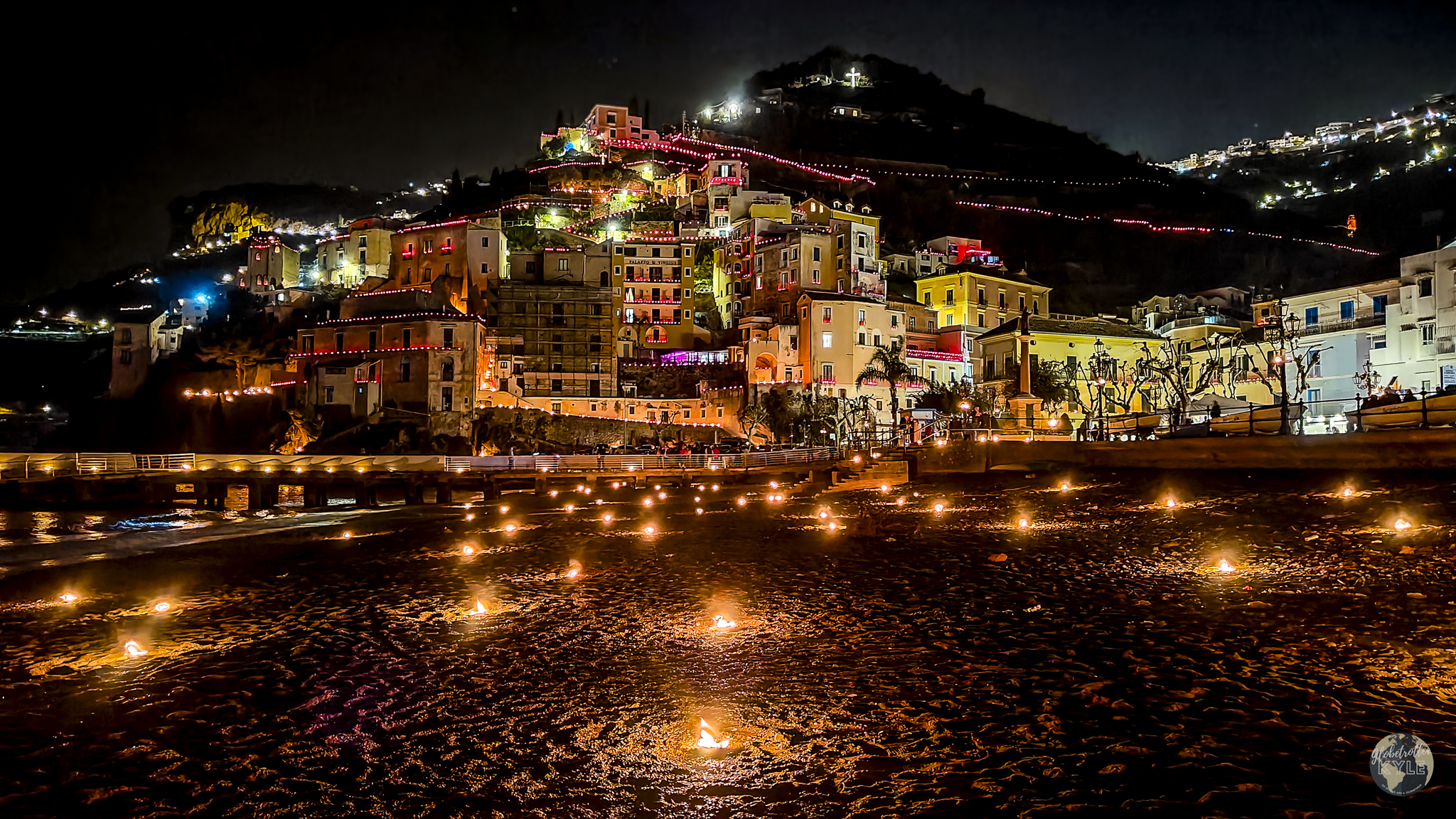
Because we were visiting during Easter Weekend, we witnessed something neither Ciara nor I had anticipated: Amalfi’s Good Friday celebration. I grew up in the church, and I’ve attended more Easter services than I can count. But nothing compared to this celebration.
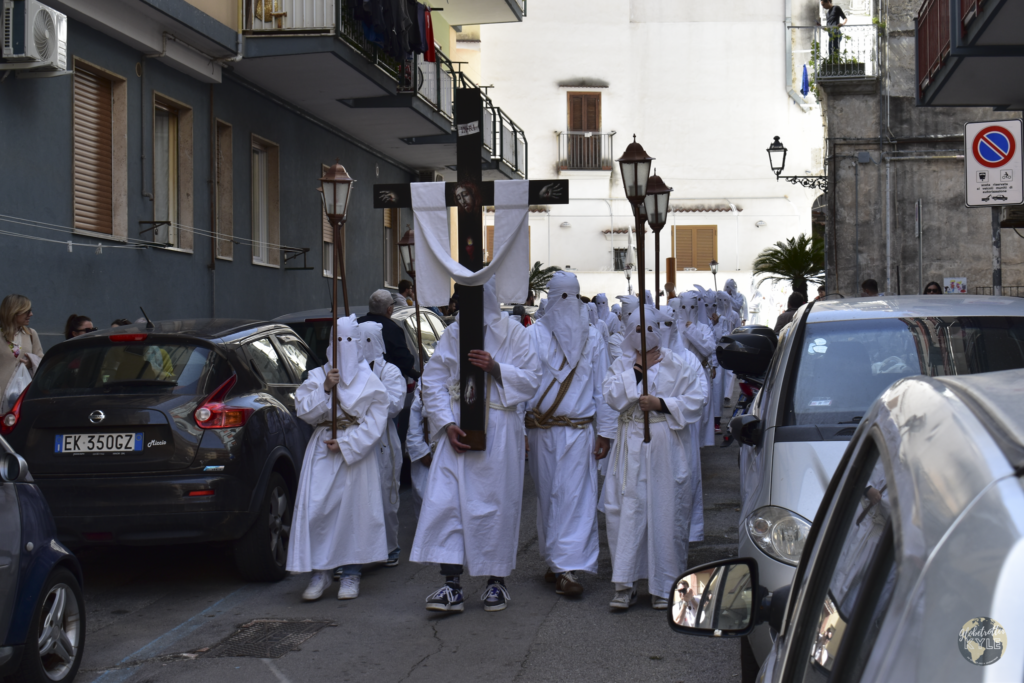
As dusk settled, every single powered light in Minori went dark. Streetlamps. Shop signs. Restaurant menus. Every source of electric light was extinguished and replaced with candles. When I say every light, I’m not exaggerating for effect—I mean every single light.
At the edges of the town, two enormous bonfires were lit, their flames reflecting off the water. But most beautiful of all were the candles along the beach. Hundreds of them lined the sand in orderly rows, leading toward the water’s edge where floating candles then took over, creating a luminous boundary between the shore and the sea. The entire town shimmered under candlelight. Despite the total absence of electric light, every building and shoreline remained perfectly visible because they were outlined in warm, flickering light.
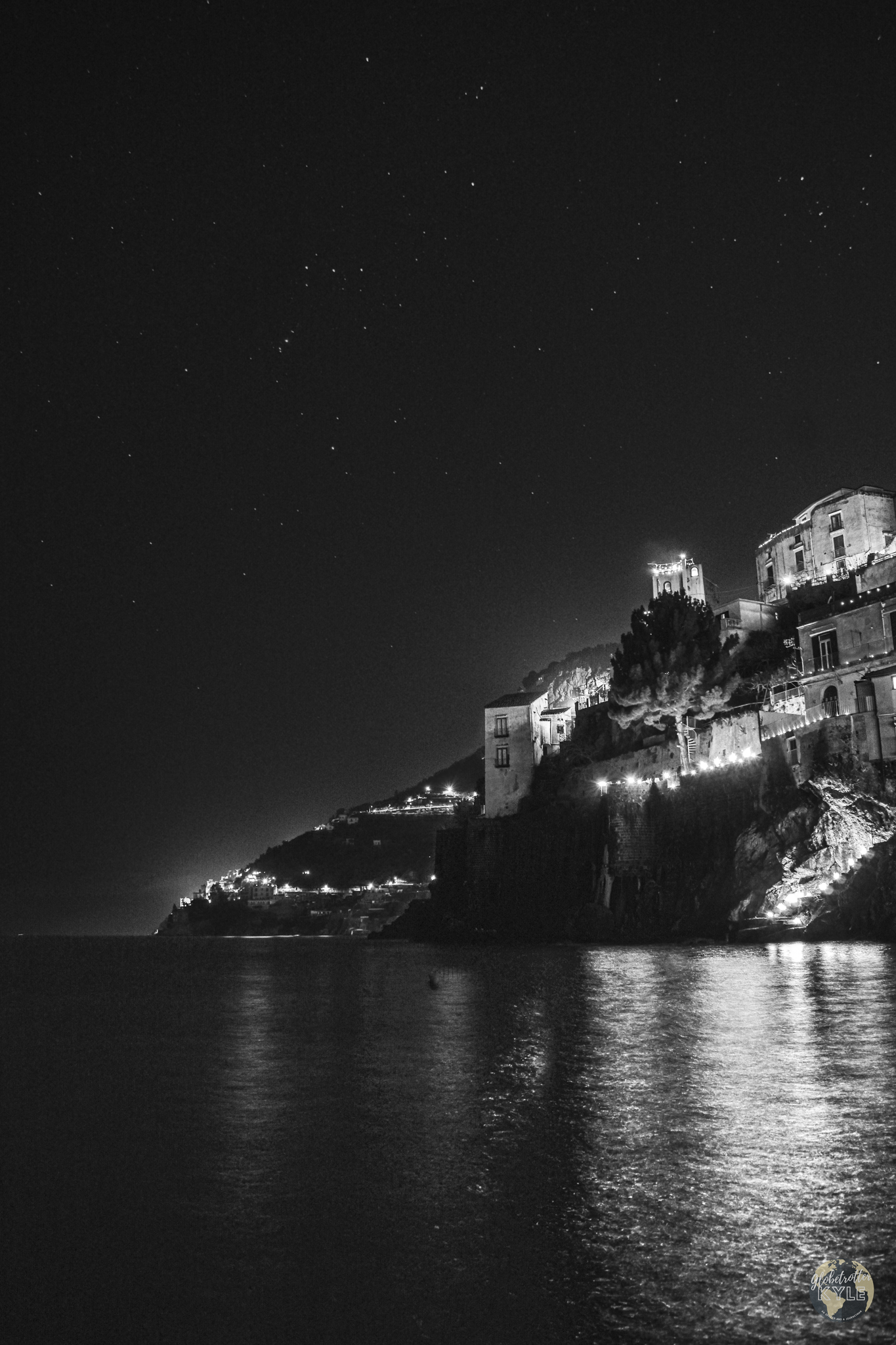
If you ever have the opportunity to experience the Amalfi Coast during Easter, arrange your schedule around Good Friday. It will move you in ways you won’t see coming. Ciara and I stood on that beach for a long time without saying much, welling with emotion at the beauty of it all. It was a moment that didn’t need commentary.
Day 1 Quick Tips
- Rent the scooter first thing. Don’t waste your morning figuring out the bus schedule
- Visit Ravello early. Crowds build throughout the day; mornings are more peaceful.
- Bring a jacket for the evening. Coastal nights in April can be cool, especially near the water.
- If you visit during Easter, stay for the Good Friday candlelight ceremony; it’s one of the most beautiful things you’ll see in Italy.
Amalfi Coast Itinerary Day 2: Sun, Slow Mornings, and Positano
The morning after Good Friday started without urgency. Ciara and I had nowhere to be and no interest in rushing. I made coffee on the small stove in our Airbnb, zested a fresh lemon over each cup the way our host had showed us, and sat by the window watching the sea catch the morning light. There’s something to be said for a travel pace that allows you to actually inhabit a place rather than sprint through it.
After a small breakfast, we were back on the scooter. The feeling never got old: sun on our faces, the smell of salt and lemons in the air, and the landscape constantly delivering something new around every bend.
Heading West Toward Positano
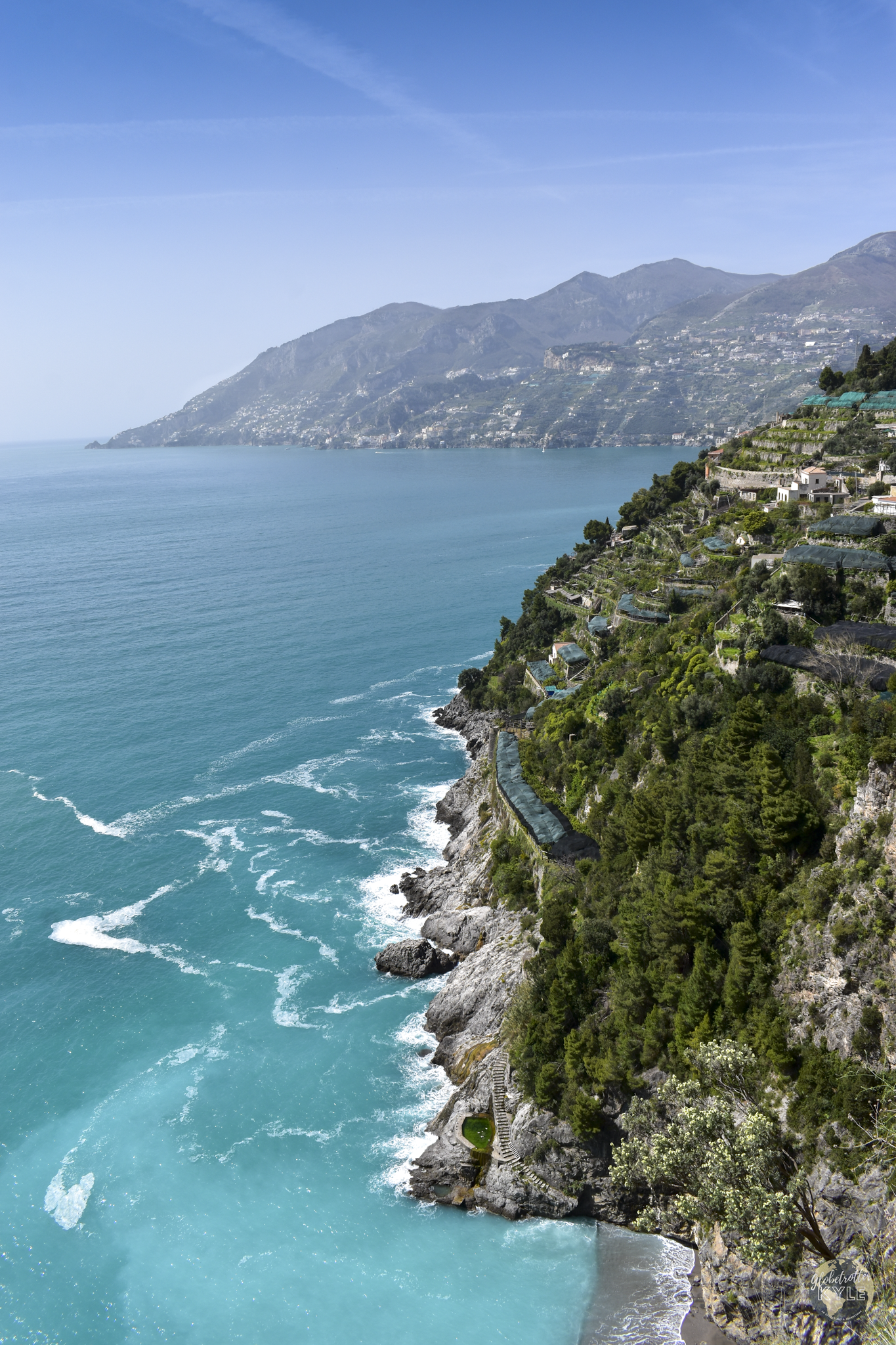
The previous day’s ride had taken us east, but day 2 pointed us west. Destination: Positano; one of the most photographed towns on the entire Amalfi Coast. A friend of mine had proposed to his fiancée in Positano just a few months earlier, and the photos and video from that moment made the decision easy. If a place looks that good in a proposal video, it warrants a full day.
The ride to Positano follows the same spectacular coastal road that defines this entire Amalfi Coast itinerary. Every curve reveals a new angle of the sea. Every overlook tempts you to stop and stare, so needless to say, we stopped more than once.
Walking Positano
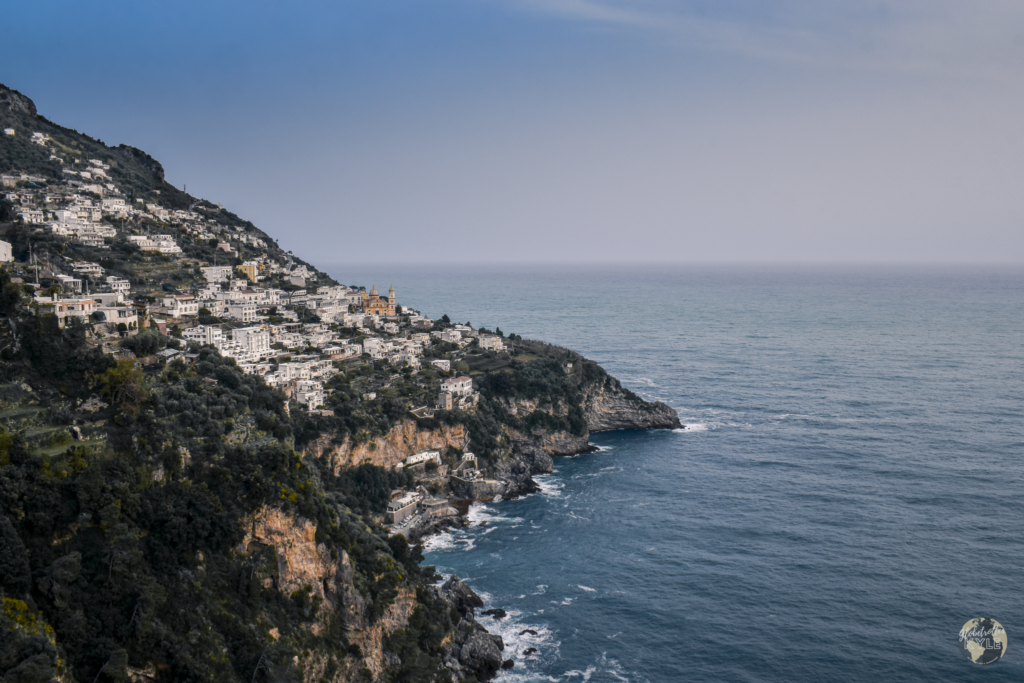
Positano shares many characteristics with Minori and Amalfi: the layered hillside architecture, the ceramic shops, and the smell of food drifting out of restaurant doorways. You could say Positano carries its own distinct charm. The town tumbles steeply down toward the beach in a way that feels almost theatrical. Every vantage point was a composition that I tried my best to capture, never truely encapsulating the magic of it all.
Ciara and I walked the main street and its offshoots without any particular agenda. Shops offered locally made leather sandals, limoncello, ceramics, and linen clothing in every shade of Mediterranean blue and white. The streets were lively but not overwhelming. Even the more touristy sections of Positano retained enough authenticity to feel genuine rather than performative.
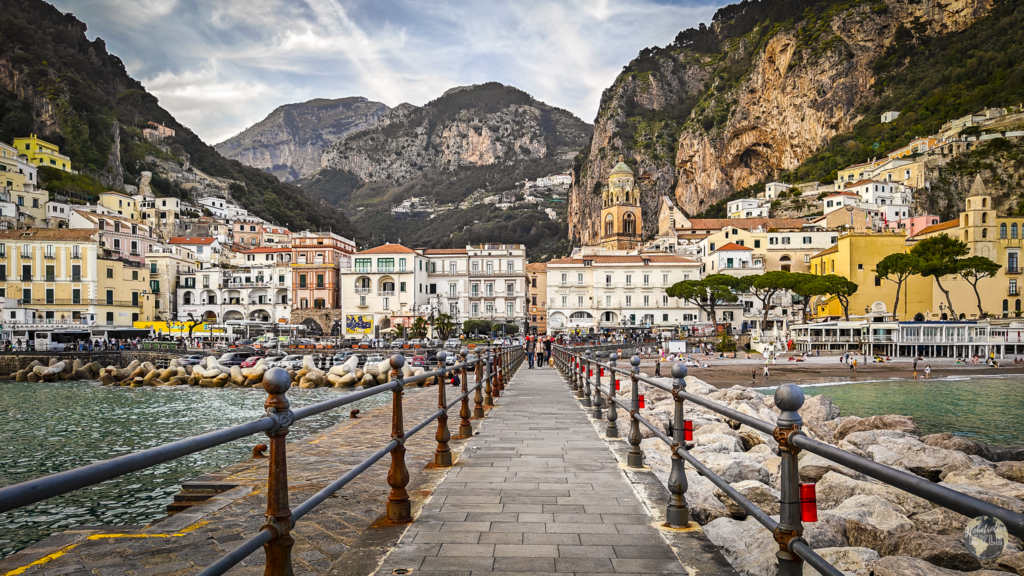
One thing worth knowing: Positano involves a lot of stairs. The town descends from the main road to the beach through a system of steps, lanes, and switchback paths. Comfortable footwear is non-negotiable. The stairs will be part of the experience as you discover new shops, sudden viewpoints, and quiet residential corners on every descent. Wear the right shoes!
The main beach, Spiaggia Grande, is where most visitors end up, and it earns its popularity. The setting is undeniable: the crescent of dark sand cupped by the hillside town rising behind it, the water changing colors as you look further out from shore, the boats bobbing offshore. On a clear Easter Saturday, it was close to perfect.
Beach Time in Positano
With our walking exploration complete, the beach was calling Ciara’s name. We found our spot, spread out the towels, and within minutes Ciara fell asleep. She was likely dreaming of limoncello and Neapolitan pizza, knowing her. I wasn’t far behind; she made it look so easy!
A beach nap in Positano on Easter Saturday with waves as your white noise and the Italian sun doing its job is a recipe for the most satisfying sleep of your life. No agenda, no alarm, no guilt; that’s rest.
One note on beach logistics: the Spiaggia Grande offers paid lounger and umbrella rentals, which are worth the spend if you’re planning a full afternoon. Bring your own towel either way. Prices for sunbeds can add up quickly, so if you’re budgeting carefully, the free public beach section at the southern end of the Spiaggia Grande is your best bet.
The Overlook Above Positano
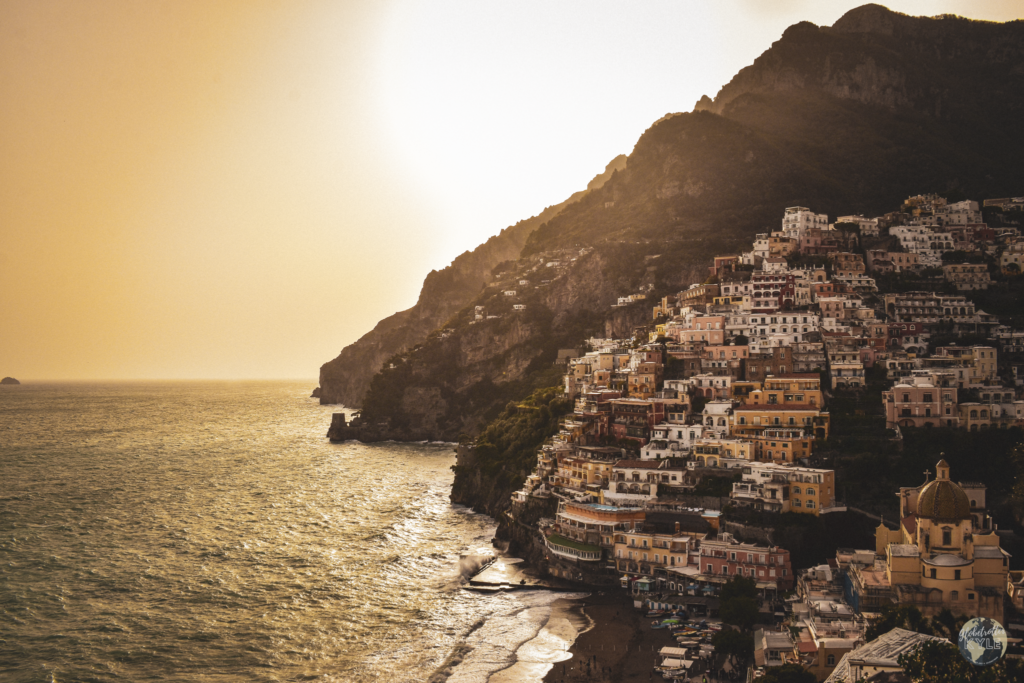
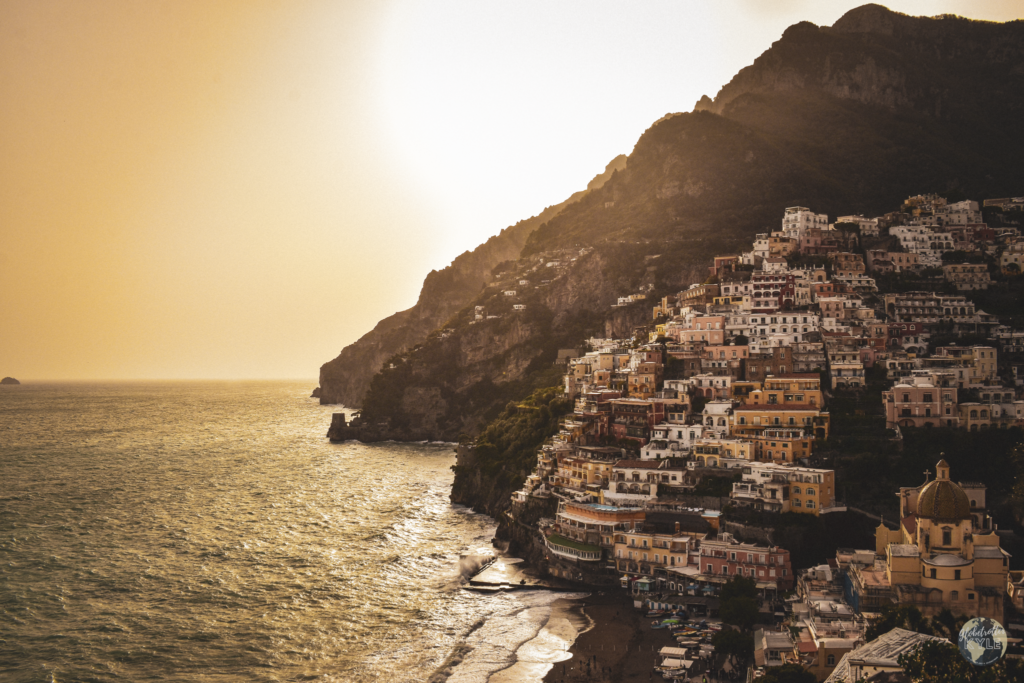
After waking up feeling refreshed, we had enough energy for one more adventure before heading back. From the beach, we climbed up the hillside to a sweeping overlook of the entire town. Positano from above is a completely different experience than Positano at the street level. The full amphitheater of the town is revealed by houses layered in terraces, each stacked on top of one another up the hillside. Each one caught the late afternoon light differently, creating a kaleidoscope illusion.
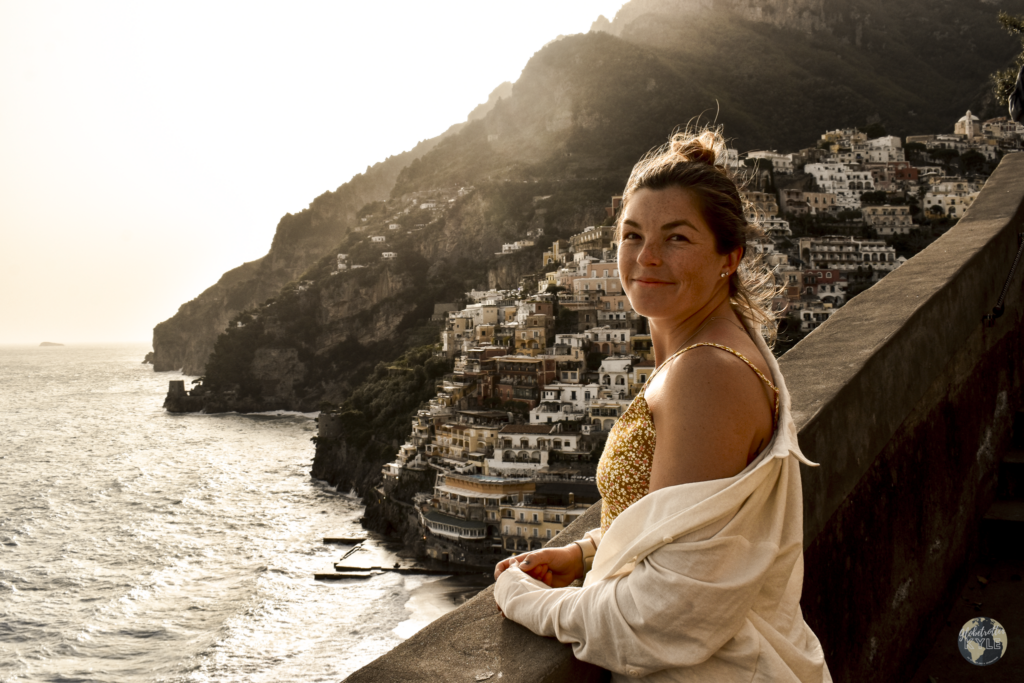
The sun was beginning to set behind the hills, and dozens of houses lined the slope below us like something out of a National Geographic spread on top Italian destinations. We took photos knowing full well they would only approximate what we were actually seeing.
This is the kind of moment that validates an entire Amalfi Coast itinerary. There’s nothing to do but stand there and absorb it.
Dinner Back in Minori
The scooter carried us back to Minori as the light faded. We found a local restaurant, ordered simply, and ate well. Tomorrow was Easter Sunday, and we wanted to be rested. The Cathedral of St. Andrew Apostle in Amalfi wasn’t going to experience itself.
Day 2 Quick Tips
- Visit Positano on a Saturday or weekday. The beach gets busy; earlier in the day is better for walking the streets
- Bring a beach towel from your accommodation. Beach chair rentals add up quickly
- The overlook above Positano is accessible on foot from the main beach area; ask a local for the best path up
- Plan to ride back before full dark. The coastal road is best navigated with full daylight visibility, especially on a scooter
Amalfi Coast Itinerary Day 3: Easter Mass, Scooter Adventures, and the Villa Rufolo
Final days of great trips always arrive with an unwelcome abruptness. Our last morning in Minori hit that way: too soon, too final, and full of the particular weight that comes with knowing you’re leaving somewhere that got under your skin. This wasn’t just the end of three days on the Amalfi Coast, it was the close of our entire spring break. We started in Milan over a week earlier; Milan, Florence, and now this. Returning to Stuttgart felt abstract and slightly cruel.
But Easter Sunday had a full schedule, and there was no time for sulking.
Easter Mass at the Cathedral of St. Andrew Apostle
I’ll preface saying neither Ciara nor I are Catholic. We knew walking into the Cathedral of St. Andrew in Amalfi that we wouldn’t understand a single word of the Italian-language servicek, but we went anyway. Celebrating our faith in community, even across a language barrier, mattered more than comprehension.
The cathedral sits dramatically at the top of a long staircase in Amalfi’s main piazza, its facade a striking example of Arab-Norman architecture. Stepping inside, the interior opened into a soaring space dripping in ornate detail. Gold, marble, and centuries of devotion layered on top of one another in every direction. The smell of frankincense filled the air.
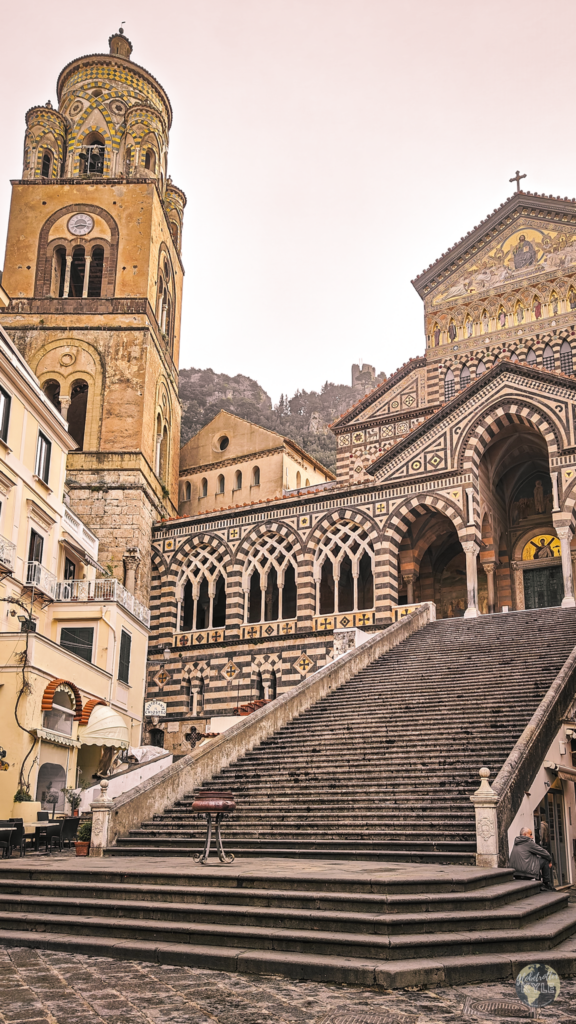
The service began with something neither of us anticipated: the men and women were separated to perform a symbolic Easter ceremony. The ringing of bells filled the cathedral, the the smell of frankincense drifted throughout. Catholic priests sang chants that bounced off ancient stone walls while men and women led separate processions around the center of the church before eventually converging in the middle to begin the main service.
We understood nothing, but we felt everything. That’s the best way I can describe it. Walking out into the Easter morning sunshine afterward, I was genuinely grateful. Not just for the experience, but for the reminder that some things transcend language entirely.
Grabbing a Bite Before the Crowds Arrive
After mass, Ciara and I found a spot in Amalfi for a quick bite before the second wave of Easter Sunday worshippers and tourists began flooding the town. This is a practical tip worth following on your own Amalfi Coast itinerary: eat early on Easter Sunday in Amalfi. By mid-morning, the town fills rapidly and wait times at restaurants climb quickly. Get in, eat well, and move before the rush.
From Amalfi we rode east toward Maiori, another coastal town worth an hour or two of exploration. The ride itself was as enjoyable as any other leg of this Amalfi Coast itinerary. Coastal roads, sea views, and the scooter’s reliable ability to make every kilometer feel like an adventure.

Maiori provided one of the trip’s more memorable and entertaining moments: Ciara finally got the nerve to try driving the scooter herself! She handled the practice laps in a nearby parking lot with admirable composure. The decision to hand driving duties back to me came shortly afterward, possibly because I kept leaning the wrong direction while riding on the back. My fault entirely, yet no regrets.
The Scenic Drive Through the Mountains: Valico di Chiunzi
From Maiori, we took the road north to get a better vantage point. This was a route that most Amalfi Coast itinerary guides overlook entirely. The road climbs away from the coast and passes through a string of small inland towns: Ponteprimario, Tramonti, and Campinola. Each one had its own quiet character made up of small shops, local restaurants, and residents going about their Easter Sunday with no particular interest in being a tourist attraction. We didn’t stop; we just let the wind rush by and the scenery change around us.
Eventually the road led us to the Valico di Chiunzi scenic overlook. From this vantage point, the sea reappeared in the distance below, framed by mountain ridges on either side. Taking a moment here to breathe and look out added a dimension to the trip that we hadn’t planned for. Sometimes the best parts of any Amalfi Coast itinerary are the unplanned ones.
Villa Rufolo: The Painting That Became Real
From the overlook, we continued through Sambuco and Scala before arriving at one of the most iconic views in all of the Amalfi Coast: the Villa Rufolo in Ravello.
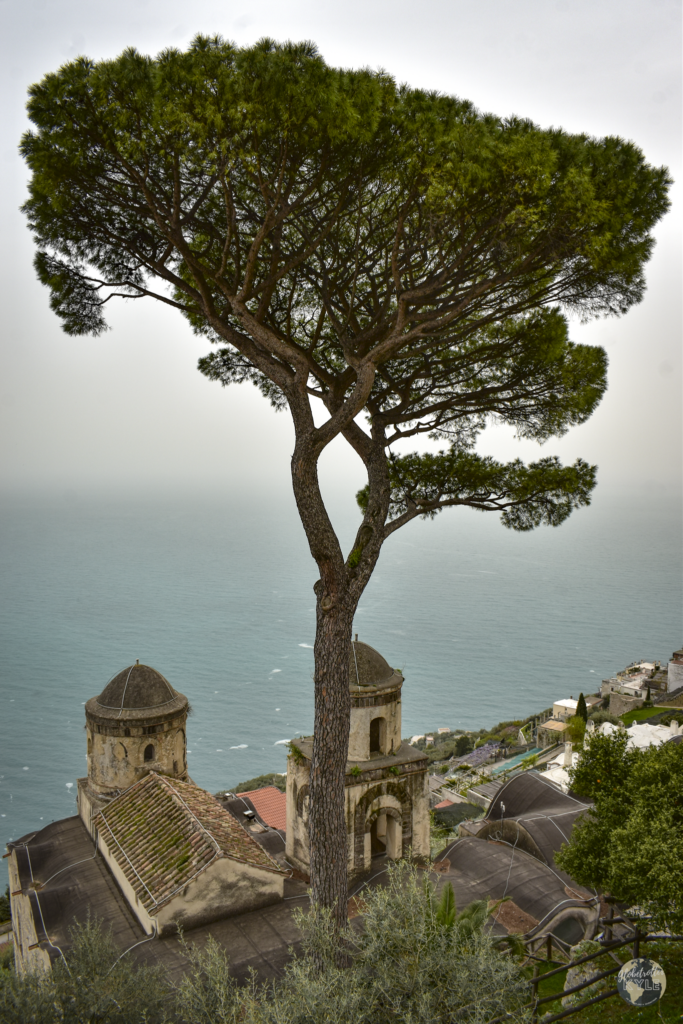
I kept seeing the same image painted on ceramic plates in every shop we passed: two tall pine trees with canopies only at the very top, a church positioned between them, and the sea stretching out to infinity behind it all. The image was everywhere: on plates, tiles, paintings, and even postcards. Eventually, curiosity won. We had to see what this scene actually looked like in person.
The Villa Rufolo is a 13th-century estate whose grounds have been sculpted into one of the most beautiful gardens in southern Italy. Admission grants you a self-guided wander through the entire property, which is exactly how I’d recommend experiencing it. Take your time and don’t rush. An hour is my recommended minimum; ninety minutes is better.
Walking the grounds, the smells hit you first: roses, citrus blossoms, and the faint salt of the sea carried upward on the breeze. The variety of flowers and vegetation across the terraced gardens is remarkable. It’s an argument made in living color for why the Amalfi Coast has attracted artists, composers, and dreamers for centuries. Richard Wagner reportedly found inspiration here for part of Parsifal. Standing among those flowers and looking out toward the sea, it’s not hard to understand why.
The View from Within
Inside the villa itself, ornate decoration covers every surface. Romanesque arches, intricate tilework, and centuries of architectural attention to detail reveal a building that understood its purpose: to be worthy of the view it commanded. The windows opened outward to the terraced gardens, and just beyond them, down the slope, stood a well-preserved Romanesque cathedral that has clearly endured everything the centuries threw at it.
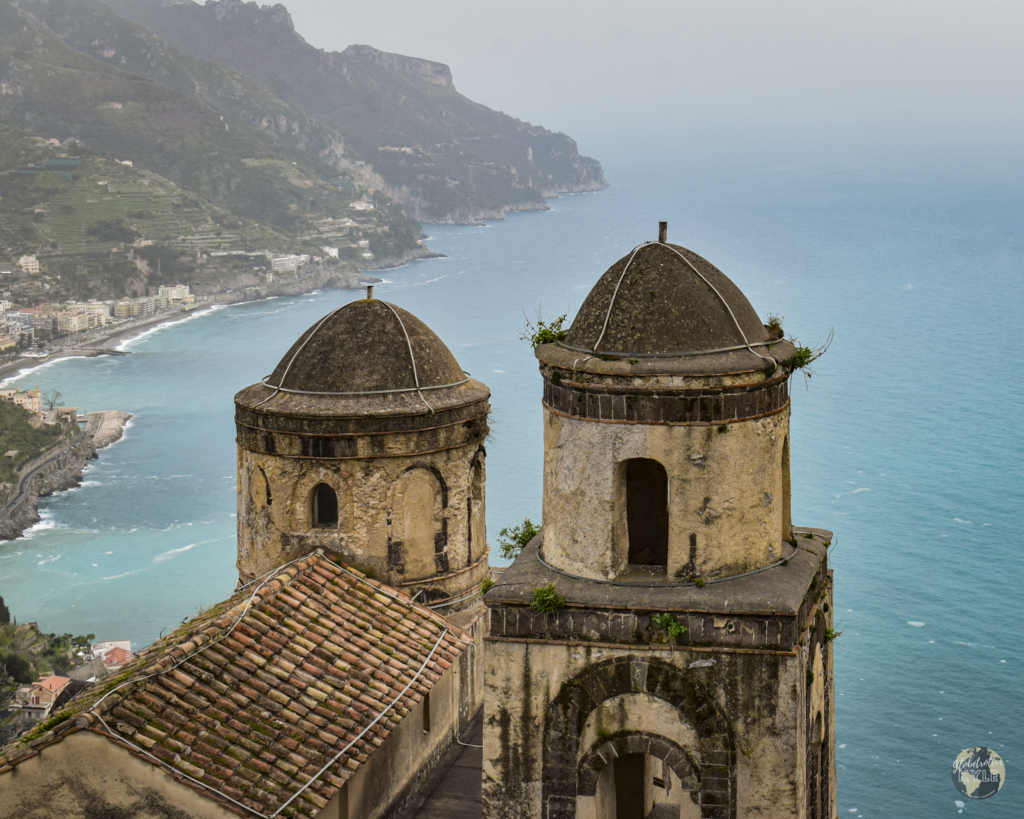
Ciara and I found a bench on the terrace and just sat there. No agenda, no next destination, just us and something beautiful. The sweeping view, the pleasant smells, the slight breeze moving through the flowers: everything felt exactly right. We were thousands of miles from our families in the U.S. and from all of our belongings back in Stuttgart, and yet sitting on that bench in the gardens of the Villa Rufolo, we felt completely at home.
That’s a rare feeling as not every destination produces it. The fact that a bench in a centuries-old terraced garden produced it, on the final afternoon of a long trip, truely says something real about this place.
The Villa Rufolo also puts the ceramics in context. Seeing the actual view (the pine trees, the cathedral, the sea) after having seen it rendered on dozens of plates across the coast is one of those satisfying full-circle moments that travel occasionally hands you. Now I understood why every shop owner had that painting on the wall. It made complete sense now.
Day 3 Quick Tips
- Arrive at the Cathedral of St. Andrew Apostle early on Easter Sunday. The church fills quickly and standing room goes fast
- The inland mountain route through Maiori to Valico di Chiunzi is best on a scooter; do not attempt it in a large vehicle
- Villa Rufolo charges a small admission fee. It’s worth every cent; budget 60 to 90 minutes to explore properly
- Don’t skip the Valico di Chiunzi overlook. Most itineraries for the Amalfi Coast ignore this route entirely, and it’s one of the best drives on the entire trip, second to the coastal cruise.
Getting Home : Leaving the Amalfi Coast
The Bus You Have to Take Again
With one final look at the sea, we packed our bags, said goodbye to Minori, and made our way to the bus stop. The return ride to Salerno was every bit as punishing as the arrival. Hairpin turns, narrow roads, and a driver with no particular sympathy for the stomachs of his passengers. Bring your motion sickness remedies, sit near the front, and stare at the horizon. Good luck.
If ferries are running between your coastal town and Salerno when you’re visiting, take the ferry. Your stomach will write you a thank-you note.
Practical Tips for Your Amalfi Coast Itinerary
Transportation
Rent a scooter. I’ve said it multiple times and I’ll say it once more because it’s the single most important logistical decision you’ll make on this trip. The Amalfi Coast’s roads are narrow, winding, and not designed for large vehicles. A small scooter navigates them effortlessly. Parking is never a problem. Spontaneous stops are always available. The experience of riding along this coastline on two wheels beats any alternative by a significant margin.
Where to Stay
Budget travelers and military members: Minori and Maiori offer the best value on the coast. Hotels and Airbnbs run noticeably cheaper than in Positano or Amalfi town, and with a scooter you’re within 10 to 20 minutes of every major attraction. This is the smart play. Don’t let other blogs convince you that you need to stay in Positano to experience the Amalfi Coast properly. You don’t.
That said, if budget is less of a concern, staying in Amalfi town or Positano puts you right in the center of the action and eliminates the need for daily commutes along the coastal road. For a romantic splurge stay (e.g., honeymoon, anniversary, proposal trip) Positano is worth every extra euro.
Food and Coffee
Eat where the locals eat. Ask your accommodation host for recommendations. Ours gave us the best travel tip of the entire trip (the lemon coffee trick) before we’d even unpacked. Local trattorias along the coast offer fresh seafood, handmade pasta, and regional specialties at prices that reward the traveler willing to step one street back from the main tourist drag.
The Amalfi Coast is famous for its seafood. Fresh anchovies, grilled fish, and pasta alle vongole (clams) are regional staples worth seeking out. The pasta here is also exceptional — made fresh daily in most local restaurants, in a way that reminds you why Italian pasta became a global obsession.
Limoncello is produced all along this coastline. Try it locally. Sip it cold, after dinner, the way it was designed to be consumed. It doesn’t taste the same anywhere else because the lemons here are genuinely different from anything you’ve had before.
The lemon coffee trick deserves its own paragraph again: take a fresh lemon, run your thumbnail across the skin over your cup of coffee, and let the citrus oils do their work. Your morning is instantly better. Do not skip this.
Visiting During Easter
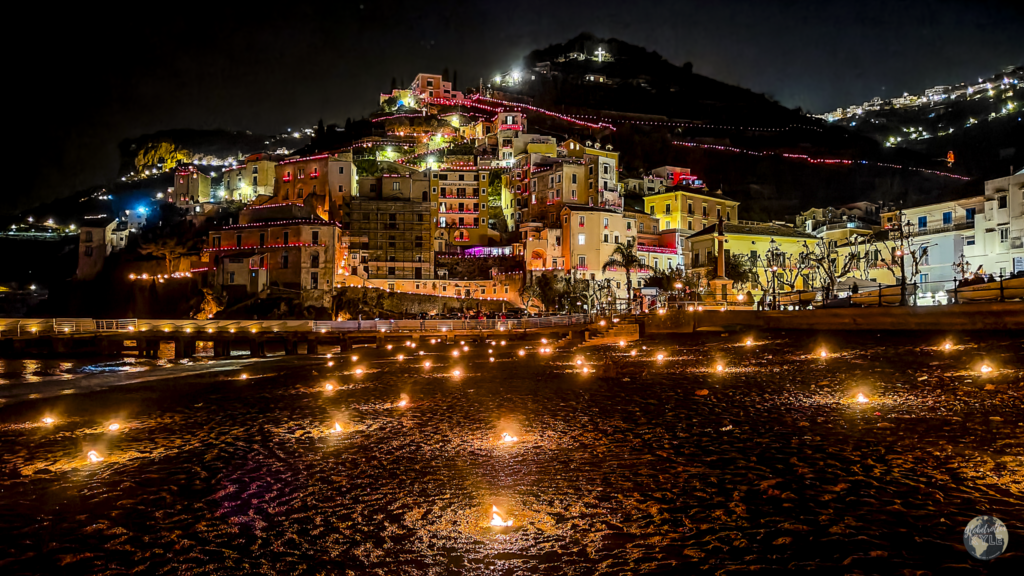
If your travel dates align with Easter Weekend, don’t change them. The Good Friday candlelight celebration along the Amalfi Coast is one of the most visually stunning things I’ve witnessed anywhere in Europe. Easter Sunday mass at the Cathedral of St. Andrew Apostle is a once-in-a-lifetime experience even if you don’t speak a word of Italian and aren’t Catholic. The Amalfi Coast at Easter is the Amalfi Coast at its most alive.
Holy Week (the week before Easter) is also worth considering. The candlelight processions happen across multiple evenings, and some travelers find the buildup through Holy Week as moving as Easter Sunday itself. If your schedule allows for a longer stay, arriving mid-week before Easter Sunday gives you the full experience.
Packing for the Amalfi Coast
Pack light, seriously. You’ll be on a scooter for most of the trip, carrying anything bulky is inconvenient, and the narrow streets of coastal towns weren’t designed with rolling luggage in mind. A carry-on sized bag and a daypack is all you need for three days.
Essentials include: sunscreen (the Mediterranean sun is no joke in April), comfortable walking shoes with grip (the stone streets and stairs are slippery), a light jacket or layer for evenings, and a camera or charged phone. The Amalfi Coast is one of the most photographable places in the world, so come prepared to document it.
Money and Budget
The Amalfi Coast is not cheap by Italian standards. Positano in particular skews expensive across accommodations, restaurants, and beach chair rentals. Planning your Amalfi Coast itinerary around a Minori or Maiori base dramatically lowers your daily spend while sacrificing nothing in terms of access to the coast’s best experiences.
Military travelers: the combination of Minori basing, scooter mobility, and eating where locals eat makes a fully satisfying 3-day Amalfi Coast itinerary achievable without blowing a budget. This is a trip that delivers extraordinary value relative to what it costs when you make smart choices about where to stay and how to get around.
Frequently Asked Questions About the Amalfi Coast
How many days do you need for an Amalfi Coast itinerary?
Three days is the minimum to experience the coast meaningfully, and that’s what this guide covers. Five to seven days would allow you to explore further, take day trips to Capri or Pompeii, and move at a slower pace. If you’re working with a long weekend from a German base, three days is very doable with the right logistics. The key is keeping your base town centrally located and having your own transportation.
What is the best time of year to visit the Amalfi Coast?
Late spring (April to June) and early fall (September to October) offer the best combination of weather, manageable crowds, and pricing. Summer is peak season, meaning the coast will beautiful, but crowded and expensive. Easter Weekend is a spectacular time to visit if you can handle the crowds, particularly for the candlelight celebrations on Good Friday and the Easter Sunday mass at the Cathedral of St. Andrew Apostle.
Is renting a scooter on the Amalfi Coast safe?
The roads are narrow and the turns are sharp. If you’re a comfortable scooter or motorcycle rider, the roads are very manageable at an appropriate pace. If you’ve never ridden before, the Amalfi Coast is not the place to learn. Start with a small engine size (under 125cc) and ride conservatively. Your USEUCOM license plus a U.S. license covers rentals for military travelers. Helmets are required by law, but rental shops provide them.
How do I get from Naples to the Amalfi Coast?
Train from Naples Centrale to Salerno (approximately 40 minutes), then ferry or bus from Salerno to your coastal town. The ferry is strongly preferred over the bus for comfort. The bus is cheaper but involves significant hairpin turns that cause motion sickness in many travelers, including people who don’t normally get car sick. If ferries aren’t running due to season or weather, sit at the front of the bus and bring motion sickness remedies.
What should I do if I only have one day on the Amalfi Coast?
One day is tight but workable. Prioritize: rent a scooter first thing in the morning, ride to Amalfi town for the views from the pier, continue to Ravello for the ceramics and courtyard garden, then return via the coastal road at sunset. If you only have one day, this Amalfi Coast itinerary gives you the essential experience without requiring overnight accommodations.
Is the Amalfi Coast worth visiting without a scooter or car?
Technically yes, but you’ll be bus-dependent, which limits your spontaneity significantly and subjects you to the motion-sickness risk on every transfer. The coast is also difficult to navigate on foot between towns because the terrain is steep and distances between attractions are not walkable. A scooter transforms the experience. If you’re genuinely unable to ride one, look into organized day tours from Salerno or Naples, which at least handle the driving for you.
Can I visit Pompeii or Capri from the Amalfi Coast?
Yes to both. Pompeii is accessible by ferry from Salerno or by car/scooter in under an hour. Capri ferries depart from multiple ports along the coast including Positano and Amalfi town. Neither is included in this 3-day Amalfi Coast itinerary because the days were full without them, but either makes an excellent addition if you’re extending your stay to four or five days.
Is the Amalfi Coast worth it?
Yes. Without reservation. Every difficult bus ride, every logistical challenge, every moment of sticker shock at a waterfront restaurant; all of it dissolves the moment you’re standing on a pier in Amalfi watching the sun drop behind a hillside covered in pastel houses. The Amalfi Coast earns its reputation. Your job is simply to show up.

Once again your blog has transported me halfway around the world! Excellent writing!
I think you should send me a lemon from your tree so I can try the coffee trick! 😊