
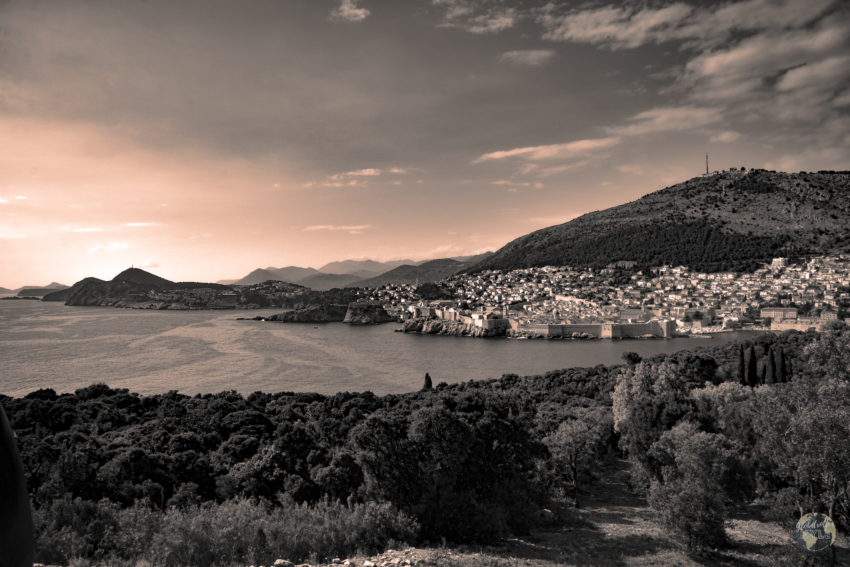
If you’ve been building a Dubrovnik must do list in your head for years, let me tell you something right now: whatever’s on that list, the city will exceed it. Ciara and I spent five days in Dubrovnik, exploring the Old Town, island-hopping to Lokrum, day-tripping to Mostar and Montenegro, and stumbling into some of the most memorable human moments either of us has experienced while traveling.
In short: this place does not disappoint.
This guide covers five full days including two day trips, based out of the Old Town itself. Whether you’re flying in from the States on a long-awaited European vacation or you’re a U.S. military member stationed in Europe looking for a weekend escape, this Dubrovnik guide is built for you. Everything I share comes from our actual experience: the good, the expensive, and the unexpectedly unique.
Let’s get into it!
Before You Go: Getting to Dubrovnik
Flying In
Dubrovnik Airport (DBV) sits about 20 kilometers south of the city center and receives direct and connecting flights from major European hubs. From the U.S., the most common routing is a transatlantic flight into Frankfurt, Amsterdam, or London. From there you’ll take a short connecting flight into Dubrovnik. Budget carriers like Ryanair and EasyJet serve Dubrovnik from cities across Europe, making it very accessible if you’re already in theater.
One tip worth passing on: if your layover in any of those hub cities runs longer than five hours, seriously consider storing your bags at the airport and going outside to explore. Frankfurt’s Old Town is a fifteen-minute S-Bahn ride from the terminal and is far better than any airport lounge. Amsterdam’s canal district is similarly close and stunning. London has more options than you can reasonably fill five hours with. A long layover is free time in disguise, and Europe rewards people who treat it that way.
Getting From the Airport to Dubrovnik Old Town
From Dubrovnik Airport, a taxi or pre-booked transfer will run you roughly 35 to 50 euros into the city center. Uber operates in Dubrovnik and tends to be cheaper than taxis, so use it. You’ll hear more about Uber throughout this guide because it will become your best friend getting out of the city.
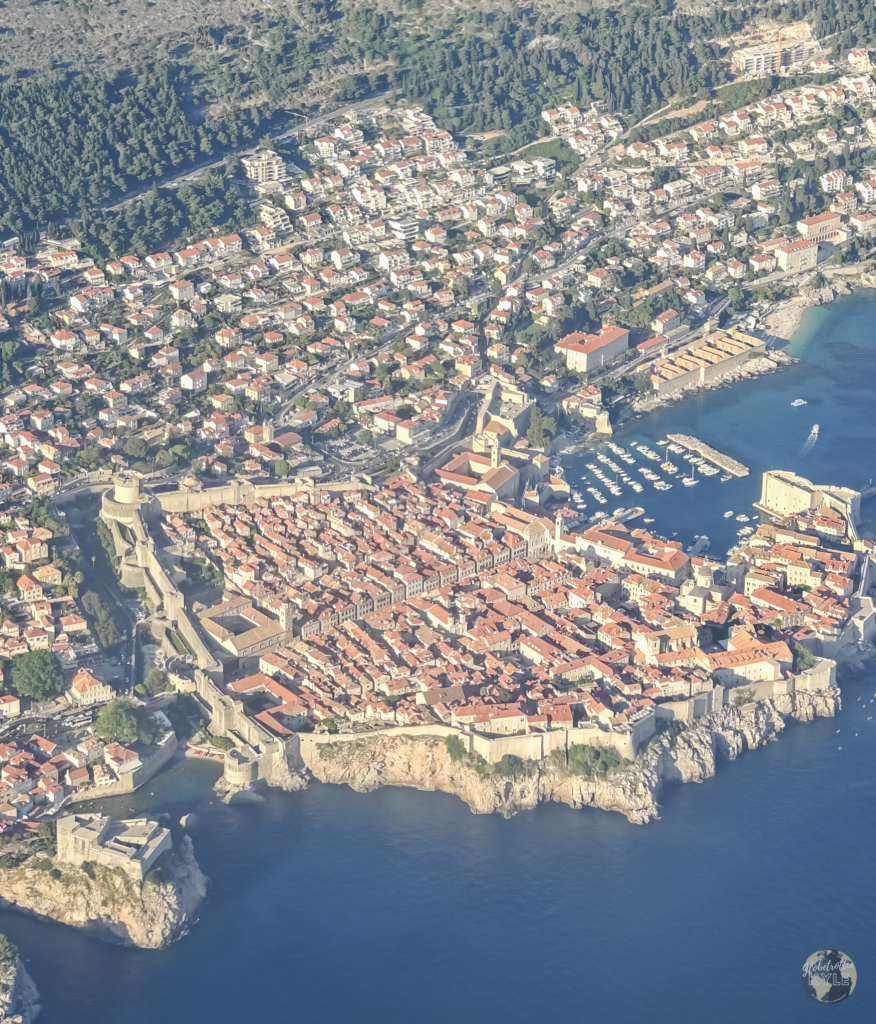
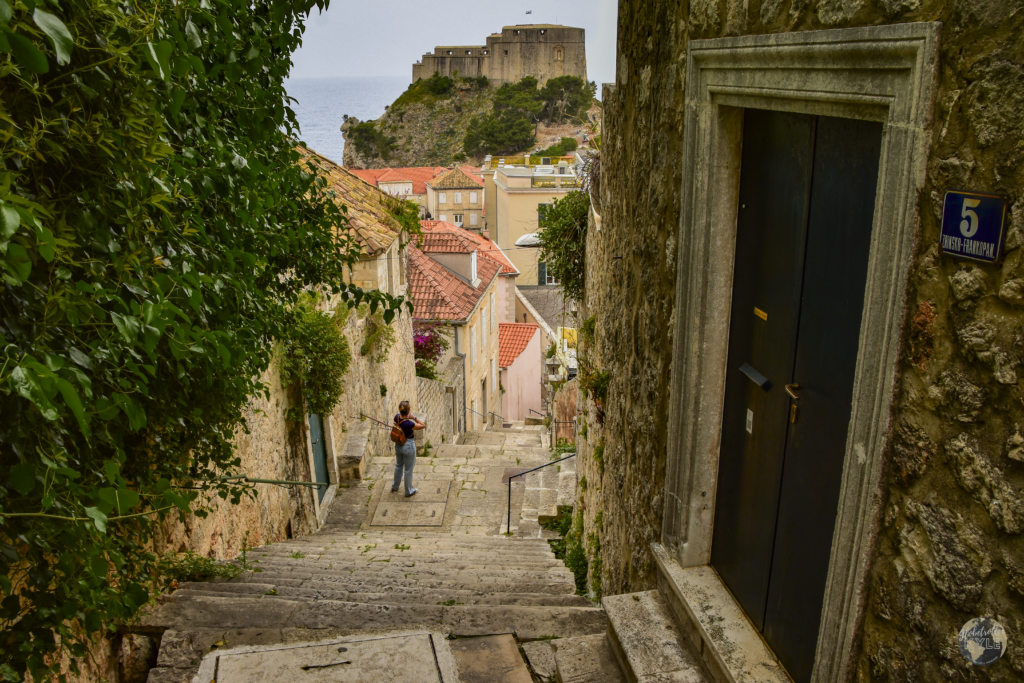
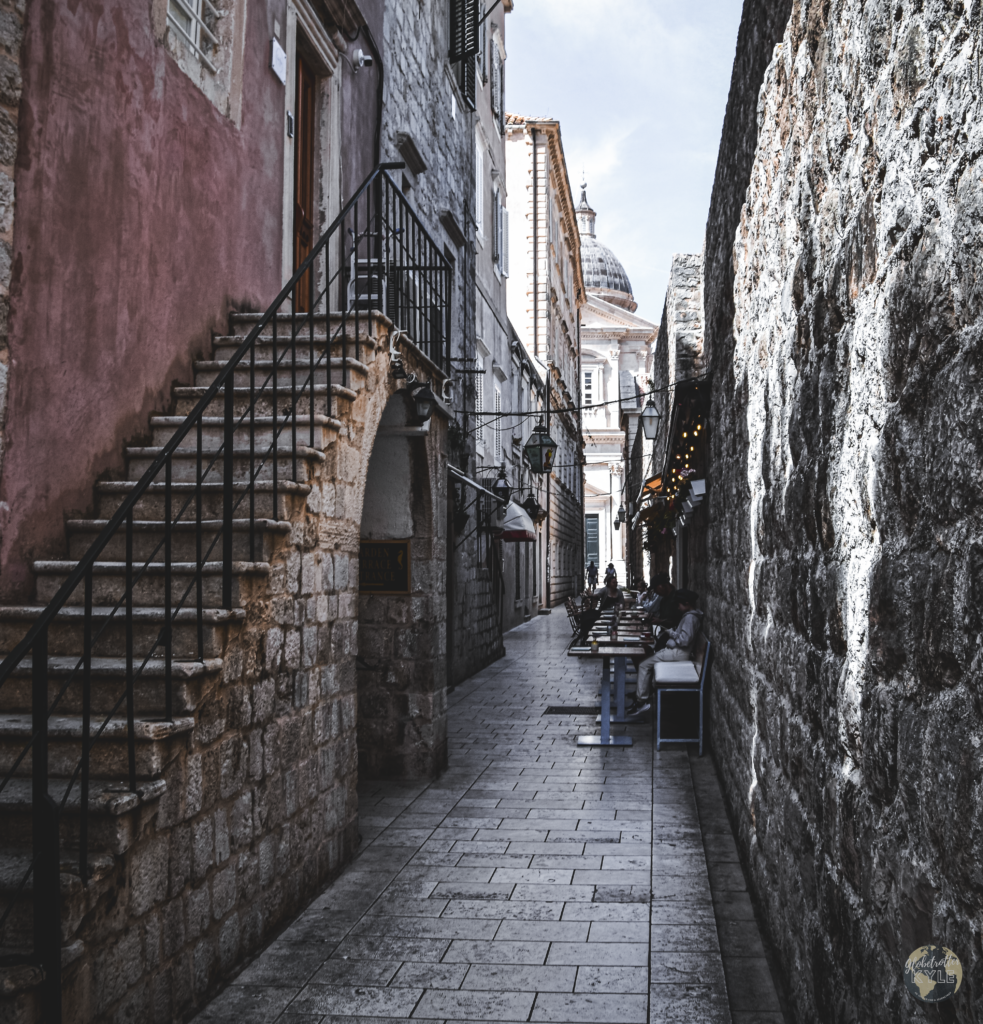
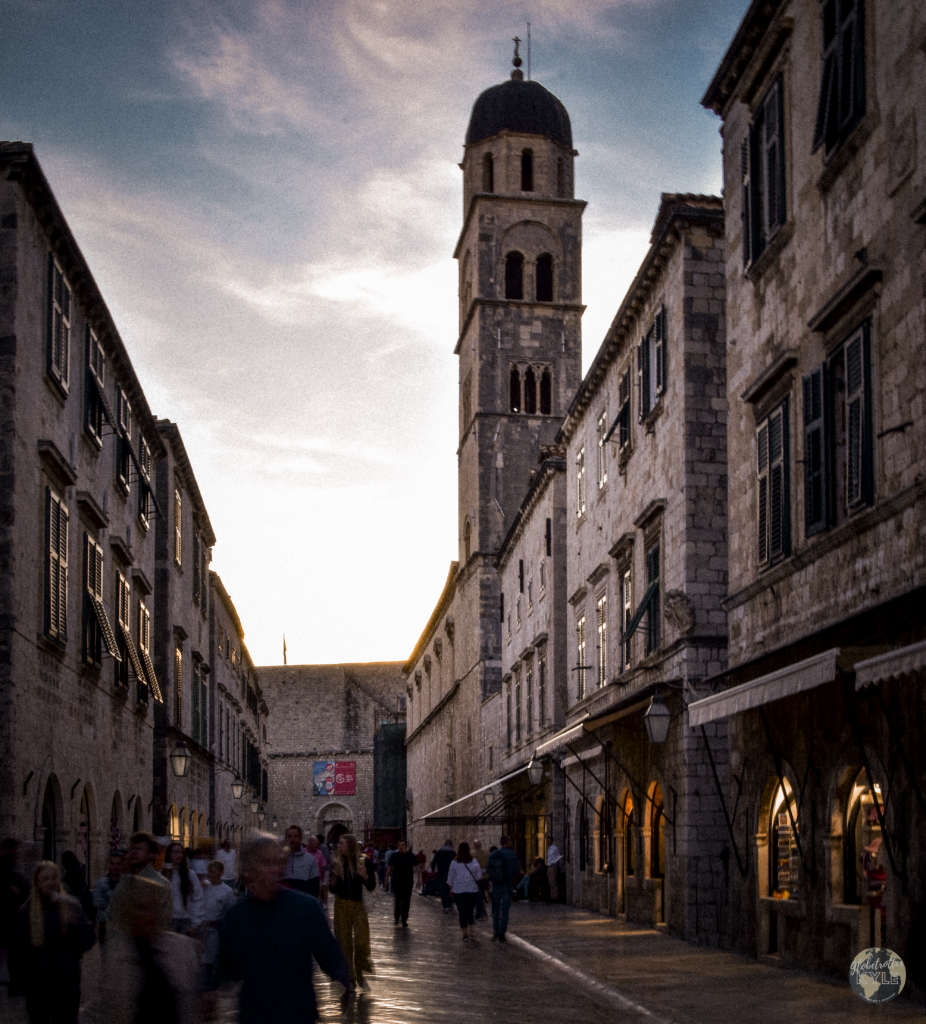
Once you arrive at the edge of the Old Town, be prepared for stairs. The best way I can describe Dubrovnik’s Old Town is that it’s essentially a ship’s deck with raised sides. The main street, the Stradun, runs along the bottom, and everything else climbs up the sides via staircases. Your accommodation is likely partway or all the way up one of them, so pack light!
Where to Stay
Staying inside the Old Town walls is the move. Yes, it costs more than staying outside the city and yes, the stairs are challenging. However, it is absolutely worth every extra euro and every extra step.
Waking up inside those walls means stepping out your door into one of the most beautiful medieval cities in the world. No commute, no bus, no taxi: just you, the limestone streets, and a city that was built to be wandered. Ciara and I stayed in an Airbnb halfway up the perimeter. We were close enough to the Stradun (main street) to be convenient and high enough to have views that made the stair climb worthwhile.
One critical logistics note worth putting in bold if you rent a car: parking around Dubrovnik’s Old Town is absurdly expensive. Seriously, use a combination of Uber + your feet. Uber is cheap and plentiful, and on the one day we had a rental car, we worked out a deal with Advantcar at Hotel Raxios to park overnight in their lot for free, saving around 100 euros. More on that in Day 3.
Ok, onto the “must do’s” of Dubrovnik!
Day 0: Frankfurt, Feelings, and the Flight to Croatia
Our journey to Dubrovnik started in San Francisco. The flight to Frankfurt ran eleven hours (one longer than scheduled thanks to a delay) but with a six-hour layover already built into our itinerary, we barely noticed.
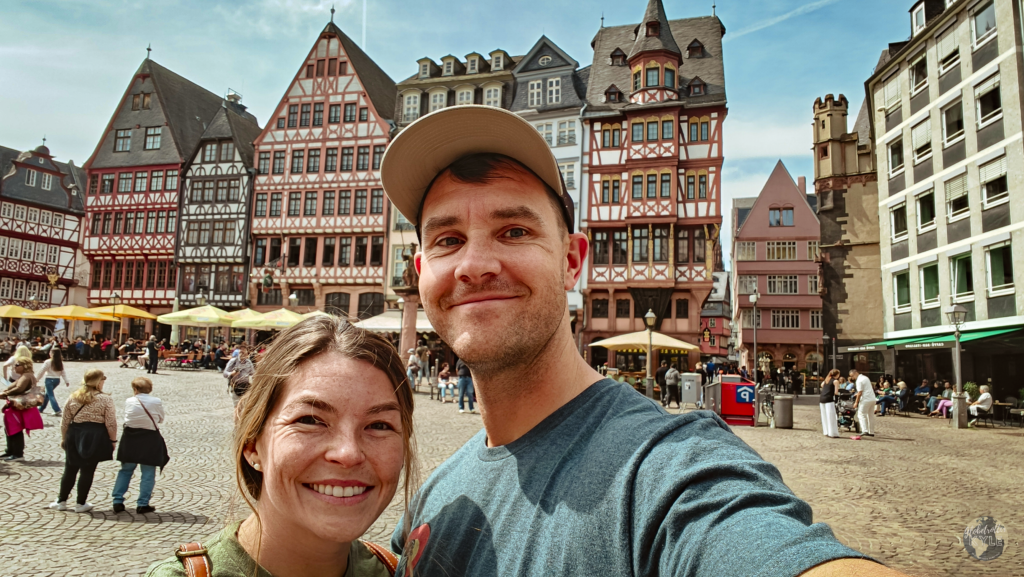
Once we landed in Frankfurt, we stored our bags at the airport and decided to head into the city center. This was one of the more unexpected moments of the entire trip, and it happened before we’d even reached Croatia.
Walking through Frankfurt’s Old Town, I was hit by something I hadn’t anticipated. I knew I’d be surrounded by half-timbered houses, the distant tune of a European police siren, and the smell of cigarettes. What I didn’t expect was how it landed on me with such warmth. Having been stationed in Germany years prior, arriving back in Frankfurt felt less like a layover and more like, well, coming home honestly. Ciara didn’t quite share my level of enthusiasm, but she humored me as I wandered the streets grinning like someone who’d just remembered something important.
A Fleeting Feeling, Replaced With Excitement
What it made me realize is that Germany had settled into me in a way that our current assignment never quite has. There’s a particular feeling of belonging that certain places give you, and Frankfurt handed it to me in the span of twenty minutes. You know that feeling when you reunite with your friend after years apart and it immediately feels like nothing changed? That’s what I’m trying to describe; that’s exactly what this was.
Anyway, we made it back to the airport in time for our connection. Though we were exhausted, the blue water below our plane started coming into view, and anticipation began to build. We landed, grabbed an Uber to the Buza Gate, and were immediately greeted with a sunset over the medieval city. I couldn’t believe how gorgeous this place was! We wanted so badly to explore the whole town, but because we were so tired, we refrained from climbing every inch and stuck to strolling the Stradun. We fell asleep dreaming of what tomorrow held in store for us.
Day 1: Stairs, Cathedrals, and the Promise of Nightly Gelato
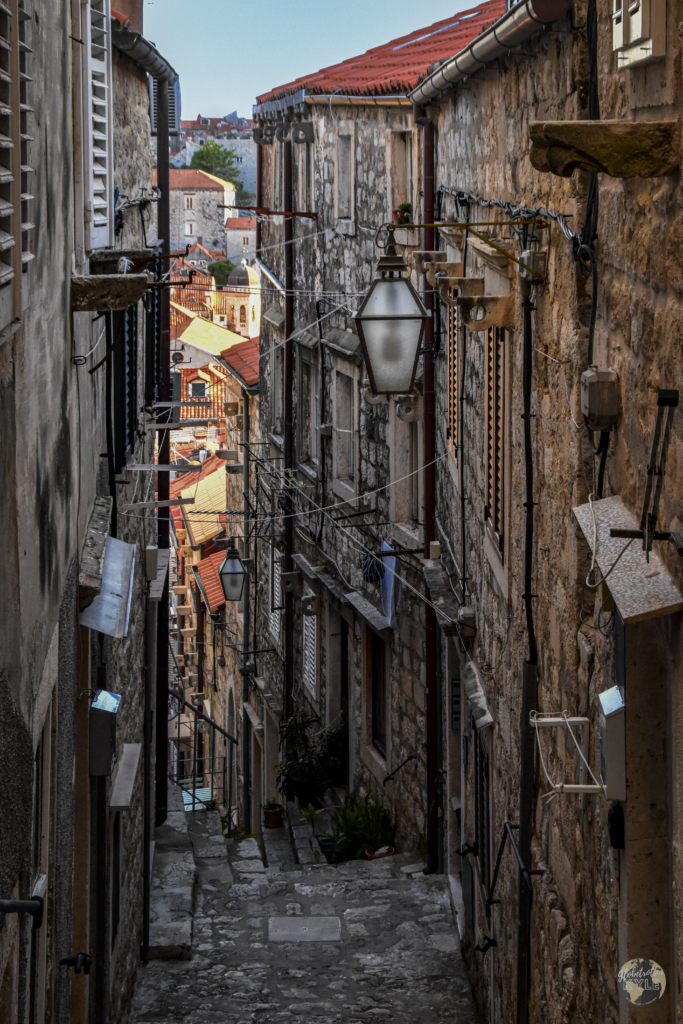
Quick Tips
- Buy the Dubrovnik Pass before attempting the walls walk. It pays for itself quickly
- Start the walls at Tvrđava Minčeta in the northwest corner for the best flow.
- Cogito Coffee Shop is your caffeine anchor for both morning starts and mid-walls breaks
- The Cathedral of the Assumption is free so block out 30 to 60 minutes and don’t rush it
- Wear proper shoes because the limestone streets and stairs can be slippery, especially after rain
Morning Stair Workouts and the European Breakfast Ritual
Sleep on the first night of a trip I’m excited about is always a negotiation I lose. Ciara was still asleep when I laced up my running shoes, stepped outside into the early morning quiet, and decided to make the most of what Dubrovnik’s Old Town has to offer in lieu of a running route: stairs, and plenty of them. With our Airbnb sitting halfway up the city wall’s upward slope, I spent about fifteen minutes doing repeats on the staircase outside our door, getting the blood moving before the city woke up around me. Besides, I had a PT test next week!
Upon returning, Ciara was up and about, so we assembled a simple yogurt parfait from groceries we’d picked up the night before and had an espresso. Fueled up and ready to go, we stepped out with no particular agenda other than to follow our curiosity wherever it led. There’s something about slipping back into the European rhythm of a light breakfast and strong coffee that feels like exhaling after holding your breath too long.
Church of St. Nicholas and the Port
Honestly, Day 1 didn’t begin cleanly, no pun intended. News arrived from California that our housesitter had spilled ink across our brand new white sofa, and both of us had to actively fight the urge to let that ruin the morning. We made a deliberate choice to provide some cleaning guidance, and then close the app, put the phone down, and remain on vacation. Sometimes the most important travel skill isn’t navigating a foreign transit system, but rather knowing when to look up.
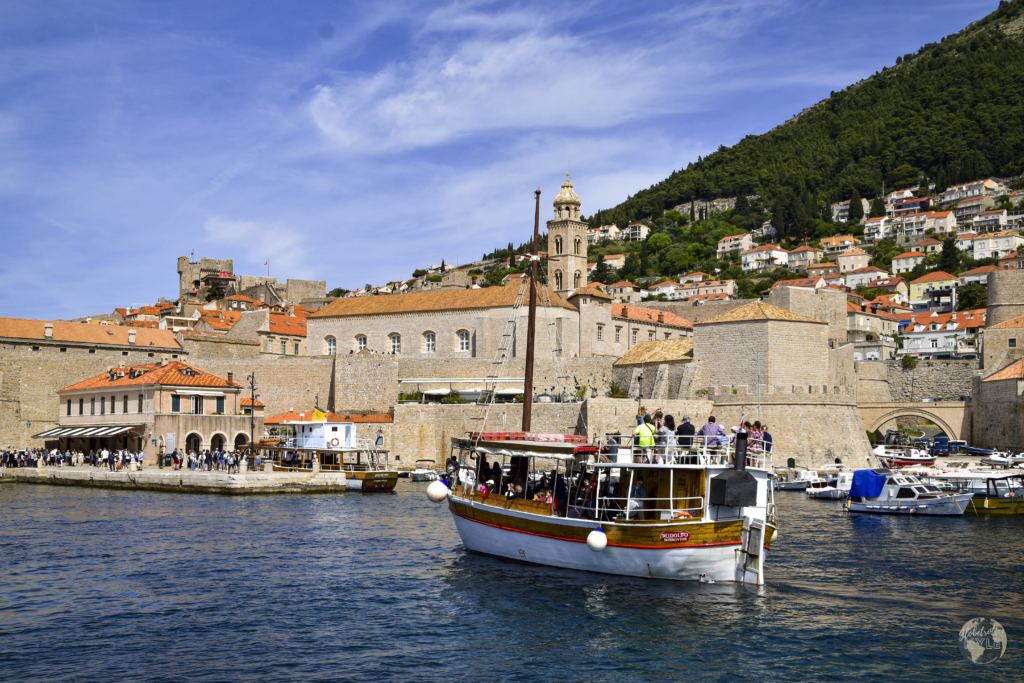
Luckily, our first stop required zero navigation. At the end of our street stood the Church of St. Nicholas, a modest Romanesque church that bookends one of the main streets inside the Old Town. It was quiet and unassuming in the way that only the truly old can afford to be. T
wo large bells hung above a small rose window, swaying gently in the breeze, completely at peace with the tourist traffic moving past them. We took a few photos and let the morning carry us forward toward the sound of activity we could hear building just beyond the walls.
St. Blaise: Dubrovnik’s Protector
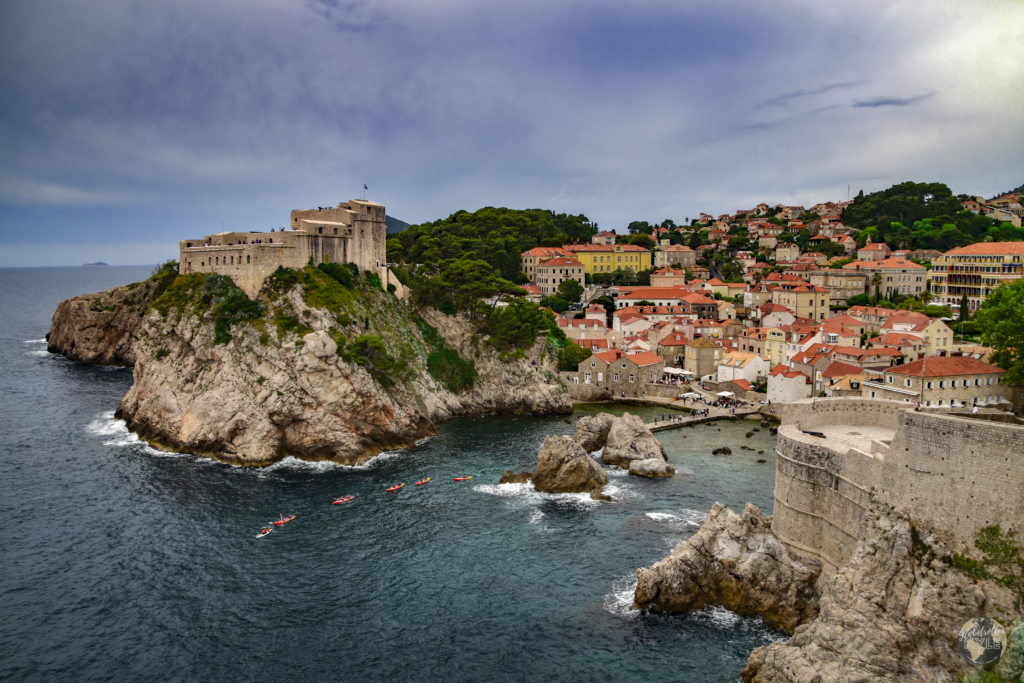
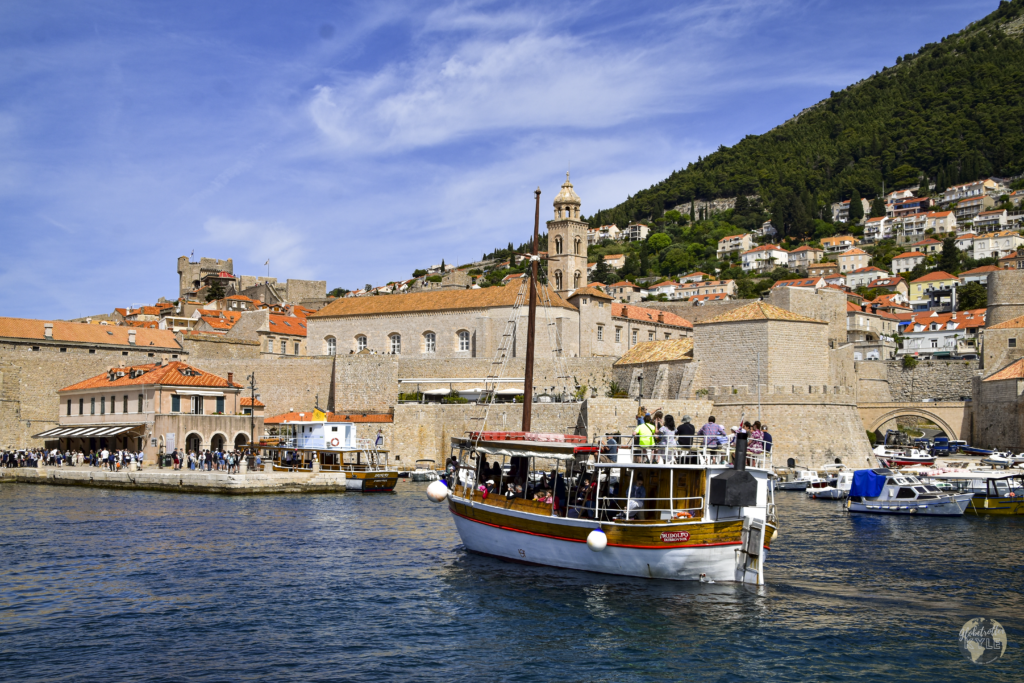
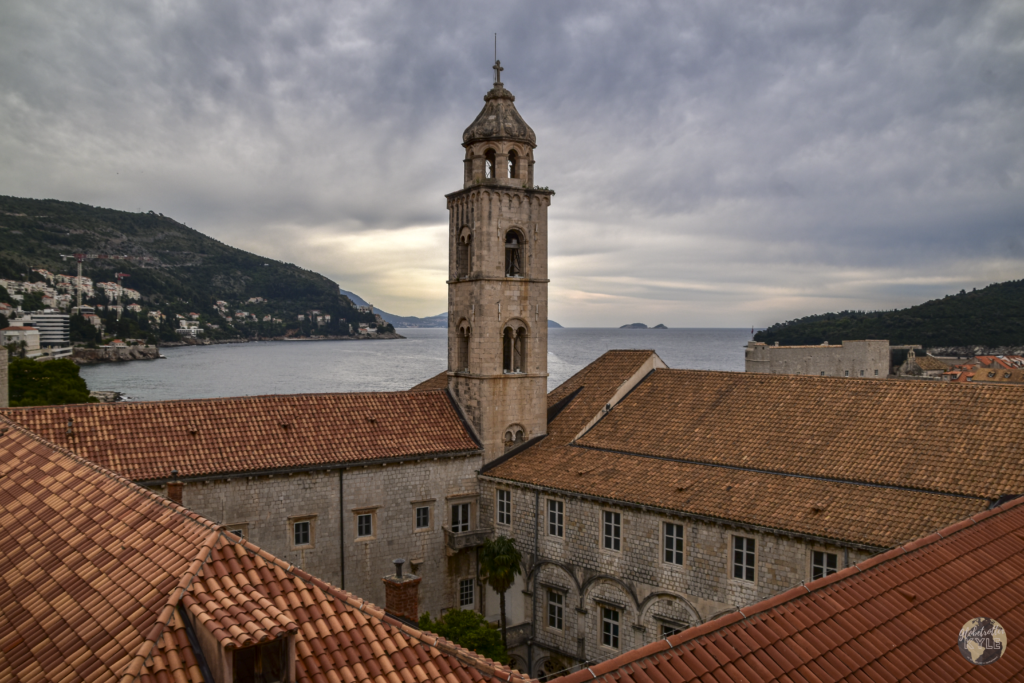
This led us to the port, which I would describe as controlled chaos. Dozens of tourists funneled to and from ferries while cruise ship passengers continued to pour in. Restaurants were already packed with travelers getting their first taste of the city. We dodged the crowds and kept moving until we reached the Porporela, a 19th-century pier that juts out into the water and offers a quieter view over the bay.
I crouched down and dipped my hand in, finding the water cool enough to confirm that swimming was likely not in the cards for this trip. Standing back up and scanning the fortress wall, I spotted a large stone figure carved into the side of the Tvrđava sv Ivan fortification. We later learned this was St. Blaise, the patron saint and protector of Dubrovnik. Just standing in front of something that old and that intentional reminded me why I love wandering around Europe. History doesn’t sit in museums here. It lives in the walls.
Cogito Coffee Shop: A Dubrovnik Must Do for Any Morning
Jet lag has a way of catching up with you the moment you stop moving, and it caught us somewhere between the port and the city walls. We ducked back inside the Old Town and followed our instincts toward coffee, landing at Cogito Coffee Shop, which I’d put on any Dubrovnik must do list without hesitation. The coffee is excellent, the outdoor bench seating puts you front and center for the best people-watching in the city, and the location couldn’t be more strategic: it sits right at the base of one of the few entry points to the city walls walk. Planning to do the walls later in the day? This is your pre-game stop. Already mid-walls and fading? This could be your rescue.
Cathedral of the Assumption of the Virgin Mary
No matter which direction we walked, a commanding church kept appearing above the rooftops. If you know me at all, you know that a gothic church within eyeline is a non-negotiable detour. Ciara knows this too, which explains why she was already walking toward it before I’d finished forming the thought.
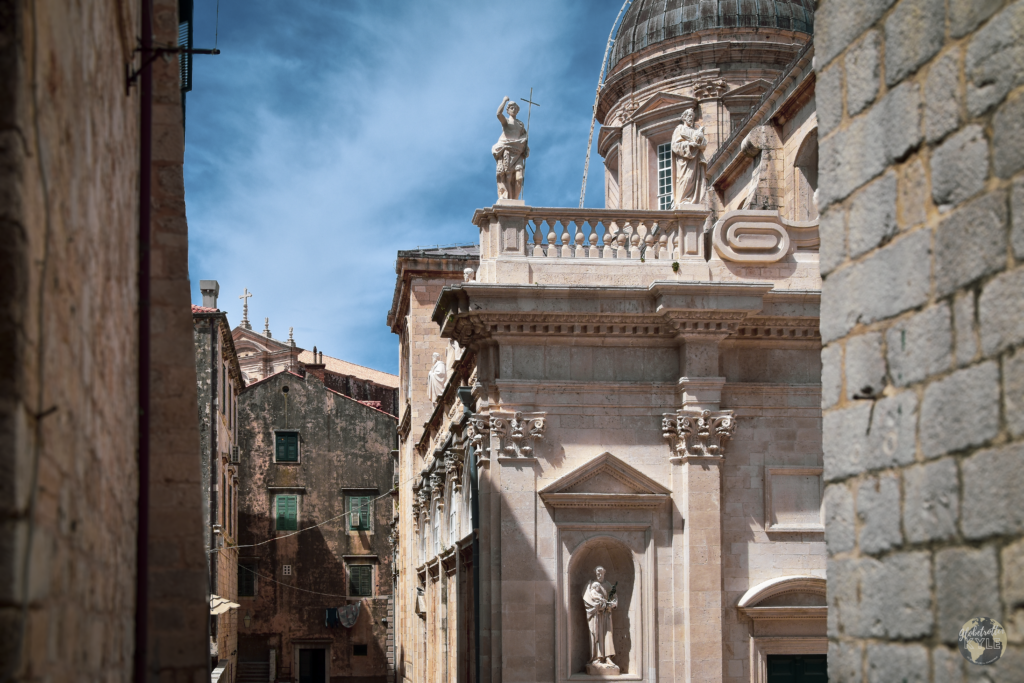
The Cathedral of the Assumption of the Virgin Mary is one of the true Dubrovnik must do experiences. It’s also one of the only free things in this city, so take full advantage. Originally built in the 1600s, the site has hosted multiple churches across its history, with archaeologists having uncovered evidence of a church dating back to the 12th century beneath the current structure. Walking inside knowing the ground beneath your feet has been a place of worship for nearly a thousand years puts things in perspective rather quickly.
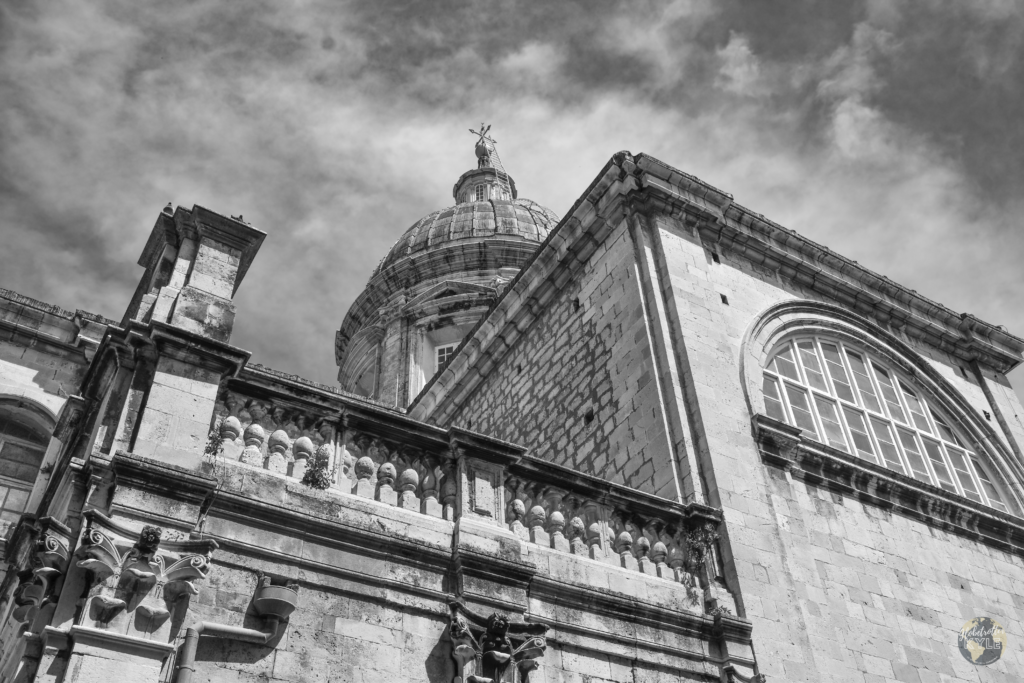
Inside, frescoes sweep across the ceiling in rich depictions of Christian scenes, and the centerpiece is the fresco of the Assumption of the Virgin Mary herself: Mary rising through dramatic clouds, surrounded by angels, saints, and cherubs, rendered in extraordinary detail at a scale that makes you feel very small. I sat in a pew and stared at it for a long while, genuinely blown away by the craftmanship of it all; something rarely found in the U.S. anymore. I hate to say it but things like this simply don’t exist in the United States. We’re just too young a country to have built anything remotely this grand. The ancientness of Dubrovnik is one of its greatest gifts to any visitor, and this cathedral delivers it in spades.
Lunch at the Jesuit Stairs
We emerged from the cathedral hungry and found a small spot to eat right in front of the Church of St. Ignatius, at the top of the Jesuit Stairs. The Jesuit Stairs are Dubrovnik’s answer to Rome’s Spanish Steps: a sweeping Baroque staircase that descends from the Church of St. Ignatius into the square below. The church itself is considered one of the finest Baroque complexes in all of Dalmatia, so definitiely put it on your Dubrovnik must do list.
Eating lunch at the top of these stairs with the city spread out below us and the church rising behind us felt like sitting inside a painting. We later learned this was a frequent filming location for Game of Thrones, though neither Ciara nor I have watched a single episode. The setting makes its own argument.
Walking the City Walls: The Top Dubrovnik Must Do
About halfway through the afternoon, I suggested walking the city walls and Ciara was immediately on board. Walking Dubrovnik’s medieval city walls is perhaps the single greatest Dubrovnik must do on any visitor’s list, and having done it, I understand completely why.
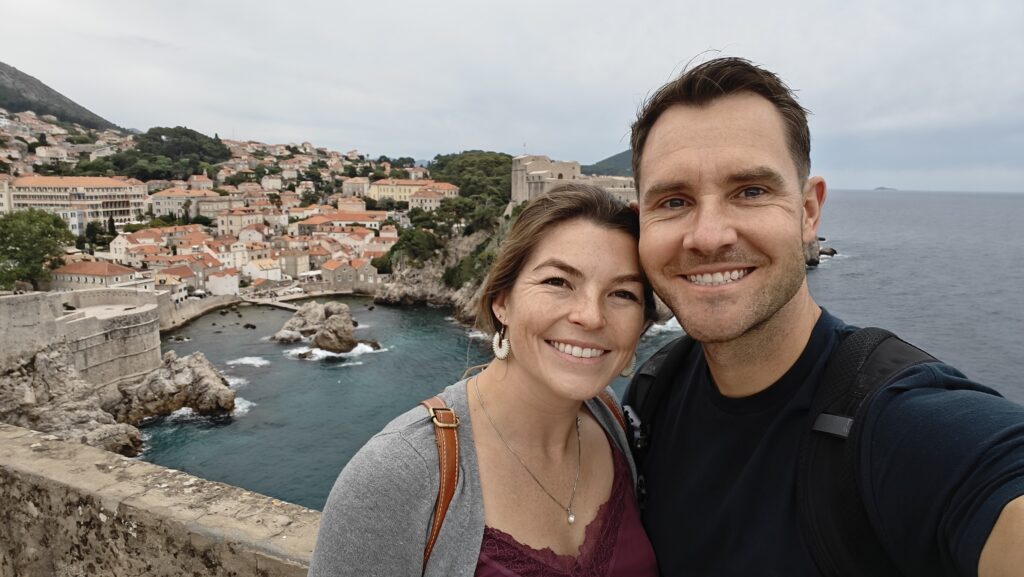
The best way to access the walls is with the Dubrovnik Pass, an all-inclusive visitor card that covers the walls walk, several museums, and a handful of galleries. It’s worth the price without question. We dropped a few things at the Airbnb, downloaded our passes on our phones, and made our way to the starting point at Tvrđava Minčeta in the northwest corner of the Old Town.
What to Expect on the Walls Walk
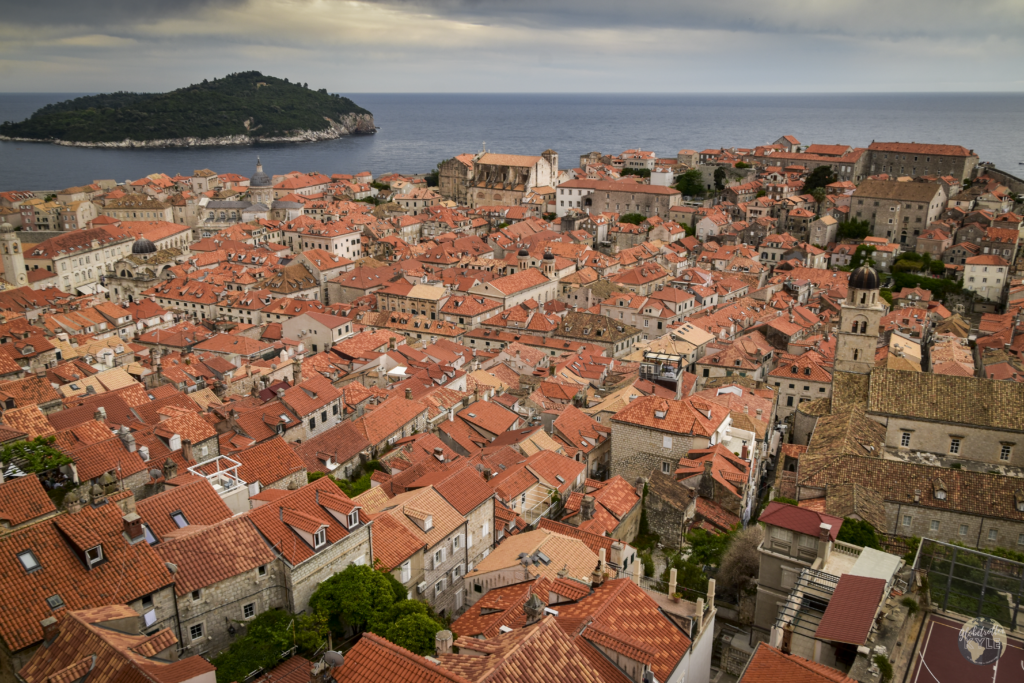
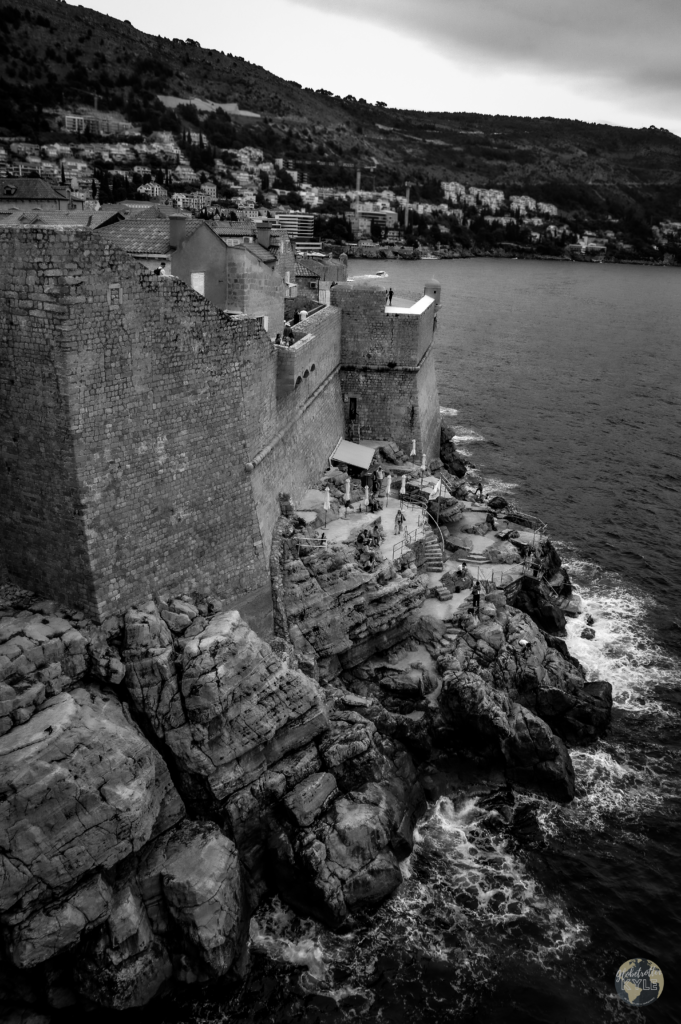
The walls stretch roughly two kilometers around the entire perimeter of the Old Town. From the top, every direction delivers a different and equally stunning view. On one side, the terracotta rooftops of the Old Town spread out in a dense, orderly sea of orange and red. On the other, the Adriatic opens up in every shade of blue and green you’ve ever seen, plus a few you haven’t.
From the height of the walls, the rooftops told Dubrovnik’s recent history without a single word. Looking at the roofs, I noticed some tiles were dark brown, while others were bright orange (new terracotta). Each variation was representative of whether a building was struck during the shelling of Dubrovnik in the early 1990s or not. Honestly it’s a beautiful and heartbreaking patchwork that no history book conveys as powerfully as standing up there and seeing it yourself.
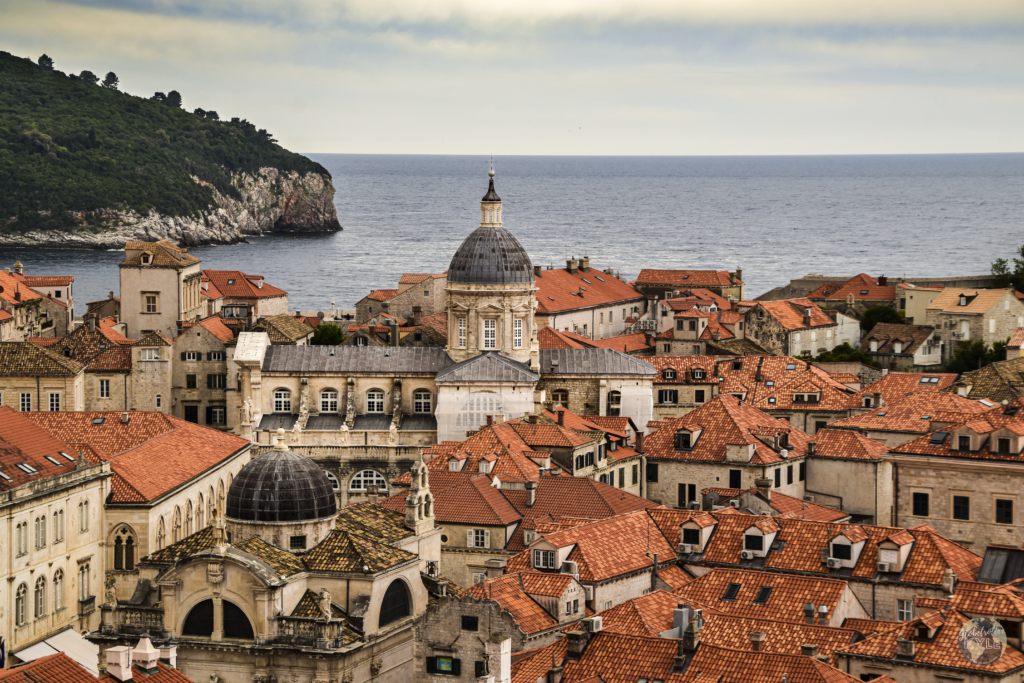
We spent about three hours on the walls and came down twice: once for a restroom break and a gelato, and once to grab a coffee from Cogito. Both were worth the brief interruption, and by the time we descended at the end, my camera roll was full and our feet were genuinely cooked.
The Gelato Promise
We finished the evening with a wander outside the city walls before deciding the local area didn’t offer much after dark. On our way back up to the Airbnb we passed a gelato shop at the bottom of our staircase. One look inside and I knew immediately this was going to become a nightly ritual. I walked in, introduced myself to the young woman behind the counter, and told her with complete sincerity that I would be back every single night for the rest of the week. She smiled and said she would love nothing more. I kept that promise, and by the end of the trip, that small exchange had grown into one of the warmest recurring moments of the entire vacation. More on that later.
Day 2: The Mostar Day Trip (Bosnia, Bridges, and Craft Beer)
Day 2 Quick Tips
- Rent a car for the Mostar day trip. Independence is worth the cost, and it might even be cheaper
- Take highway 516 via Pločice for the alternate border crossing to save hours at the border crossing
- Bring cash in Bosnian Marks. Cards are rarely accepted outside major establishments
- Visit Arboretum Trsteno on the way and allow for about an hour
- The Neretva River color has to be seen in person. No photo captures it accurately
- Ćevapi is the must-order dish in Mostar, so don’t leave without trying it
How Mostar Ended Up on the Itinerary
Five days before this trip began, a good friend of mine mentioned Mostar in Bosnia and Herzegovina. He said there was remarkable architecture, an ancient bridge with a dramatic wartime history, and that we’d regret skipping it. We’d never heard of Mostar before that conversation, and by the end of our day there it had become one of the most memorable stops of the entire trip.
Rather than joining one of the pre-arranged tours leaving from Dubrovnik, Ciara booked a rental car so we could explore at our own pace. Having your own wheels means stopping when something catches your eye, lingering longer than a tour guide would allow, and moving on when you feel like it. That’s the right approach to any Dubrovnik must do day trip: go independently whenever you can.
Trsteno Arboretum: The Stop You Didn’t Plan For
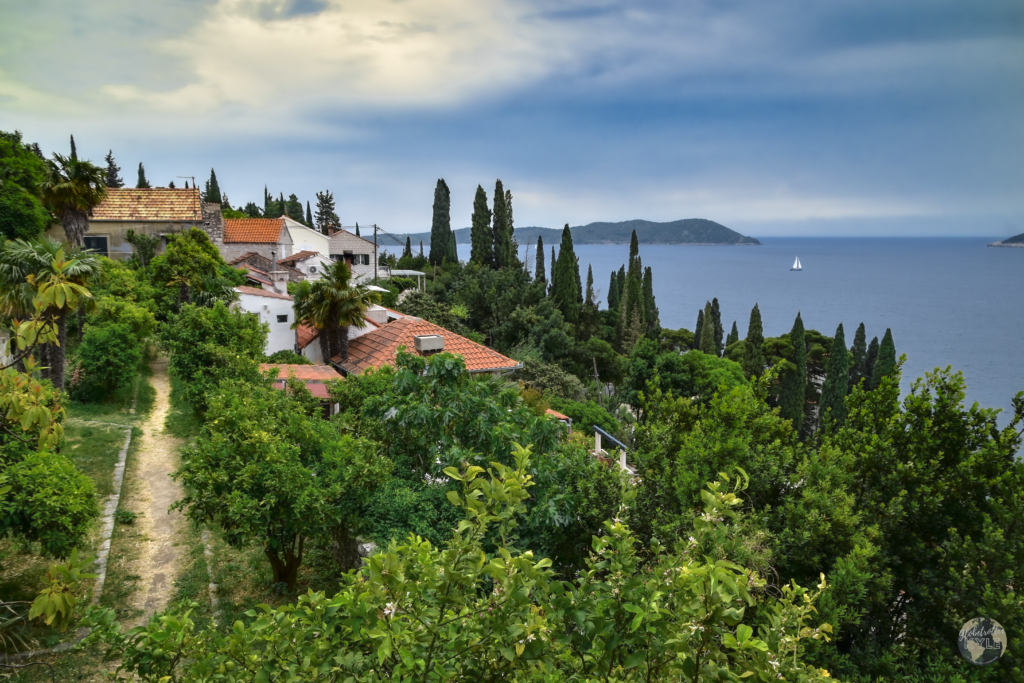
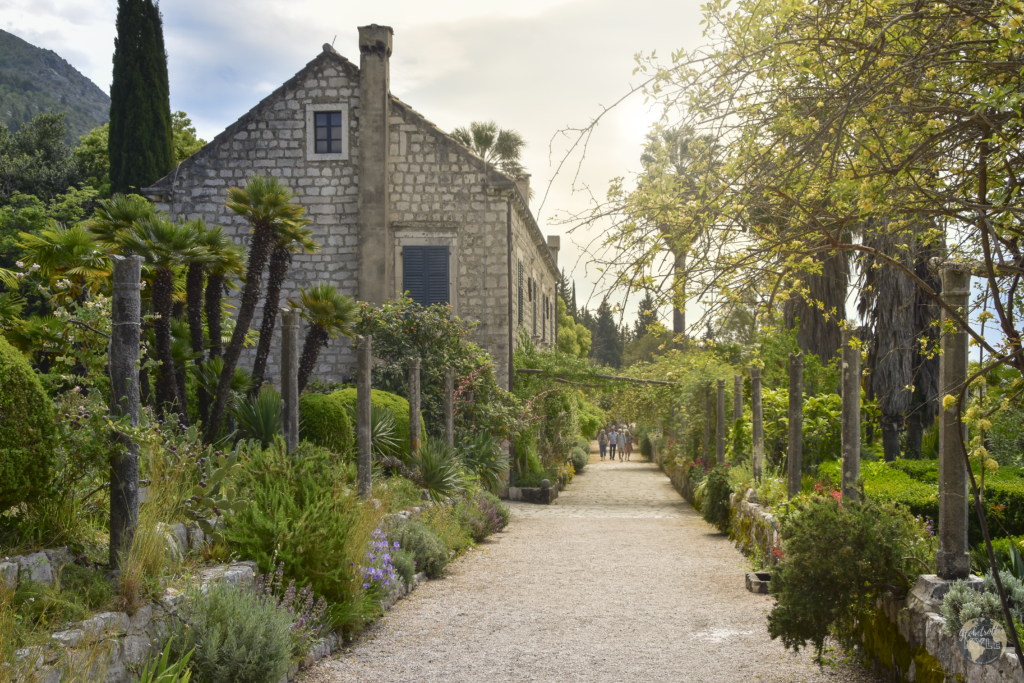
On the drive north toward the Bosnian border, I spotted Trsteno Arboretum highlighted in a travel guide we’d picked up. Ciara agreed immediately, and we pulled off the highway. If you’re making the Mostar day trip from Dubrovnik, this is a genuine must do Dubrovnik detour to one of the oldest, most beautiful botanical gardens in this part of Europe.
Walking through it, the air was layered with citrus trees, jasmine, and salt blowing in off the sea below. A small storm rolled in, and rain fell softly as we stood at the Poseidon fountain watching ripples spread across the water’s surface.
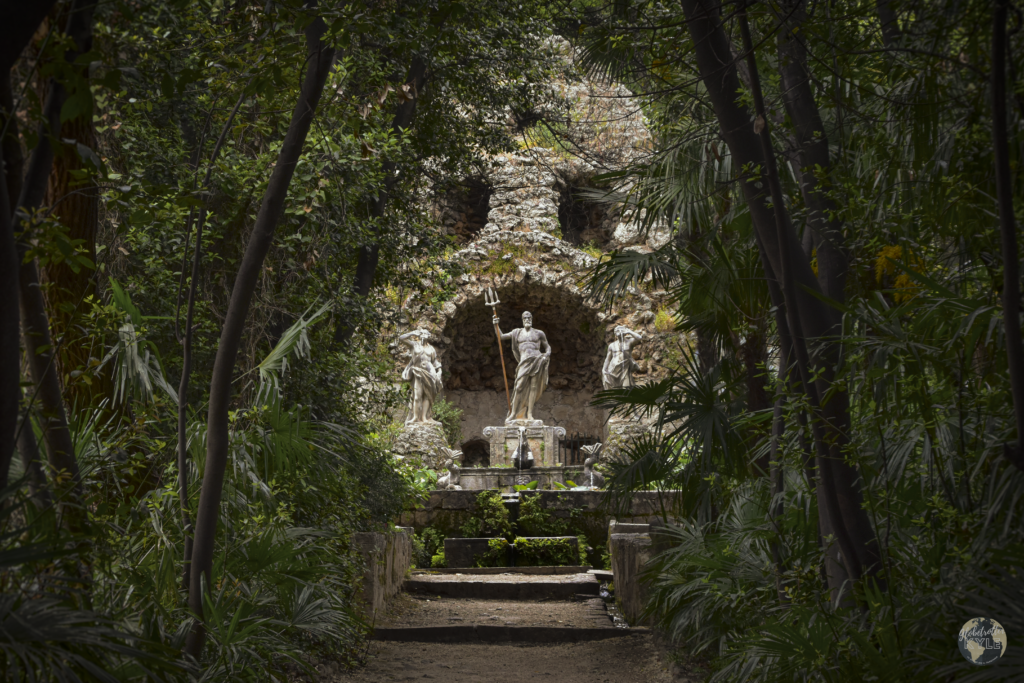
I remember spotting a sour orange hanging from one of the trees and, in a moment of pure optimism, jumped up and snagged it. One bite confirmed that “sour orange” is not a name chosen for marketing purposes: it was aggressively, almost offensively sour, and Ciara found the whole thing absolutely hilarious.
When I offered her a slice, she was very quick to say no; smart girl! Budget an hour for Arboretum Trsteno and you’ll leave glad that you stopped.
Mostar’s Old Town: More Surprises Than Expected
Mostar’s Old Town greeted us with something neither Ciara nor I had anticipated: a rich and visible Islamic heritage. Street signs were in Cyrillic, flags with unfamiliar markings hung from buildings along the road, and multiple mosques dotted the skyline. Minarets rise above the rooftops in a way that feels genuinely surprising for two Americans arriving from a Croatian coastal city. The cultural shift was striking and fascinating in equal measure, and it made the whole city feel more layered and interesting than we’d expected.
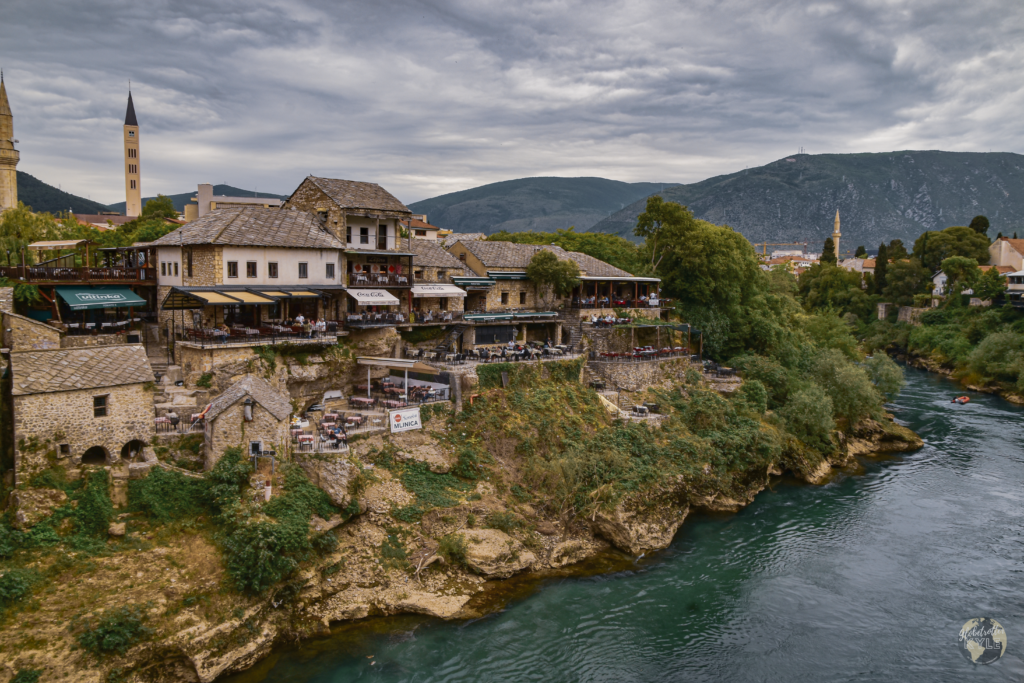
The old town itself is dense with craft shops, restaurants, and a lived-in energy that makes a place feel authentic rather than curated for tourists. Vendors sell copper goods, handwoven textiles, and local food along the cobblestone lanes, and the whole area rewards wandering slowly. Resist the urge to march straight to the bridge; explore the surroundings first.
Stari Most: The Bridge That Was Rebuilt
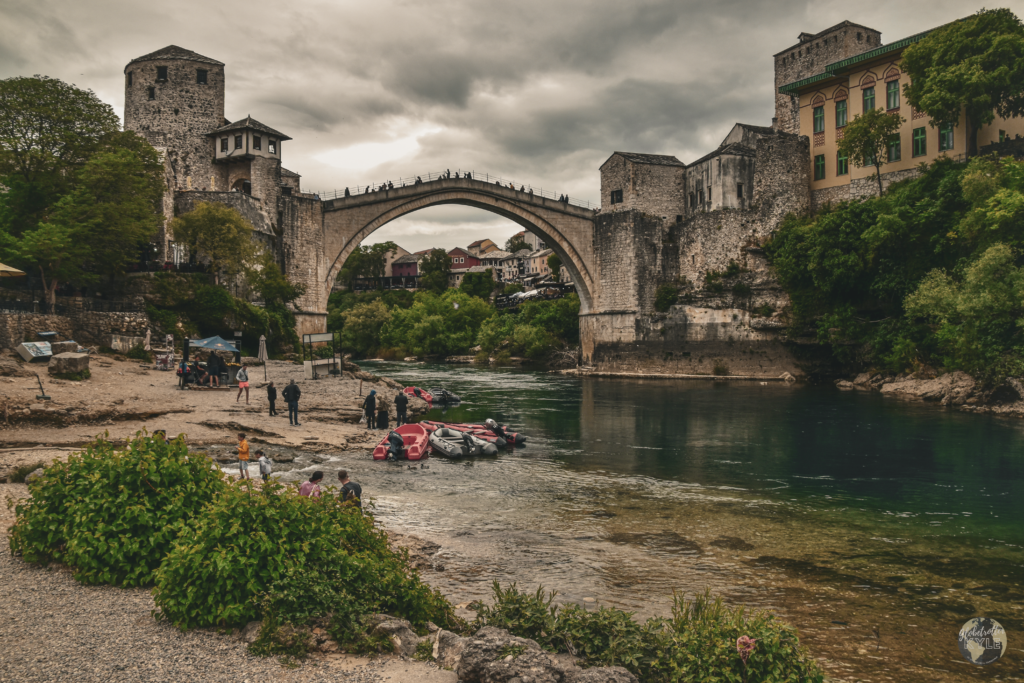
The Stari Most, or Old Bridge, is the reason most people come to Mostar, and it earns every visitor it gets. The original bridge was built in 1557 by the Ottoman architect Mimar Hayruddin and stood for over 400 years until Croat forces destroyed it in 1993 as a strategic military target during the Bosnian War. Its destruction was later declared a war crime.
What stands today is a faithful reconstruction completed in 2004, built using the same stone and traditional techniques as the original. Standing on it, you can feel the history in the weight of the stone beneath your feet. The surface is polished smooth from centuries of foot traffic, which makes it legitimately slippery, so watch your step!
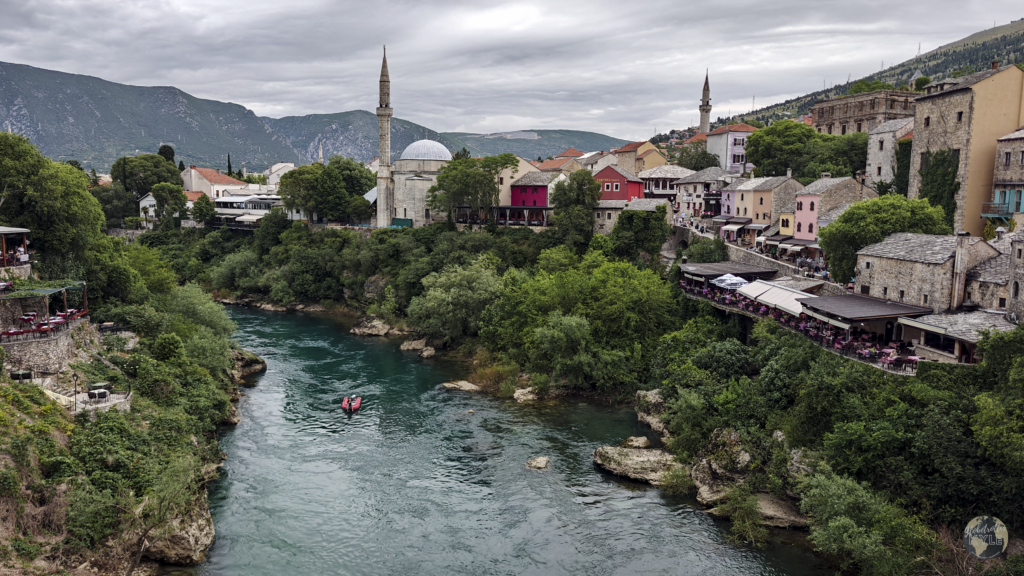
What you cannot fully prepare for is the water below. The Neretva River running under the bridge is one of the most extraordinary shades of emerald green-blue I’ve ever seen. Sort of like the waters of Greece! It’s so vivid and so clear that photographs of it look edited. This is a sight that has to be witnessed in person because no screen does it justice.
The Crooked Bridge and the Craft Beer Discovery
Past the main bridge and through some quieter backstreets, we stumbled onto the Crooked Bridge, a smaller and older crossing over a tributary of the Neretva. The contrast with the busy Stari Most was immediate and welcome. We were nearly alone here, with restaurants and shops hanging out over the water on both sides, their wooden terraces extending right over the river below.
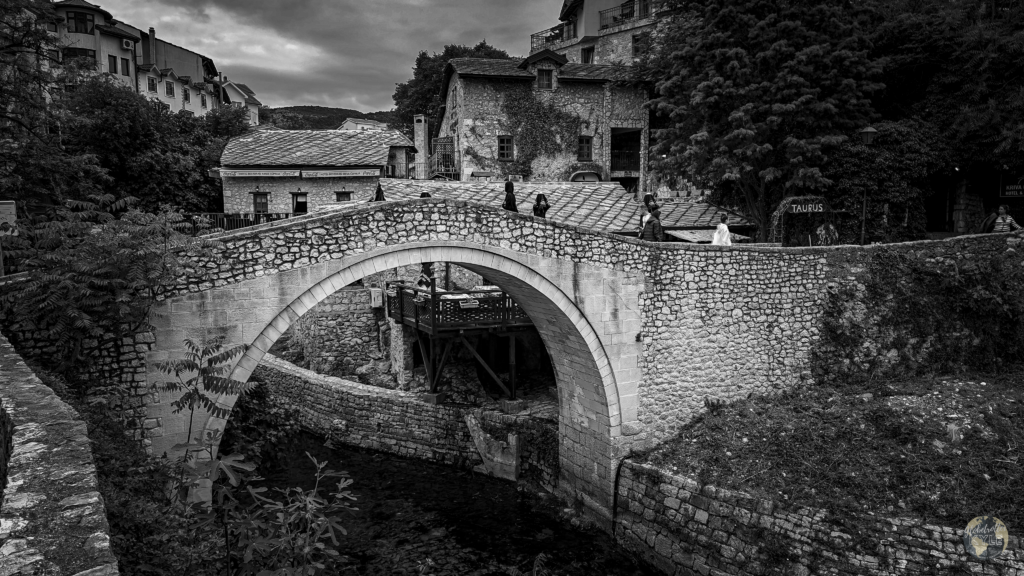
The best discovery of the day came shortly after when we found the only craft beer bar in Mostar, tucked under a covered wooden patio with exposed rafters and the river running directly below the floorboards. Ciara ordered a sour and I had an IPA while Bosnian jazz played from somewhere in the back and the river moved quietly underneath us. For a few minutes, neither of us felt like tourists. We felt like we’d found something real: a local spot on a quiet afternoon, drinking good beer in a city we’d never heard of a week earlier. We both left slightly buzzed and fully content.
Shopping, Dinner, and the Boxed Meal Incident
The evening took an unexpected turn into a shopping mall where the USD-to-Bosnian Mark conversion rate goes very, very far. New jackets, new clothes; all at prices that made us feel slightly guilty. The mall still allowed indoor smoking, which gave the whole experience a Cold War-era authenticity I found more charming than off-putting.
Dinner was at a random local restaurant where both of us ordered large meals for a combined total of about twenty dollars. It was the cheapest meal I’ve ever had dining out! Ciara had ćevapi, the national dish of Bosnia, consisting of minced pork and beef rolled into small sausages and served in a soft pita pocket. It’s every bit as good as its reputation suggests, and I wish I would’ve gotten what she got.
My three-meat combo plate was enormous, and when I couldn’t finish it and asked the waiter to box it up, Ciara watched the chef make a humerous mistake. He set the food on the counter, and when he went to grab a box, another chef threw it in the trash! The waiter returned, told us to please wait a few minutes, and then disappeared back into the kitchen. He returned shortly after with an entirely new dish, free of charg! A perfect ending to an imperfect moment. Mostar, you delivered!
Day 3: Montenegro, the Wedding Venue, and a Border Crossing Hack
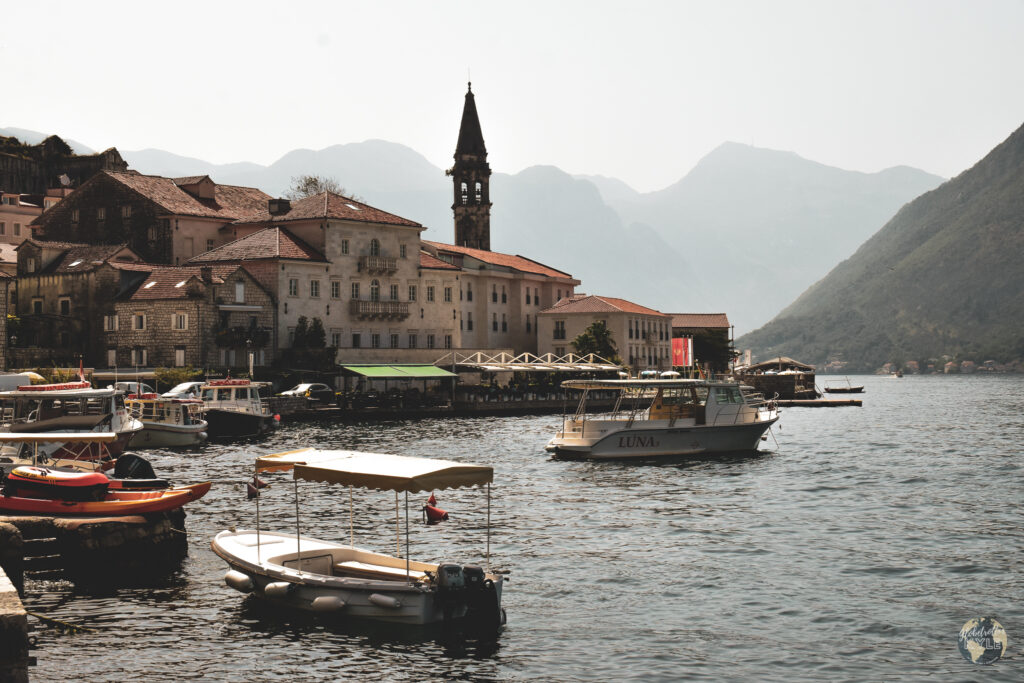
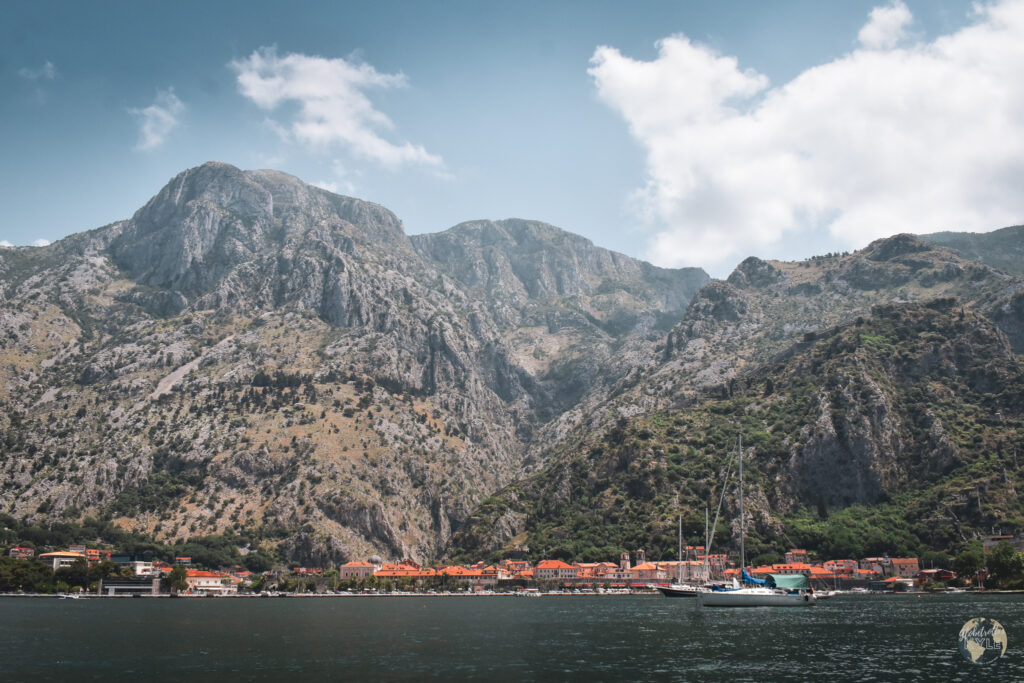
Day 3 took Ciara and me across another border. This time we ventured into Montenegro, specifically the stunning Bay of Kotor and the town of Perast. The reason? In approximately 146 days from the time of writing (and yes I’m counting) Ciara and I are getting married at a hotel in Perast. The purpose of this visit was to do a food tasting visit.
I’ve already written a full blog post covering Montenegro, Perast, and Kotor in detail, so rather than retread that ground here, everything you need is waiting for you at this link: Discover Montenegro’s Magic: Hidden Peaks, Blue Waters, and Timeless Charm.
The Parking Hack That Saved Us 50 Euros
Because we had the rental car on Day 3, parking became a logistical puzzle worth solving creatively. We worked out a deal with Advantcar at Hotel Raxios to park the car overnight at no charge. This saved us roughly 100 euros in parking fees! The worst they could have said was no, and instead they said yes without much fuss. If you find yourself with a rental car and no overnight parking plan, this kind of direct conversation is absolutely worth having.
The Montenegro Border Crossing Tip
Here’s the most important practical tip for a day trip to Montenegro: do not take the main border crossing. Reddit saved us hours of waiting with this advice, and I’m passing it directly to you.
Take the main highway out of Dubrovnik heading toward Montenegro. But, just after the town of Gruda, turn right onto highway 516 toward Pločice and follow it until it crosses into Montenegro at the end of the peninsula. The alternate crossing is significantly less busy than the main one, which can back up two to three hours during peak season. Losing that much of your day sitting in a line of cars is not what anyone came here for. Take the alternate route, and thank yourself later.
Day 4: Cable Cars, Hidden Shops, and the Tour That Rewrote History
Day 4 Quick Tips
- Skip the cable car; take an Uber to the top and hike back down on the trail
- Wear thick-soled shoes for the hike down. The rocks are sharp and jagged
- Explore the back lanes off the Stradun for unique shops you won’t find on the main drag
- Book the Free Dubrovnik Tours walking tour at freedubrovniktours.com. It’s the best value activity in the city
- Buy from Igor’s wooden boat studio before your last night and don’t make our mistake
Finding Breakfast in a City That Doesn’t Serve It
Day 4 started with an unexpectedly difficult quest: finding a croissant and coffee inside Dubrovnik’s Old Town. In nearly every European city Ciara and I visited during our time stationed in Europe, a light breakfast of a croissant and coffee was available on practically every corner. Dubrovnik operates differently though.
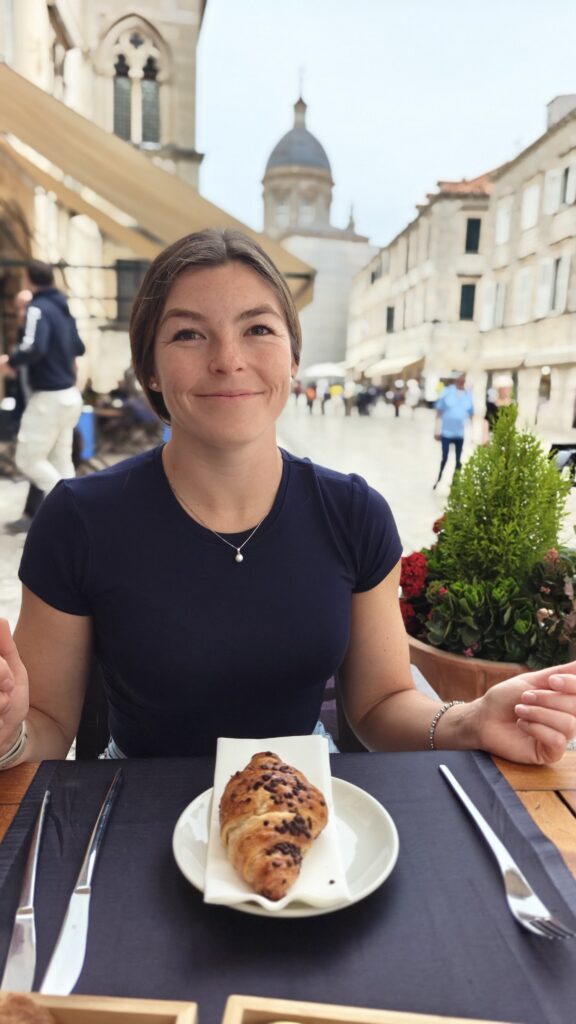
We wandered close to an hour before finally locating a spot at an international hotel on the south side of the Old Town. Once we sat down, outside, the sun pushing through the clouds and warming our faces, the search felt entirely worth it.
Igor’s Wooden Boats: The Studio You Need to Find
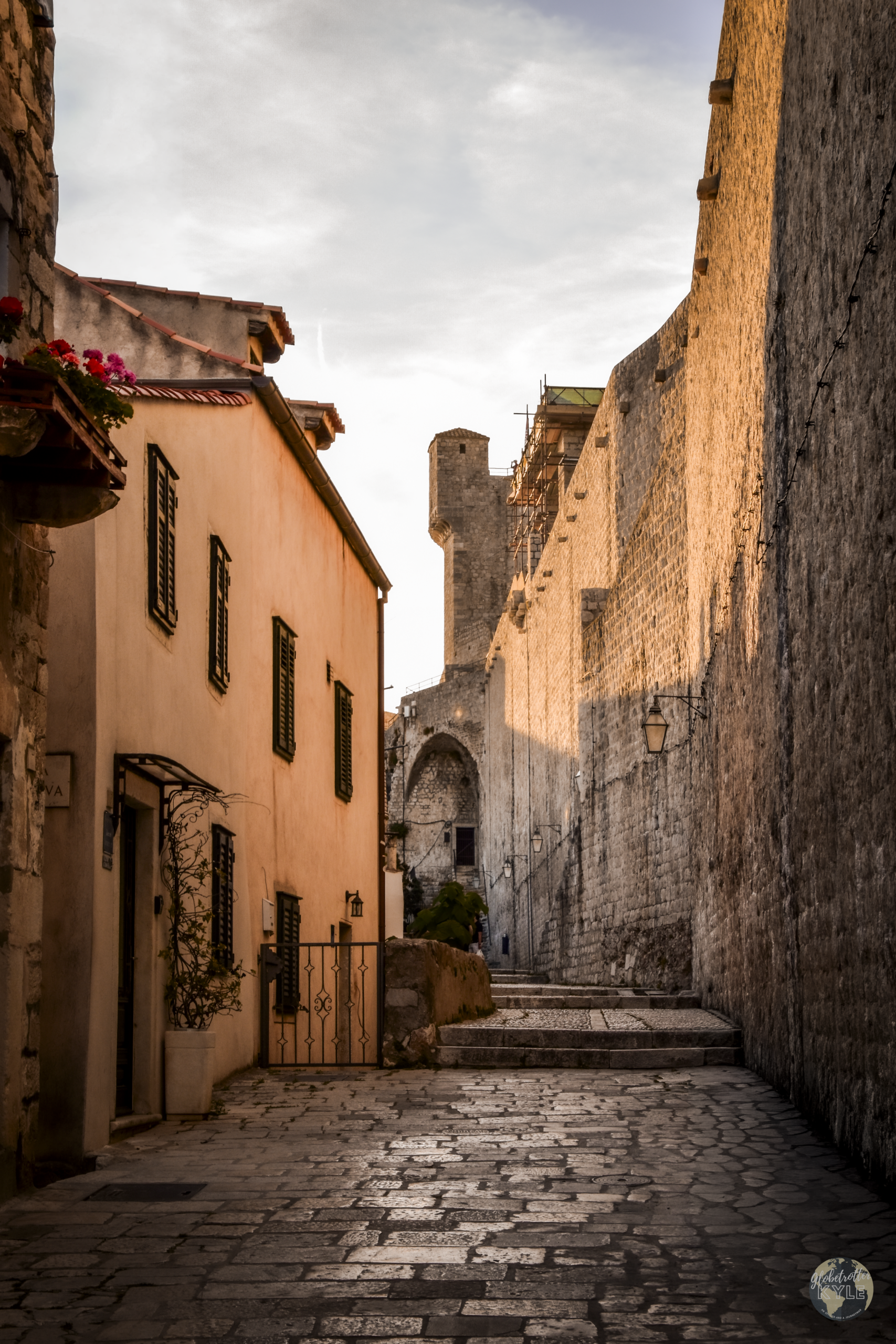
With breakfast sorted, we made a deliberate choice to stay off the Stradun and explore the quieter back lanes inside the walls instead. That strategy paid off multiples times before the afternoon was done. The first discovery was an art studio unlike anything I’ve encountered in years of travel. Igor, a local artist whose last name I regrettably didn’t catch, creates handmade wooden boats of all sizes, most mounted on distressed wood with a stamp and a calligraphy note in the corner.
What makes his work extraordinary is the repurposing: old cellos, skis, and other wooden objects become the hulls of larger boat projects. Pocket watch mechanisms become ship components, and clock parts become navigational instruments. Every single piece tells two stories at once.
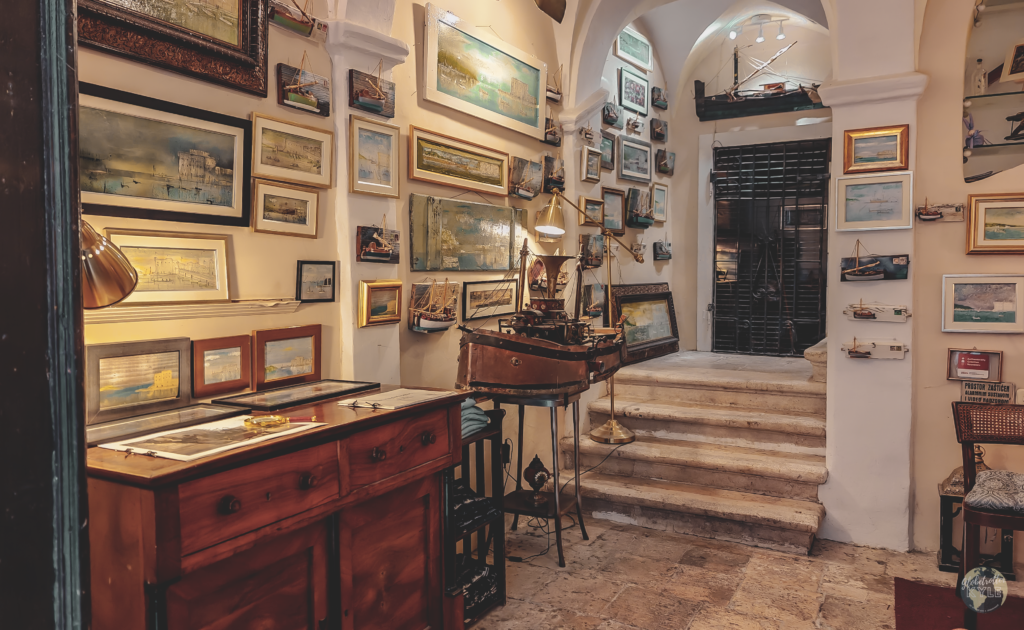
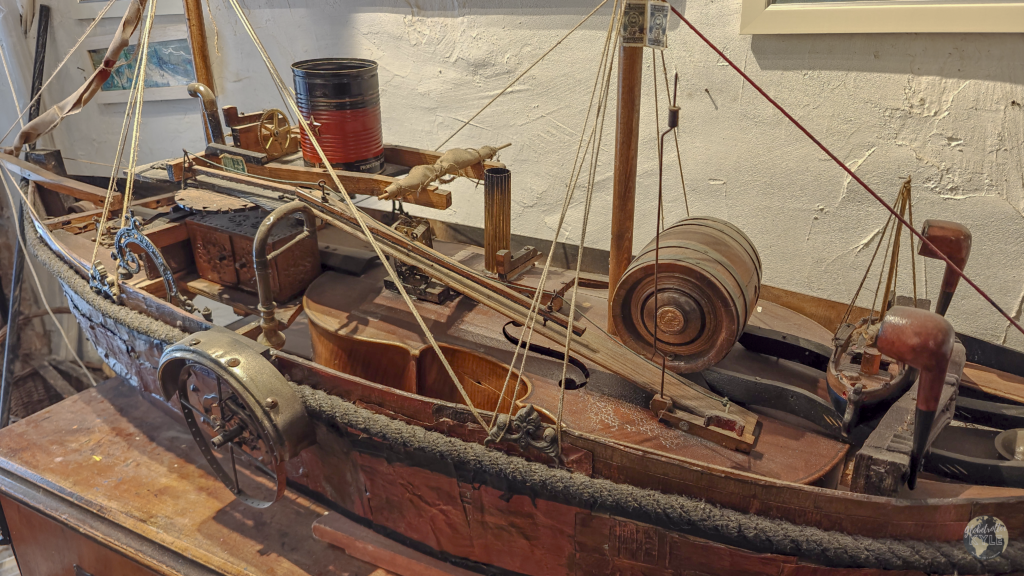
We wandered in while Igor was mid-project, and he showed us around without any pressure. Moving from piece to piece, Igor had a quiet pride of someone who has built something genuinely worth being proud of. We told him we’d come back before leaving for the U.S. to buy something, and we meant it.
On our last night, we were having far too much fun at dinner to make it back before he closed up, which remains a genuine regret from the trip. However, Ciara returns to Dubrovnik for her bachelorette party in September and fully intends to make good on that promise. Point being: don’t make our mistake. If you find Igor’s studio, buy something before your final night.
The Spice Shop That Filled the Air
Just a short wander away was an older woman’s spice shop where she curated her own blend combinations, and walking inside was a full sensory experience before we’d even looked at anything properly. Cumin, garlic, onion, paprika, and a dozen other strong notes mingled in the air all at once, creating what I can only describe as a savory atmosphere you could almost taste before you touched a single jar.
We left with a paprika-cumin-garlic blend I’ve used multiple times on breakfast potatoes. Each time is a reminder that the back lanes of Dubrovnik’s Old Town are where the real discoveries wait.
The Cable Car: Great Views, Questionable Value
The cable car ascending from the edge of the Old Town to the ridge above Dubrovnik appears on most Dubrovnik must do activity lists. And for good reason, too: the views from the top are genuinely spectacular. The price, though, is harder to justify: round trip runs 30 euros per person, and a one-way ticket is 17 euros.
Here’s our honest take: take an Uber to the top instead! A car will drop you at essentially the same viewpoint for a fraction of the one-way cable car price, and you get the exact same views without the premium gondola cost.
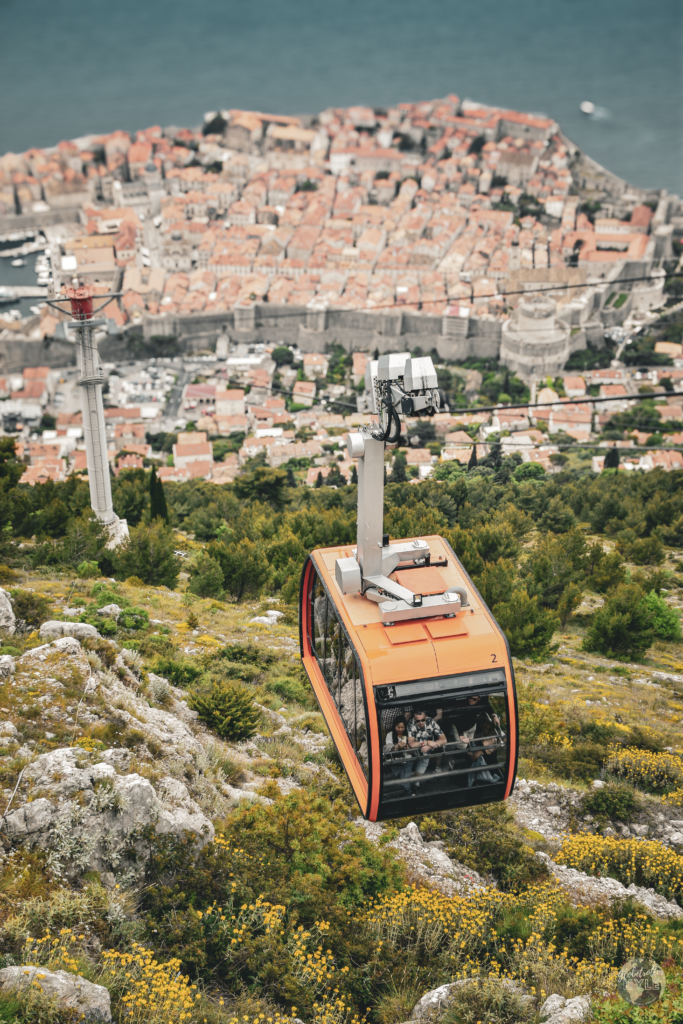
We bought one-way tickets and hiked the trail back down, which turned out to be an enjoyable experience. The trail offers different perspectives on the Old Town at every switchback, and wildflowers covered the banks the entire way down in yellows, purples, and whites. They were so dense that you could almost forget you were hiking above a bustling tourist city.
Worth noting: our cable car tickets claimed to include free admission to the Homeland War Museum at the top, and when we arrived at the entrance, the attendant told us flatly that they didn’t. It was only an extra five euros, but I refused to pay on principle. We’d already been nickle and dimed for 4 days afterall.
Nevertheless, the views from the landing area were still stunning, and from up there the rooftop patchwork of the Old Town was even more striking than it had been from the walls: dark original tiles sitting alongside bright new terracotta replacements, each new one marking a building hit during the 1991-1992 siege of Dubrovnik.
The Free Walking Tour: A Dubrovnik Must Do
The biggest highlight of Day 4, and genuinely one of the top Dubrovnik must do experiences of the entire trip, was the free walking tour that began just after sunset. The company is Free Dubrovnik Tours, and our guide Marco is someone I’d recommend to anyone visiting this city without hesitation.
He balanced light humor and deep historical knowledge in exactly the right proportions. He opened with a description of Dubrovnik as a “stone ATM” that remains the most accurate two-word summary of this city I’ve ever heard. What’s fun is that he reminded me so strongly of my good friend Timmy back in the States that it was almost distracting.
The History Marco Taught Us
The historical context Marco provided reframed everything we’d seen over the previous days. Dubrovnik maintained itself as an independent democratic republic for 450 years, an extraordinary run in a region defined by conquest and shifting empires. It did so through a combination of geographic cunning and information control that reads almost like a spy thriller.
The city strategically sold a small strip of its coastline to Slavic rulers so that any power attempting to invade from one direction would first have to cross foreign territory. This was an automatic declaration of war against a third party! So, Dubrovnik used diplomacy and geography as a shield when military force would have failed entirely—brilliant!
Their other advantage was location. Dubrovnik sat at the precise intersection of Eastern and Western cultures, making it a critical transit point for both. By controlling the flow of information between competing world powers, the city held extraordinary political leverage. Information that needed to reach its destination reached it. Information that needed to disappear did too, sometimes along with the people carrying it.
Ominous Graffiti?
Marco also showed us 16th-century graffiti carved into the side of a church wall that, when translated, read something like: “you can play ball here, but remember: you’ll die.” Two theories compete for the explanation: one is that a priest carved it as a warning to noisy children playing outside the church, and the other is that it referenced an early form of rugby in which punching was a legal defensive tactic. Either way, the 16th century had a remarkable flair for brevity.
The most astonishing fact of the evening came at the Cathedral of the Assumption of the Blessed Virgin Mary, currently under reconstruction after a recent earthquake damaged the foundation so severely that a large chasm opened in the floor. Archaeologists who descended into it found the ruins of yet another cathedral beneath the one already known to exist below the current structure. It’s basically three cathedrals stacked on top of one another!
The deepest is now believed to date to the 6th century AD, rewriting Dubrovnik’s earliest known history by six full centuries. The tour ended at the top of the Jesuit Stairs overlooking the Old Town at night, and I left feeling like I’d understood the city for the first time. If you need a “must do” in Dubrovnik, then book this tour. It is a non-negotiable.
The Drunk Croatians on the Jesuit Stairs
After the tour, Ciara and I lingered at the top of the Jesuit Stairs with drinks in hand, and two local men nearby began singing. They were loud, confident, and posessed the specific vibe that comes from an evening well spent…i.e., they were hammered. The song, we later learned, was a Croatian folk song about a woman compared to a seagull, predatory in one breath and wanting to be served in the next. When they finished, Ciara and I clapped, and that was enough to break the ice entirely.
For the next 45 minutes we talked, laughed, and listened to stories that got funnier as the evening progressed. They asked where we were from, we told them, and then they told us everything they could remember on the spot, which their hazy state of mind made entertainingly selective.
Ciara was laughing so hard at their jokes that watching her made me laugh even harder. It was at this point I realized: this is exactly why we travel. Not for cable cars or museums, though those matter too, but for moments like this one. Just two strangers singing a folk song about a seagull, two Americans clapping on some ancient stairs, and an hour of genuine human connection that no amount of planning could have produced. A perfect ending to a perfect day.
Day 5: Lokrum Island, a Peacock, and the Dinner We’ll Never Forget
Day 5 Quick Tips
- The Lokrum ferry costs 30 euros round trip. The entry fee is included, so ignore outdated pricing online
- Allow a full afternoon on Lokrum. Two to three hours covers the highlights, but the pace is worth extending
- Bring cash to Lokrum because the bar by the Dead Sea Lake is cash only
- The grassy clearing north of Fort Royal offers the best views of Dubrovnik. Go past the fort, trust me
- Dundo Maroje for your final dinner. Order the black risotto and do not skip it
Getting to Lokrum Island
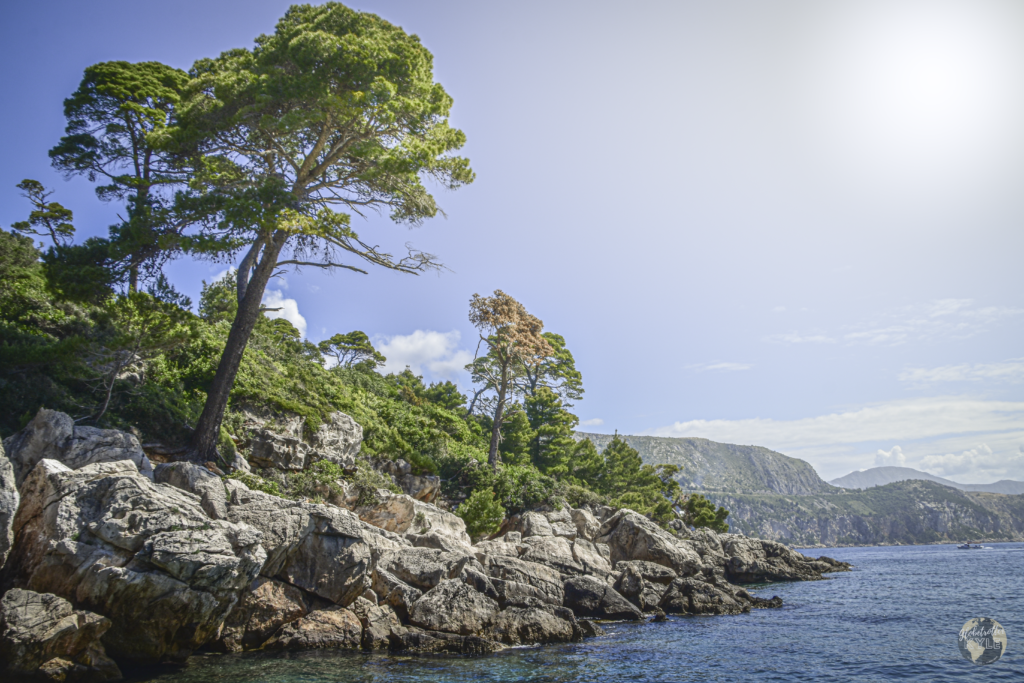
The final full day was spent on Lokrum Island, a short fifteen-minute ferry ride from Dubrovnik’s Old Town port. The official round-trip ferry costs 30 euros per person, and you should ignore anything online suggesting it’s 7 euros. That information is outdated by several years.
Even if you found a cheaper ferry to the island, you’d still pay 27 euros to enter the nationally protected nature reserve, so the official ticket that bundles both together is simply the right call.
Our tour guide Roko told us two to three hours was all we’d need on Lokrum, and in terms of covering the highlights, he wasn’t wrong. However, we ended up spending the entire afternoon there because the pace of the island was exactly what we needed heading into our final night. It was quiet, natural, and completely removed from the tourist energy of the Old Town. Add blue skies and a clear forecast and it made the decision to linger an easy one.
Dead Sea Lake
Our first proper stop was the Dead Sea Lake on the eastern side of the island. This isn’t a lake per se, but rather a saltwater swimming hole connected to the sea through underground channels and open to the sky above. We found a spot on one of the flat rocks bordering the lake and settled in for what we planned to be a long lazy tanning session. About ten minutes later, I was in the water.
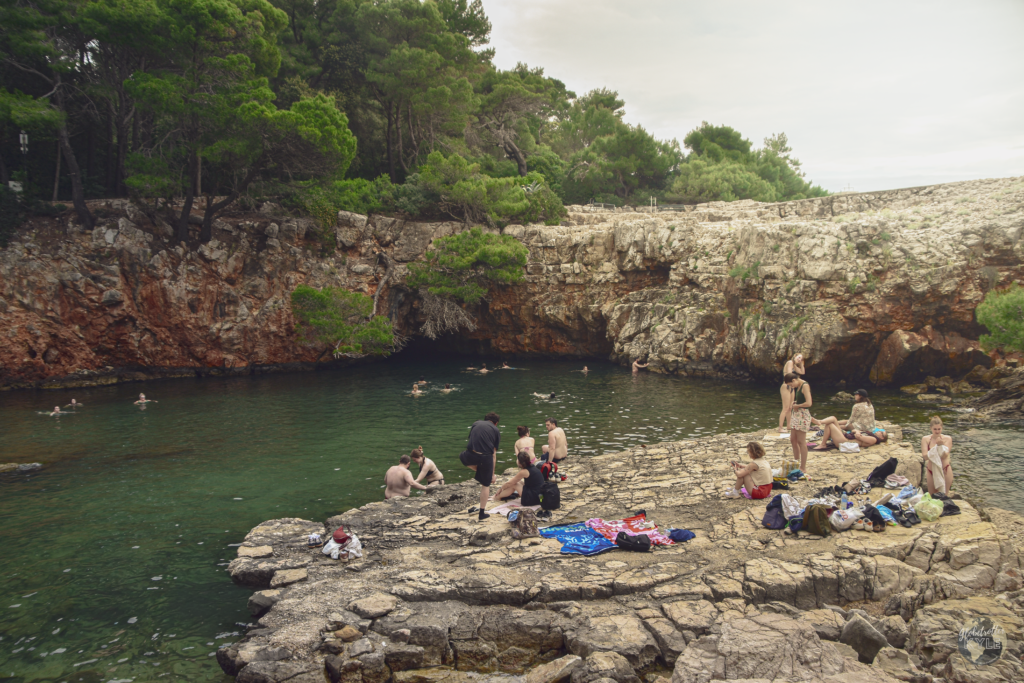
Cold water swimming is something I do regularly when exploring, and once my body adjusted, I was perfectly content wading around while other visitors watched from the rocks. When they asked how warm the water was, I cheerfully told them about 80 degrees. They were less amused than I expected; they always are.
A cash-only bar sat right beside the lake, and cocktail-sipping tourists lounged on the rocks watching the swimmers with what I can only describe as entertained pity. A small group of daredevils launched themselves off a cliff face into the lake on repeat, which was genuinely entertaining to watch, and while part of me thought it looked fun, lounging around won out easily on that particular afternoon.
The Monastery Complex
When clouds rolled in and ended our tanning ambitions, we toweled off and made our way to the Monastery Complex. This turned out to be one of my favorite moments of the trip to the island. The monastery dates to 1023 and is a stunning medieval ruin that somehow still conveys the grandeur of what it once was: stone walls, arched cloisters, and the skeletal framework of the original Romanesque basilica.
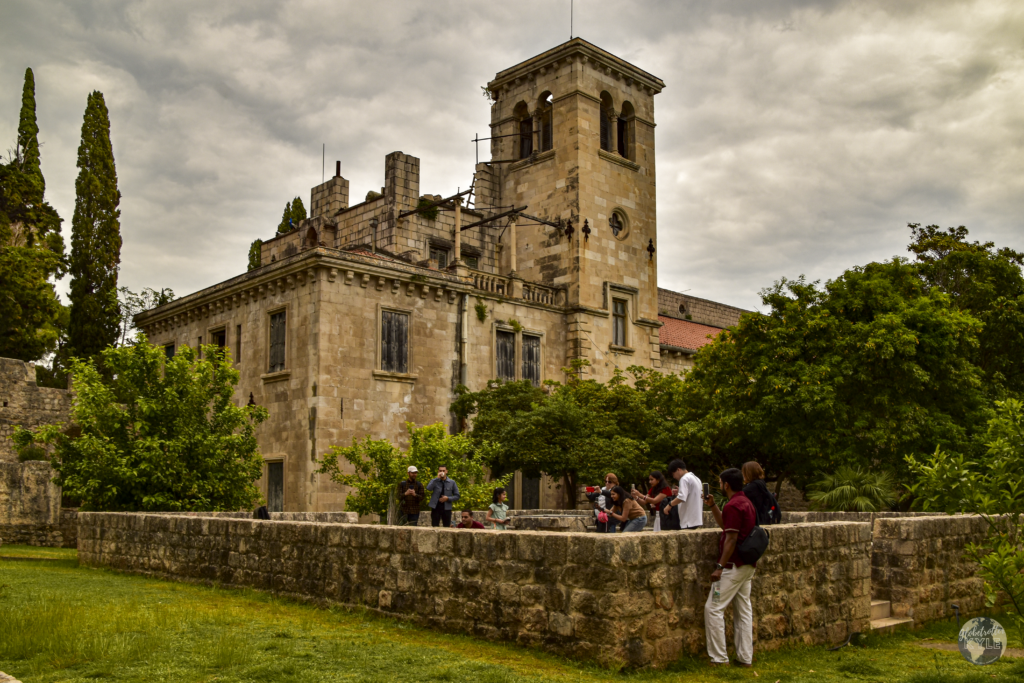
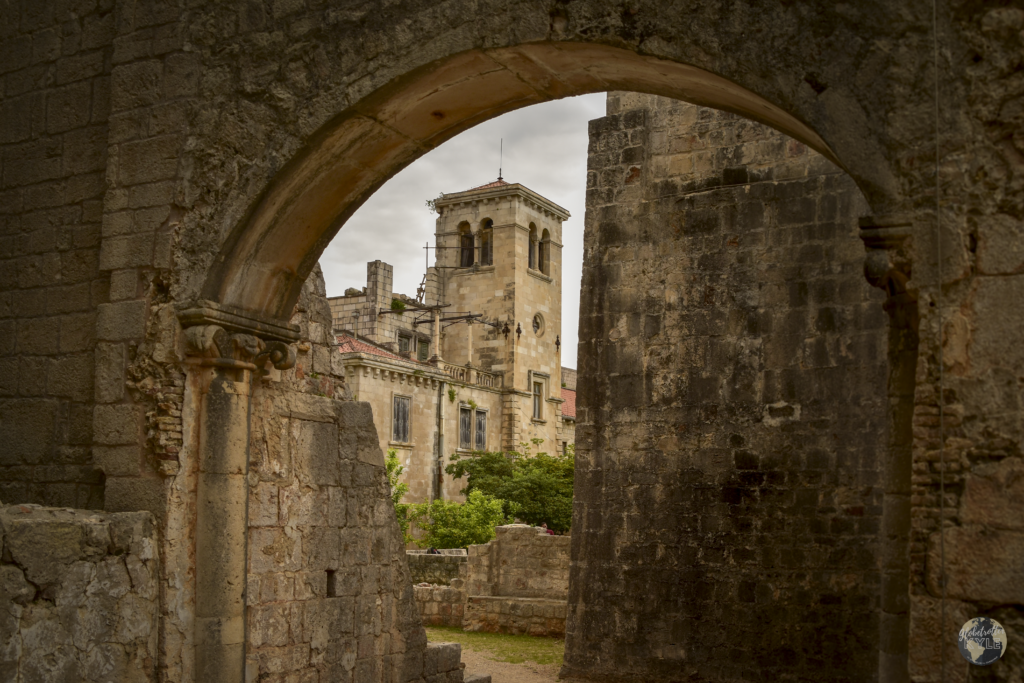
What elevated the experience entirely were the peacocks. Lokrum Island is absolutely full of them, wandering freely through the monastery complex, climbing walls, and perching on railings as though they’ve always owned the place. When two or three of them called out to each other within the stone walls of the complex, the sound echoed and layered into something that felt more like a chorus than noise.
It was a beautiful and entirely accidental concert in a medieval ruin that I’ll remember for a long time. This was a Dubrovnik must do moment I couldn’t have predicted or planned for, which is exactly the kind that sticks.
The Path of Paradise, Fort Royal, and the Best Photos of the Trip
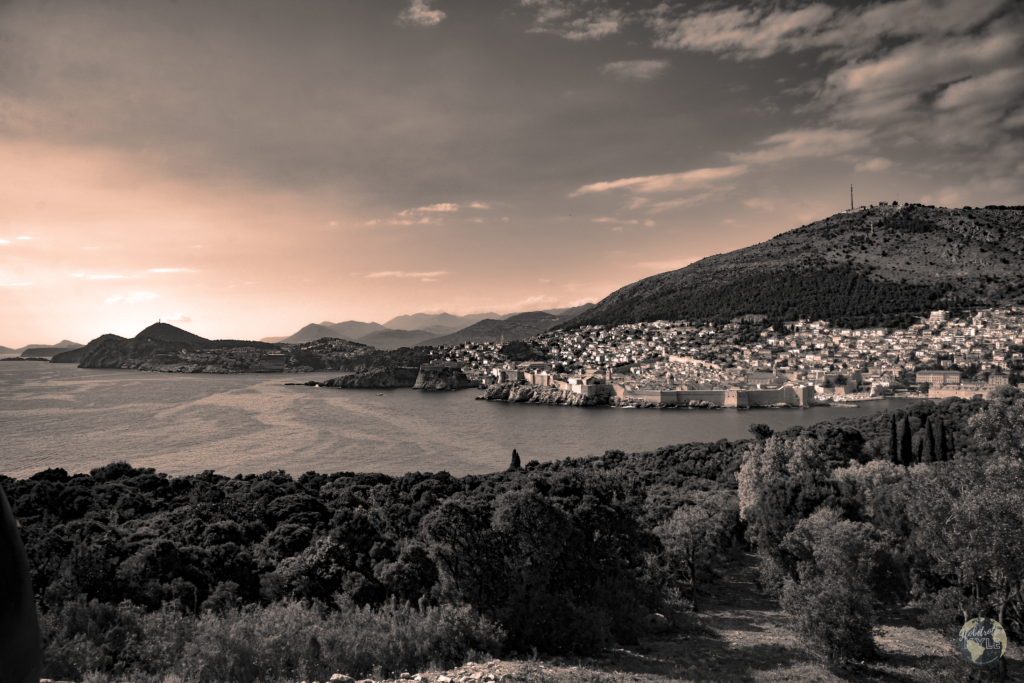
From the monastery we followed the Olive Grove down to the Path of Paradise, a trail that begins gently and steepens toward the end before culminating in Fort Royal at the island’s highest point. The fort offers 360-degree views of the island and the Old Town across the water. After five or ten minutes there, Ciara spotted a grassy clearing just to the north that she thought might offer even better sightlines. She was absolutely right.
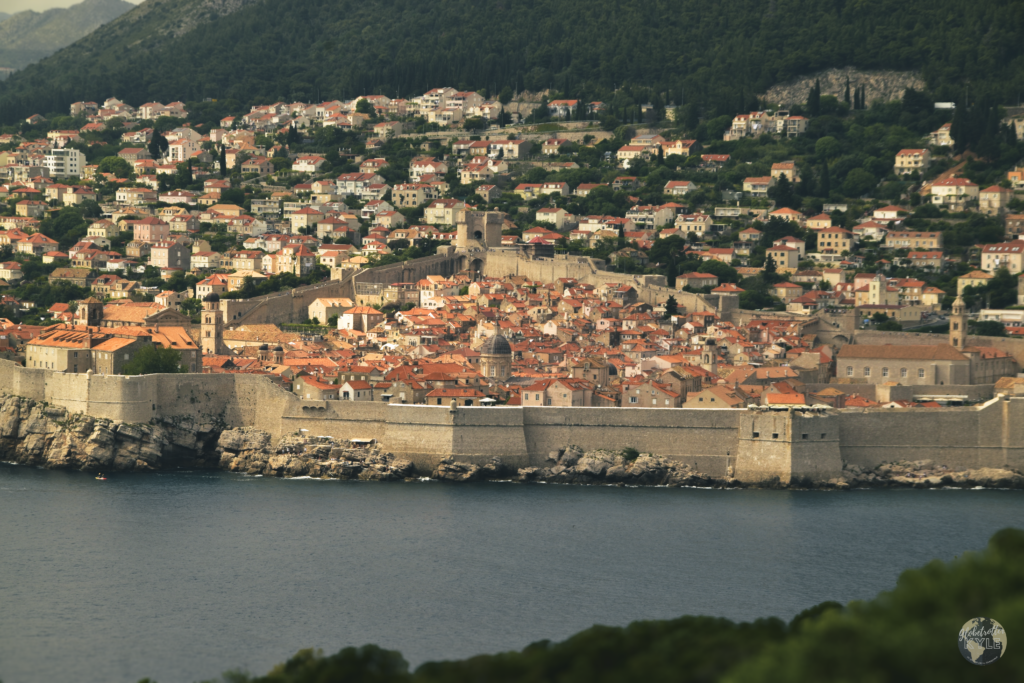
That clearing was the best decision of Day 5. The views of Dubrovnik’s Old Town were the clearest, most dramatic, most postcard-worthy we’d seen at any point on the trip. The sun had just broken through the clouds, flooding everything in warm afternoon light with the city perfectly framed across the water. We set up the camera on a tripod and spent the next hour doing an impromptu photoshoot, trying every funny and romantic pose we could think of.
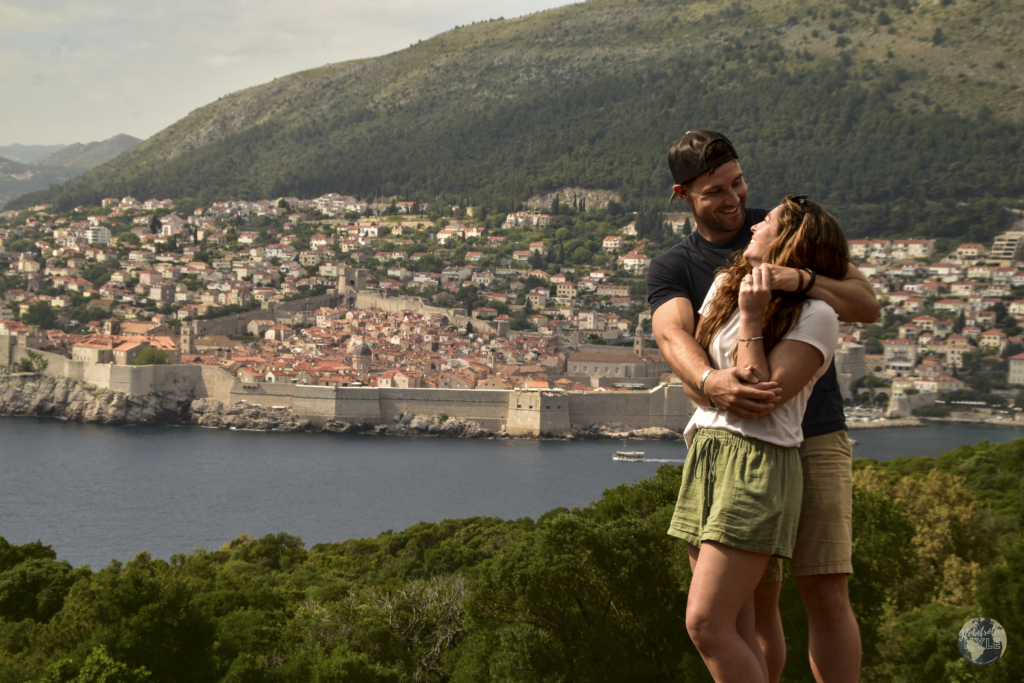
Dubrovnik sat in the background as if it had been placed there specifically for us, and specifically for this moment. Some of those photos are the best travel pictures either of us has ever taken. They’re even some of the best photos we have of each other! That view was exactly what I’d been chasing without knowing it when we first booked this trip. Standing in front of it, I finally understood what I’d been looking for.
The Peacock on the Guardrail
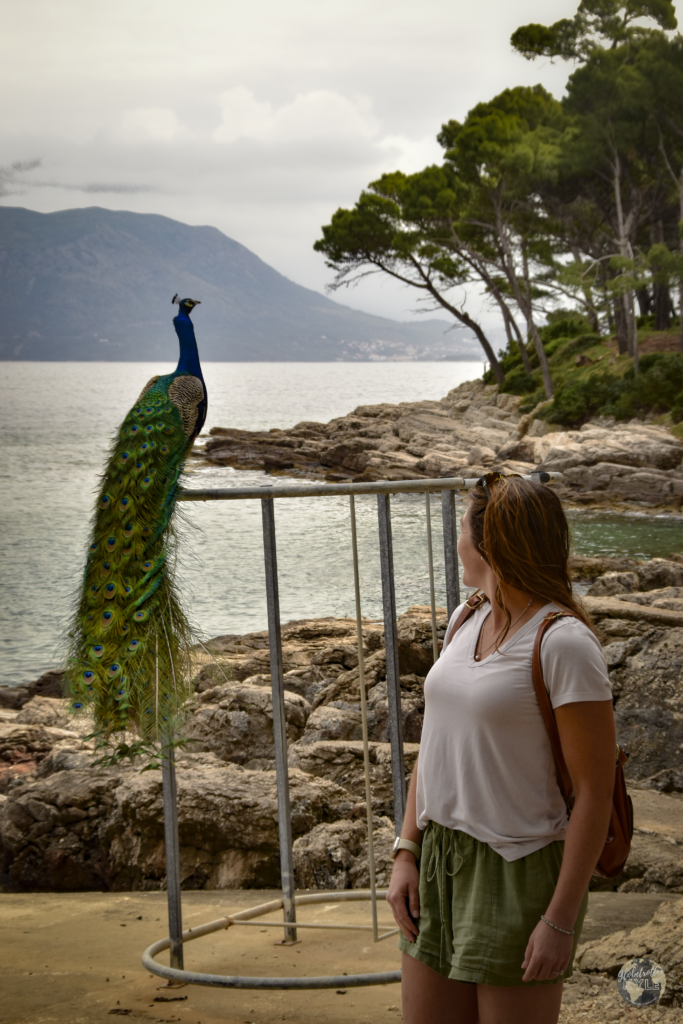
We slow-walked back toward the ferry port, stopping so I could grab an overpriced beer from the bar, and settled onto the rocks to watch ferries come and go for another hour. At some point a peacock wandered over and perched itself on a metal guardrail nearby. It was completely unbothered by two Americans photographing it from two feet away! Lokrum’s peacocks have absolutely no concept of personal space, and on this occasion, that worked perfectly in our favor.
Dundo Maroje: The Dinner That Anchored Everything
We ferried back to Dubrovnik as the sun began its descent, and wandered the Stradun one final time. We arrived at the most important decision of the evening: where to eat our last meal. Ciara and I were close to defaulting to an Italian restaurant we’d enjoyed earlier in the week when something Roko had mentioned surfaced to our memories.
Dubrovnik, he’d told us, is famous for black risotto made with cuttlefish ink. He described it as rich, deeply savory, and unlike anything else on a Croatian menu. I’m not a seafood person by nature, but the trip had been built on saying yes to things that made me slightly nervous. Serarching for the best option, Ciara landed on Dundo Maroje through Google reviews.
Walking up, we were greeted warmly by the host, a man named Csaba as we later learned, who seated us one table back from the main street. We were close enough for excellent people-watching but far enough to avoid being bumped by foot traffic. Our waiter introduced himself as Natko, a deep-voiced and slightly stocky man projecting the friendly confidence of someone completely at home in his environment.
We told him we wanted a bottle of red wine but had no idea which to choose, and he asked exactly one question: “White or red?” We said red, and he said: “Don’t worry. I will bring you something,” and disappeared into the kitchen.
Black Risotto: A Must-do in Dubrovnik
While Natko was gone, Ciara and I sat holding hands at the table watching people move through the street as the light faded. Some hurried past while others drifted by slowly, mezmorized by their gelato cones. Natko returned with a local red, told us it paired well with nearly everything on the menu, and Ciara approved immediately. My first sip however, suggested it might be among the worst wines I’d ever tried. Natko, as I discovered, was entirely correct though in that it paired beautifully with both our dishes.
I ordered the black risotto and Ciara had the striploin, a cut she’d never heard of. When the food arrived, we said grace and then I took my first bite. Here’s the best way I can describe it: you know how people say something is “good”? This was not just good.
This was the kind of food that rewires your expectations for what food can be. Each bite was so deeply and layered-ly savory that I actually slowed down while chewing, and I never eat slowly! Ciara’s striploin was excellent by her own assessment, though her fork kept migrating toward my plate throughout the evening.
Natko stopped by periodically to check on us, and somewhere into the second hour the host Csaba joined the conversation. His English was sharper than Natko’s, and he filled in the evening with stories about the wine, about Croatian cuisine, and about how he’d ended up in Dubrovnik.
Csaba and Natko: Simply the Best!
We eventually learned that Natko and Csaba had been friends since grade school, which made their easy chemistry suddenly make complete sense. Two old friends working a restaurant together, making their guests feel like family without any apparent effort.
After three or four hours we finally signaled for the bill. Natko disappeared briefly and returned not with the check but with shots of Rakija, his own glass included! He announced cheers in Croatian and down they went. Ciara, who doesn’t typically enjoy hard liquor, actually loved it.
Csaba explained why: “The bottle came from a family about 20 kilometers away” pointing east over the mountains, “and they bring a fresh batch down to the restaurant every week”. This homemade, smooth, and entirely appropriate drink was perfect for a final night of our trip. We hugged Natko and Csaba on the way out and told them they’d left the biggest impression on us of anyone we’d met the entire week. They said we were welcome back anytime, and I hope we’ll take them up on it some day.
The Final Gelato
The last stop before climbing the stairs to pack was the gelato shop at the bottom of our street. The young woman who had served us every single night since our arrival saw us coming before we’d even reached the door. By this point she knew Ciara’s order by heart and had it ready before we’d finished walking in. We told her it was our final night and that we’d genuinely miss stopping in to see her, and without any hesitation she loaded up our scoops and said: “Then these ones are a gift from me.”
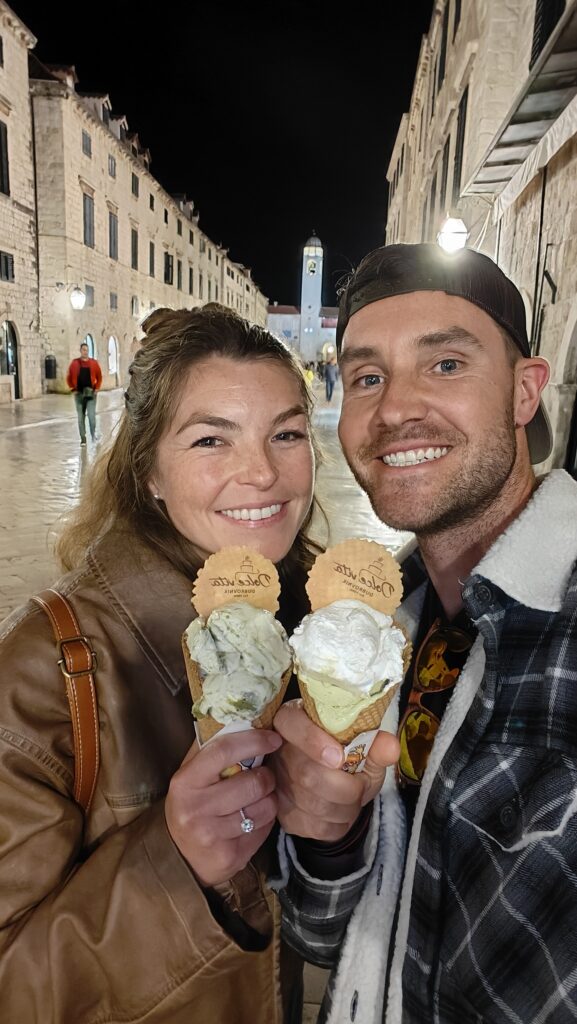
The cherry on top of an already perfect evening, quite literally. We climbed our stairs one last time, packed our bags, went to sleep, and in the morning caught a cab to the airport and a flight back to California.
Why Dubrovnik Belongs on Your List
Every place has a version of itself that it shows tourists and a version it saves for the people who slow down enough to find it. Dubrovnik shows most tourists the walls, the Stradun, and the cable car, and it showed us all of those things too. Then it showed us Marco rewriting Dubrovnik’s history under a night sky, two Croatians singing a folk song about a seagull on a baroque staircase, and a waiter named Natko bringing out shots of Rakija because we were, apparently, family now.
The Dubrovnik must do list that most travel blogs hand you is a good starting point. The real list reveals itself when you wander off the Stradun, say yes to the black risotto, and sit still long enough for the city to show you what it’s actually made of.
Go. And don’t forget to stop by the gelato shop every night.

Yes, I for sure want to go now! 🥰
If you ever wonder what you should do for a living, you should write for a travel magazine and then help people book vacations! It is amazing the things you see and do! It’s like I’m living through your eyes! 💕